Tesla launched its first commercial robotaxi service in Austin on June 22, with CEO Elon Musk emphasizing its role as a future growth engine. Within the initial days, the service logged over 7,000 miles without major safety incidents, despite reports of erratic vehicle behavior, including abrupt braking and traffic rule violations.
Tesla is also testing services in the San Francisco Bay Area, although regulations prevent the use of “robotaxi” terminology there. The company aims to expand its robotaxi service to cover half of the U.S. population by the end of 2025, pending regulatory approvals, and plans to grow service coverage in Austin significantly.
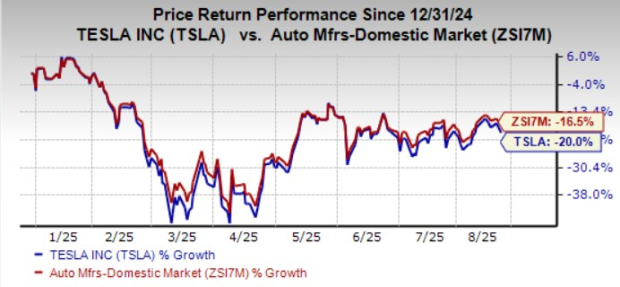
Competitors in the robotaxi market include Alphabet’s Waymo, which runs fully driverless services in several major U.S. cities, and Baidu’s Apollo Go, which operates in 16 cities globally and has completed over 14 million rides. While Tesla shows potential for growth, it currently trails behind these industry leaders. Additionally, Tesla shares have declined about 20% year-to-date.
5 Stocks Our Experts Predict Could Double In the Next Year
By submitting your email, you'll also get a free pivot & flow membership. A free daily market overview. You can unsubscribe at any time.