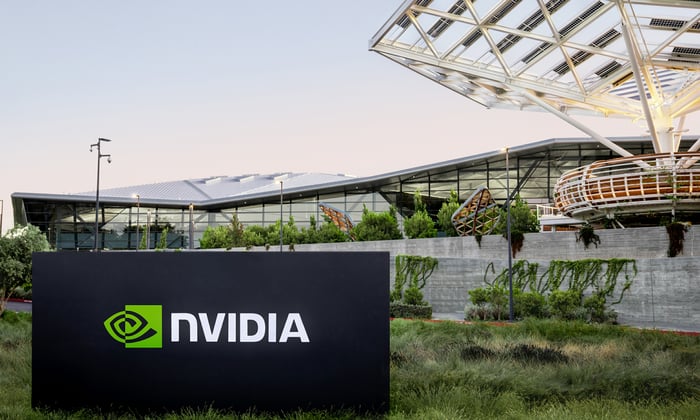
The Future of AI: Top Stocks to Consider Now
There’s no denying that artificial intelligence (AI) technology has rapidly advanced in recent years. However, the businesses fueling this innovation have only begun to explore its vast potential. Industry analytics firm Precedence Research projects that the overall AI market will grow at nearly 20% annually through 2034.
Investment Opportunities in AI Stocks
Given this optimistic growth outlook, here are three promising artificial intelligence stocks to consider while they are currently trading at a discount.
Where to invest $1,000 right now? Our analyst team has identified the 10 best stocks to buy currently. Continue »

Image source: Getty Images.
1. Arm Holdings
Often overlooked in discussions about tech companies poised to profit from AI, Arm Holdings (NASDAQ: ARM) is, in fact, critical to the future of artificial intelligence.
Although Arm does not manufacture chips directly, it designs them and licenses these designs to well-known chip companies. Those companies may use Arm’s designs as they are or adapt them for their specific needs, often outsourcing manufacturing to external foundries. You might be using a smartphone or computer with an Arm-based chip without even knowing it; as of its latest quarter, the company generated around $4 billion in high-margin revenue annually.
Why is Arm a compelling choice for AI investment, especially after its 20% pullback from February? Early on, concerns about electrical usage in AI hardware were minimal as engineers focused on functionality. Now, as AI technology becomes mainstream, power consumption has emerged as a critical factor. A Goldman Sachs study indicates that from 2023 to 2030, AI data centers will increase global electrical power demand by 165%.
AI-capable smartphone chips also have considerable power demands, draining batteries at a fast pace. Arm’s designs prioritize energy efficiency; for example, Amazon’s Arm-based Graviton processor consumes 60% less electricity than comparable chips, and Google’s Arm-based Axion chip shows similar efficiency. This competitive advantage matters significantly, contributing to the expectation that Arm’s revenue will grow about 20% annually over the next three years, despite an uncertain economic environment.
2. SoundHound AI
The initial forays into voice-based interfaces were not very successful. While some remain popular, like voice-command menus, many ambitious projects have been abandoned, including McDonald’s past use of IBM’s automated order system.
However, this setback does not spell the end for voice technology. Enter SoundHound AI (NASDAQ: SOUN). Founded in 2015, SoundHound has developed an advanced AI platform called Houndify, evolving mere speech recognition into a more sophisticated understanding of speech and meaning.
Distinctively, SoundHound is currently unmatched in the voice-driven sector of the AI market, with automakers incorporating Houndify into their in-car technology and Mastercard utilizing it for voice-ordering solutions at restaurants, including McDonald’s.
Though not yet mainstream, market research from Market.us suggests that the global voice-based AI agent market could expand at nearly 35% annually through 2034, positioning SoundHound AI to capture substantial growth. It already demonstrated impressive performance, with first-quarter revenue rising 151% year over year, accelerating from an annual growth of 85% in 2024.
3. BigBear.ai
Lastly, consider BigBear.ai (NYSE: BBAI) among your top AI stock picks.
While Palantir Technologies has garnered much attention in AI-driven decision-making software, BigBear.ai presents a promising opportunity as well.
Palantir has partnered with high-profile organizations like the Centers for Disease Control and the Department of Defense, positioning itself firmly in the spotlight. Yet, investment opportunities exist among smaller companies with significant growth potential, which are often overlooked.
At first glance, BigBear.ai may seem similar to Palantir, but deeper analysis reveals its unique position in the market, ripe for savvy investors willing to look beyond the giants.
# BigBear.ai: Navigating the AI Market with Caution
## Overview of BigBear.ai’s Market Focus
BigBear.ai primarily targets the private sector, concentrating on industries such as manufacturing, industrial warehouses, healthcare, and biopharma. While it does serve some government clients, its main focus is on companies. The private sector typically makes significant capital investments in a slower, more deliberate manner, due to the careful resource management required by stakeholders. However, this sector presents a more substantial opportunity than government markets because AI technologies can help organizations reduce costs, increase revenues, or achieve both—essential priorities for businesses.
## Market Growth Predictions
According to a forecast from Precedence Research, the decision-making segment of the artificial intelligence industry is expected to grow at an annual rate of 16% through 2034. This growth represents a robust opportunity for companies like BigBear.ai to expand their offerings.
## Risks Involved with BigBear.ai
Investors should be aware that investing in BigBear.ai carries risks. The company is currently not profitable, and its smaller size limits the advantages that scale can offer. Additionally, the number of analysts tracking BigBear.ai is relatively low, meaning it may not attract widespread attention from investors.
Nevertheless, there is some bullish sentiment surrounding the stock. The consensus price target set by analysts stands at $6.63, nearly double its current price. This optimistic projection could provide a favorable backdrop for potential investors considering a new investment.
## Investment Considerations for Arm Holdings
As capital markets evolve, investors may be tempted to explore opportunities in companies like Arm Holdings. However, prospective investors should consider the insights shared by the Motley Fool’s analyst team, which recently highlighted what they regard as the ten best stocks to invest in now, excluding Arm Holdings.
The historical context of past recommendations offers perspective: for instance, if investors had purchased Netflix stock right after it was recommended in December 2004, a $1,000 investment would now be worth approximately $635,275. Similarly, a $1,000 investment in Nvidia from April 2005 would have grown to about $826,385.
## Conclusion
These statistics illustrate the potential for substantial returns on investments in carefully selected stocks. While BigBear.ai presents both risks and potential rewards, investors should weigh their decisions against established performance metrics and carefully assess their own risk tolerance.
The views and opinions expressed herein are those of the author and do not necessarily reflect those of Nasdaq, Inc.
5 Stocks Our Experts Predict Could Double In the Next Year
By submitting your email, you'll also get a free pivot & flow membership. A free daily market overview. You can unsubscribe at any time.