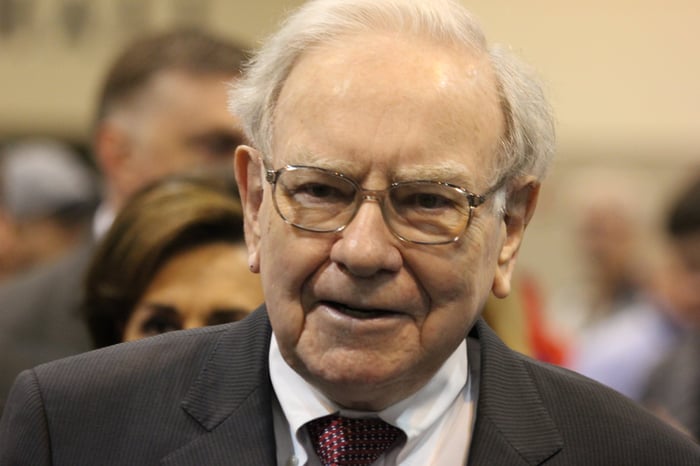
Warren Buffett Plans to Step Down as Berkshire Hathaway CEO
At Berkshire Hathaway‘s (NYSE: BRK.A) (NYSE: BRK.B) latest annual meeting on May 3, Warren Buffett announced his intention to step down as CEO at the end of this year. This decision comes as no surprise, given Buffett will celebrate his 95th birthday in August. He has already appointed Greg Abel, the CEO of Berkshire Hathaway Energy, as his successor.
Abel has been part of Berkshire for 25 years. While he may not possess the same reputation as a stock picker as Buffett, he is expected to adhere closely to Buffett’s investing strategy, focusing on stable and cash-rich businesses. However, some analysts caution that he might not capture as many long-term investment opportunities.
Top Investment Options in Buffett’s Portfolio
For investors eager to explore long-term opportunities without waiting to see Abel’s impact on Berkshire’s portfolio, consider three of Buffett’s past picks: Amazon (NASDAQ: AMZN), Kroger (NYSE: KR), and Coca-Cola (NYSE: KO).

Berkshire Hathaway’s CEO Warren Buffett. Image source: The Motley Fool.
1. Amazon
Amazon stands as the largest e-commerce and cloud infrastructure company globally. Berkshire initially purchased shares in Amazon during the first quarter of 2019 and now holds 10 million shares valued at $2.05 billion, making up 0.7% of its entire portfolio.
The majority of Amazon’s revenue comes from its retail operations, while its profits are significantly bolstered by the Amazon Web Services (AWS) cloud platform. The profitability of AWS enhances Amazon’s ability to improve its Prime ecosystem, attracting discounts and lower-margin strategies. Presently, Amazon serves 220 million Prime members worldwide.
Looking ahead, analysts project that from 2024 to 2027, Amazon’s revenue and earnings per share (EPS) will grow at compound annual growth rates (CAGR) of 10% and 17%, respectively. Although Amazon’s retail business faces pressure from tariffs and appears expensive at 33 times forward earnings, it remains a strong long-term investment in the growing e-commerce and cloud markets.
2. Kroger
Kroger is the largest supermarket chain in the U.S. by annual revenue, operating several brands like Fred Meyer and Ralphs. Last year, it almost merged with Albertsons in a $24.6 billion deal. Berkshire began investing in Kroger during the fourth quarter of 2019 and currently owns 50 million shares valued at nearly $3.4 billion, equating to 1.2% of its total portfolio.
Kroger has successfully capitalized on three core strategies: enhancing digital and loyalty programs, launching more private-label products, and expanding into advertising and health services. This scale has helped Kroger withstand inflation and other economic challenges, and it is diversifying its supply chains to address the impacts of tariffs.
After its bid for Albertsons was blocked by regulators, Kroger redirected significant cash into a $7.5 billion buyback plan. From fiscal 2024 through fiscal 2027, analysts expect Kroger’s revenue and EPS to grow at CAGRs of 2% and 13%, respectively. With a reasonable valuation of 14 times forward earnings and a forward yield of 1.9%, Kroger presents a reliable investment in the supermarket sector.
3. Coca-Cola
Coca-Cola, the world’s largest beverage company, has been part of Berkshire’s portfolio since 1988. Currently, Berkshire owns 400 million Coca-Cola shares worth $28.6 billion, constituting 10% of its total holdings. Buffett is even known to drink approximately five cans of Coca-Cola daily.
Despite concerns that global soda consumption rates are declining, Coca-Cola has diversified its offerings with brands spanning bottled water, sports drinks, energy drinks, teas, fruit juices, coffee, and alcoholic beverages. It has also refreshed its classic sodas with new flavors, smaller serving sizes, and sugar-free options.
Currently, Coca-Cola is not heavily exposed to tariffs, as it sells primarily concentrates and syrups. Its bottling partners operate independently, producing and selling finished drinks. Though they face increased tariffs on aluminum, they can mitigate these costs by switching to plastic bottles or raising prices. From 2024 to 2027, revenue and EPS are expected to grow at CAGRs of 4% and 11%, respectively. The stock is fairly valued at 25 times forward earnings, pays a 3% forward yield, and is a Dividend King with an impressive 63 consecutive years of payout increases, making it a solid long-term investment.
The views and opinions expressed herein are those of the author and do not necessarily reflect those of Nasdaq, Inc.
5 Stocks Our Experts Predict Could Double In the Next Year
By submitting your email, you'll also get a free pivot & flow membership. A free daily market overview. You can unsubscribe at any time.