
Author’s Note: Our monthly peek into Dividend Stocks is a treasure map to 5 promising stocks, published at the start of each month. We sift through approximately 7,500 stocks listed and traded on U.S. exchanges using our distinctive filtering criteria to pluck out five stocks that seem relatively secure and are possibly being undervalued. A few segments in the article, such as “Selection Process/Methodology,” repeat with minimal changes each month. This is both intentional and unavoidable, aimed at familiarizing new readers with our process. Regular readers can safely skip these sections to avoid redundancy.
************
Markets are akin to a riddle without an answer. But to thrive as an investor, one need not solve this elusive riddle. Nailing the exact market bottom (or peak) is improbable. Hence, the smart strategy is to consistently invest in sturdy dividend-paying stocks when their valuations are appealing. Against this setting, having a stash of cash at hand to tackle any situation is crucial.
After all, you wouldn’t venture into a jungle without a map, would you?
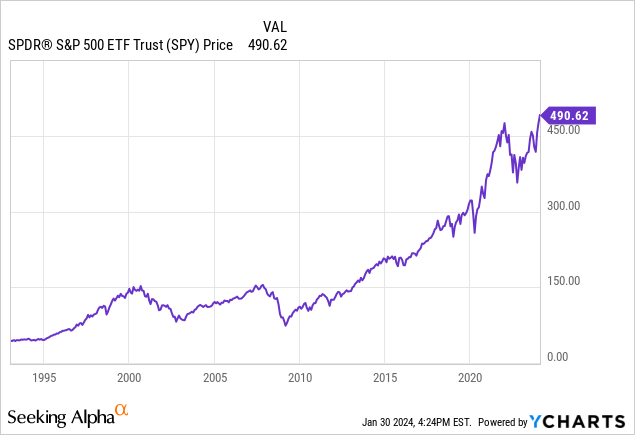
The main aim of this series is to spotlight companies with a solid track record of paying and increasing dividends. We also insist on these companies showing robust fundamentals, carrying minimal debt, and being available at a relatively modest valuation. The DGI stocks featured aren’t a ticket to overnight wealth, but for those aiming for financial liberty through stocks that offer sustained and meaningful dividend growth, this is the place to be. This list isn’t a direct recommendation to buy. Instead, it’s a pool of potential candidates for further investigation. The goal is to keep our shopping list ready and a stash of cash at hand to seize opportunities at the right moment. Each month, this analysis manages to bring to light a few companies that might have otherwise slipped under our radar.
Every month, we embark with a haystack of about 7,500 stocks listed and traded on U.S. exchanges, OTC networks included. Using our filtering criteria, we swiftly narrow down this list to around 700 stocks, mainly those that pay dividends and are primed for dividend growth. By analyzing various data elements, including dividend history, revenue growth, debt ratios, EPS growth, among others, we compute a “Dividend Quality Score” for each stock. This score gauges the relative safety and sustainability of the dividend. Along with dividend security, we also scout for modest valuations. Furthermore, we insist on the chosen companies having a sturdy business model, a solid dividend history, manageable debt, and an investment-grade credit rating.
This month, we’re bringing to the forefront three groups, each with five stocks, sporting average dividend yields of 3.01%, 5.77%, and 7.46%, respectively. The first group is tailored for the conservative and risk-averse, while the second is for those seeking higher yields but still craving relatively secure dividends. The third group beckons those hungry for yields, but it comes with a heightened risk. We urge investors to tread cautiously.
Notes: 1) When we say “safe” in the context of stocks and investments, understand it as “relatively safe” since nothing is absolutely secure in investing. Even though we present only 5 to 10 stocks in our final list, one should ideally have at least 15-20 stocks in a well-diversified portfolio.
2) All tables in this article are created by the author unless explicitly specified. The stock data has been sourced from various platforms such as Seeking Alpha, Yahoo Finance, GuruFocus, and CCC-List (drip investing).
The Art of Collecting: Our Selection Process
Note: Regular readers of this series could skip this section to avoid repetition. However, this section aims to provide necessary background and perspective for new readers.
Targets:
Our aim is simple – to spotlight five large-cap companies that are relatively secure, pay dividends, and are trading at relatively modest valuations compared to the broader market. Our objective is to spotlight dividend-paying and dividend-growing companies that may be offering tempting dividends due to a temporary dip in their share prices. This dip can stem from an industry-wide slump or one-off hiccups, such as negative news coverage or missing quarterly earnings estimates. We employ a systematic approach to winnow down the 7,500-plus companies into a select few.
Our primary goal is a consistent income that grows over time at a rate that at the very least surpasses inflation. Our secondary goal is capital appreciation, providing a cumulative growth rate of 9%-10% minimum. These aims are largely in line with most retirees, income investors, and DGI investors. A balanced DGI portfolio should feature a mix of high-yield, low-growth stocks alongside some high-growth but low-yield stocks. How you mix the two depends on your personal situation, including income needs, time horizon, and risk appetite.
A well-diversified portfolio should include more than just five stocks, ideally featuring a few stocks from each sector of the economy. This periodic series aims to spotlight just five stocks that align with the goals of most income and DGI investors while ensuring they are trading at attractive or reasonable valuations. It goes without saying, to make any decisions, we recommend you conduct due diligence.
Filtering Finesse:
The S&P 500 currently yields less than 1.60%. Since our goal is to identify companies for a dividend income portfolio, it makes sense to seek companies that pay yields at least on par with, or preferably better than, the S&P 500. The higher, the better, but we mustn’t reach too greedily. If we seek dividend stocks paying at least 1.50% or above, we find nearly 2,000 such companies trading on U.S. exchanges, including OTC networks. We will narrow down this list.
The Art of Stock Selection: A Methodical Approach to Dividend Stock Criteria
When navigating the stock market, it’s essential to consider a myriad of factors to make informed decisions. For keen investors, selecting stocks that meet specific criteria can be a meticulous and compelling exercise. This methodical approach encompasses a range of elements, from market cap to dividend growth history, daily trading volume, and valuations. It is a multifaceted process that delves deep into a company’s financial framework and growth potential.
Refining the Initial Selection
As a first step, we would like to eliminate stocks that have less than five years of dividend growth history. We cross-check our current list of over 600 stocks against the list of so-called Dividend Champions, Contenders, and Challengers originally defined and created by David Fish.
By applying the above criteria, we got around 600 companies. After we apply all the above criteria, we’re left with 342 companies on our list. However, so far in this list, we have demanded five or more years of consistent dividend growth. But what if a company had a very stable record of dividend payments but did not increase the dividends from one year to another? At times, some of these companies are foreign-based companies, and due to currency fluctuations, their dividends may appear to have been cut in US dollars, but in reality, that may not be true at all when looked at in the actual currency of reporting. At times, we may provide some exceptions when a company may have cut the dividend in the past, but otherwise, it looks compelling. So, by relaxing some of the conditions, a total of 72 additional companies were considered to be on our list. We call them category ‘B’ companies. After including them, we had a total of 414 (342 + 72) companies that made our first list. Our choices are companies that have a market cap of at least $10 billion and a daily trading volume of more than 100,000 shares.
Weighted Evaluation Criteria
We then imported the various data elements from many sources, including CCC-list, GuruFocus, Fidelity, Morningstar, and Seeking Alpha, among others, and assigned weights based on different criteria as listed below. This intricate selection process spans weighted factors such as current yield, dividend growth history, payout ratio, past five-year and 10-year dividend growth, EPS growth, Chowder number, debt/equity ratio, debt/asset ratio, S&P’s credit rating, PEG ratio, Distance from 52-week high, and Sales or Revenue growth.
Choosing stocks that fit these stringent criteria is akin to selecting the ripest fruit in a crowded orchard. Each aspect plays a crucial role in determining a stock’s viability and growth potential, analogous to the unique blend of flavors and textures that define a perfect piece of fruit. Just as a skilled farmer carefully examines each fruit for ripeness, the investor meticulously evaluates the financial “ripeness” of these companies, seeking stocks with the optimal balance of yield, growth trajectory, and financial health.
By incorporating weighted scores for various parameters, the selection process elevates the art of stock picking to a science. Companies must demonstrate not only consistent dividend growth but also prudent financial management, sustainable earnings growth, and strategic positioning for future success. This comprehensive approach ensures that selected stocks are resilient and poised for long-term growth, resonating with the adage: “Good things come to those who wait.” In this context, the diligent and meticulous nature of stock selection mirrors the patience and discernment exercised by a seasoned connoisseur selecting the finest wine from a prestigious vineyard.
Curating Stocks for Timely Investments
Albert Einstein once said, “In the middle of difficulty lies opportunity.” When it comes to perusing the stock market for investment opportunities, the difficult task of selection can indeed unearth abundant prospects. Like miners striking it rich, investors can sift through a sea of stocks and unearth the diamonds in the rough only by meticulously employing a unique synthesis of automated criteria and subjective judgment.
Criteria for Selection
Efficiently narrowing down a list of 399 stocks to 50 is no small feat. This endeavor is meticulously conducted through a systematic, multi-step approach that brings together the realms of quality score, dividend yield, credit rating, and historical valuation.
Selecting the Top 50
The criteria for selection are as exhaustive as they are meticulous. The initial step calls for a scientific assessment that takes the top 20 stocks from the table. The subsequent steps are no less demanding, sieving out names based on diverse elements like dividend yield, credit rating, and historical valuation. After a careful curation process, the list is pruned to a final 50, ensuring a diverse and robust selection.
Prioritizing Industry Segments
When it comes to selecting from various segments, discretion and diversification are the keys that unlock the treasure chest. By strategically limiting the number of stocks from each segment, the final list emerges as a harmonious symphony of varied industry segments. From financial services to technology, energy, and real estate, the selection exudes the essence of a well-diversified portfolio.
Final Step: The Elite Five
The culminating step sees an artful and judicious approach, further pruning the elite 50 to yield three distinct lists. These lists, each with different objectives in dividend income and risk levels, culminate in what can be deemed an investment nirvana. The criteria for these lists are rooted in rigorous research and perceptive judgment, leading to final selections that embody the collective wisdom of the curation process.
In the grand scheme of things, the quest for stocks mirrors the alchemical pursuit of transmuting base metals into gold. Unlocking the hidden potential in stocks is akin to uncovering a treasure trove – the ultimate reward for those with the vision to see beyond the obvious.
Income Stocks: A Detailed Analysis of Final A-List and B-List Stocks
When investing, we tend to rely blindly on algorithms and automated models to guide us, yet sometimes the best guide is our intuition. The last step, the A-List and B-List, is a subjective conclusion, based on diversification across sectors, industry segments, and the safety of dividends. But always remember, our lists serve as a starting point for your research, not a final destination. It’s a tough and shifting world out there and the future can never be perfectly predicted.
The A-List: A Haven for Conservative Investors
The A-List, brimming with stalwart individuals such as the likes of Visa (V), Automatic Data Processing (ADP), Bristol-Myers Squibb (BMY), PepsiCo (PEP), and Chevron (CVX), with an average yield of 3.01%, presents an irresistible allure. This quintet forms a solid, diversified group and would be a delightful addition to the portfolios of income-seeking and conservative investors. It’s as though the A-List is a sanctuary, offering an average dividend growth history of nearly 33 years, along with an enticing average discount from a 52-week high at -15.5%. Additionally, each member boasts an excellent credit rating of AA- or higher, significantly bolstering their appeal. If this isn’t enough, we present you with our B-List and C-list to quench your thirsty pursuit of higher dividends.
Visa (V): A Jewel in the Payment Processing Industry
In the land of payment processing, Visa stands as a jewel, along with its counterpart Mastercard (MA), almost like a global duopoly. It commands a relatively cheaper valuation than Mastercard and, despite a modest dividend yield of 0.80%, this inclusion elevates the growth profile of the A-List, making it a quintet of remarkable ambition and promise.
ADP (Automatic Data Processing): The Reliability King
Automatic Data Processing, the reliability king, has been dutifully paying and growing its dividends for 49 years, edging closer to the throne as a Dividend-King. With its dividend growth overshadowing its current mediocre yield, the future shines brightly for ADP. Despite its fair valuation at present, its high growth potential plays an enchanting tune that resonates with investors.
BMY (Bristol-Myers Squibb Co): Weathering the Pharmaceutical Storm
Bristol-Myers Squibb, albeit facing headwinds, finds itself in an undervalued position, offering a delightful dividend yield of 4.83%. The company’s bold and masterful strokes in making partnerships, sealing deals, and acquisitions, while navigating choppy regulatory waters, make it an alluring prospect for income-seeking investors, akin to a sailor weathering the storm.
PEP (PepsiCo): Emblematic of American Enterprise
PepsiCo, an emblematic American venture operating globally, stands as a beacon for investors, having recently joined the ranks of Dividend-Kings with 50 years of consistent dividend increments. Trading nearly 9% lower than its previous month’s position, yet yielding slightly lower at 3%, represents an opportunity worth seizing.
CVX (Chevron): A Rock in the Energy Landscape
Chevron, a stalwart entity in the energy arena, continues to stand tall, despite the shifting sands of the oil industry. With its tantalizing 4% starting yield and a commendable 6% annual growth, Chevron presents a robust income investment. Its strategic share buyback and impressive financial standing further bolster its appeal, reminiscent of a towering rock in a tempestuous sea.
The B-List: A Refuge for the Moderate Investor
For those seeking respite in moderate yet rewarding prospects, the B-List is a haven, offering an average yield of 5.77%. This refuge houses individuals such as PepsiCo (PEP), Pfizer (PFE), Bank of Nova Scotia (BNS), Crown Castle International (CCI), and Enbridge (ENB). With a few low-risk additions and frequent overlap with other lists, the B-List offers another avenue into the world of diversified and conservative investments.
Safe High-Yield Stocks Making Waves in the Market
SeekingAlpha.com
High Yield, Low Risk
In the world of investing, the quest for high yields can often feel like a high-stakes gamble. However, some investors crave stability and long-term dividends from their equities. The Seeking Alpha High-Yield Stock List has been curated with such investors in mind, offering a selection that provides a safe harbor amidst the often tumultuous sea of the stock market. The A-List, B-List, and C-List, each representing varying degrees of risk, allow investors to find the right balance for their portfolio.
The “Safer” B-List Stocks
The B-List, while slightly more elevated in overall risk compared to the A-List, holds promise for those seeking safe dividends for years to come. With an average yield of nearly 5.25%, nearly 30 years of dividend history, and an average discount of -26% from 52-week highs, the B-List offers a comforting mix of long-term stability and potential for growth.
PFE (Pfizer):
Skyrocketing vaccine revenues amid the pandemic have boosted Pfizer’s cash position, as the company completed several M&A deals and is committed to higher R&D spending. Despite a decline in share prices, Pfizer maintains a high dividend yield of over 6%, presenting investors with a remarkable entry point. The company’s recent acquisitions and in-house R&D efforts have paved the way for a steady pipeline of drugs in the foreseeable future. Although a quick turnaround may not be on the horizon, Pfizer offers an enticing proposition of a stable dividend from a major pharma company.
BNS (The Bank of Nova Scotia):
With a history dating back to 1833, The Bank of Nova Scotia has weathered varying economic climates with a resilience that is reflected in its dividend payouts. The bank, which has a significant presence in Canada and Latin American countries, has managed to maintain a solid balance sheet and credit rating. Its stock price, currently undervalued and down nearly 38% from 2022 levels, offers an attractive dividend yield of 6.71%, making it an appealing prospect for income-focused investors.
CCI (Crown Castle Inc.)
Crown Castle Inc., a Real Estate Investment Trust (REIT) focused on cell towers, boasts a meteoric rise with a trajectory seemingly as endless as the signals transmitted from their towers. With a discount to its 52-week high and a bountiful yield of 5.76%, the company’s business has proven recession-proof, underpinning its stable growth in dividends over the last five years. As the demand for mobile data continues to surge, Crown Castle Inc. seems poised for sustained growth in the communications infrastructure industry.
ENB (Enbridge):
Enbridge, a stalwart in the midstream energy sector, has solidified its presence with a sophisticated network spanning Canada and the United States. The acquisition of three U.S. utilities is expected to bolster the company, which is currently trading at a significant discount to its fair value. Offering a handsome dividend yield of 7.2%, Enbridge has exhibited a consistent track record of dividend growth for 27 years, reflecting its robust position in the market.
Embracing Elevated Risk with the C-List
For those willing to navigate slightly choppier waters in exchange for a more alluring yield, the C-List presents opportunities with an average yield of 7.30%. While the risk profile is elevated, these stocks beckon to yield-hungry investors who are unafraid to venture into less certain territory.
((PFE)) ((ARCC)) CCI ((MPLX)) BCE
Notes:
Note 1: Oftentimes, a stock can appear in multiple lists. We try to include one or two conservative names in the high-yield list to make the overall group much safer.
A Diverse Array of Dividend-Paying Stocks for Shrewd Investors
The Lowdown on ARCC (Ares Capital)
Ares Capital, affectionately known as ARCC in the investment world, looms large as one of the largest Business Development Companies (BDCs) when considering market capitalization and net asset values. Boasting an extraordinarily high yield exceeding 10%, ARCC clothes itself in BDC attire and funnels its resources into nurturing small and medium-sized companies, a proportion of which may be beleaguered. With investments in almost 475 companies, ARCC brandishes the banner of a remarkably diversified portfolio. The war chest it has amassed rings in at a resounding net investment income (NII) that presently surpasses a monumental $1 billion on an annual basis. Clocking in at roughly 83%, its measured payout ratio is quite reasonable for a BDC, and is quantified by Core-EPS, which abstains from pondering realized and unrealized gains. Offering a dividend yield of approximately 10%, the possibilities of capital appreciation appear relatively meager, yet one must bear in mind that this investment is tailored for income. That being said, should one reinvest all the dividends, the enticement of total returns might still prove compelling.
MPLX (MPLX LP): A Gem in the Rough
MPLX maneuvers onto the scene as a diversified midstream energy company donning the garb of a master limited partnership. Its genesis traces back to 2012 when Marathon Petroleum Corporation (MPC) birthed it with the intention of fostering, managing, procuring, and nurturing midstream energy infrastructure assets. To this day, MPC reigns as the largest unitholder of MPLX. Breathing life into a robust balance sheet bedecked with an investor-grade BBB credit rating, MPLX exudes a magnetic yield, currently standing at a tantalizing 8.97%. Since its inception in 2012, it has unfurled the dividend payout while also hiking it. With a partnership draped around its shoulders, any inklings of price appreciation may be corralled, yet a very stable and nearly 9% dividend payout appears to shimmer on the horizon for the foreseeable future.
BCE Inc: The Canadian Powerhouse
BCE, a colossus in the Canadian communications sector, reels in as the largest communications company in Canada. In the domain of dividend payouts, it has notched a streak of 15 consecutive years (in Canadian dollar terms), with a repertoire that encompasses wireless, wireline, broadband, and TV services catered to an audience of roughly 22 million subscribers in Canada. BCE extends its branch to entice with a compelling dividend yield approaching 7%. As alluring as this may be, it is essential to recognize the lingering risks that tag alongside this investment. Navigating in a cutthroat environment, BCE shoulders a hefty debt burden that hovers around the $25 billion mark. Its share price growth might not exude exuberance, but with a 7% dividend, even a modest 2-3% uptick in capital appreciation would tidy up this investment as a reasonable endeavor.
An Overture to Investors: The Unveiling of the Combined Lists
For those yearning for yields, the C-List presents an alluring ensemble of dividends that soar to the tune of 7.46%. Evidently, this bouquet is not intended for the fainthearted. It’s evident at first glance that the average credit rating of these companies falls markedly lower than the A-List, or even the B-List. The dividends are moderately secure in this coterie, but the yields are unquestionably beguiling. Many of these companies ferry an elevated degree of risk. We fervently advocate for due diligence to decipher its compatibility with your personal circumstances. Nothing in this realm arrives gratis; hence, this collection brims with heightened risks. In the same breath, this menagerie stands as an immensely diversified group, unfurling its variegated colors across five disparate sectors.
Each company on this roster parades its own distinct tapestry of risks and concerns. It is paramount to delve deep into your research, exercising caution and vigilance.
What If We Were to Combine the Three Lists?
Perchance, should we unite the three lists and weed out the duplicates, we would find ourselves left with eleven eminences.
A couple of the supernal few appear twice: CCI, PEP, PFE (3 duplicates).
As fortune would have it, the medical sector parades two names (BMY, PFE). Reasonably, BMY retains its standing (a safer yield). Traversing the colorful terrain of the energy sector, we encounter three entities (CVX, ENB, MPLX); it is ENB that clenches our attention (yields that perch confidently at a secure and lofty altitude). From the business-services realm, ADP unfolds its sails while V finds itself washed ashore, bested by abysmally low dividend yield. In unison, we are bequeathed with seven laurels.
The combined array weaves a rich tapestry that traverses seven industry segments. The vigor of the sevenstring yields the following:
Average yield: 5.29%
Average discount (from 52-week high): -18.39%
Average 5-year dividend growth: 6.92%
Average 10-year dividend growth: 6.08% (six names)
Average Payout Ratio: 54%
Average Total Quality Score: 75.25
Conclusion
At the dawn of every month, we embark on a volitional sifting through a sweeping array of dividend-paying stocks and eventually distill the selection down to a choice handful that aligns with our criteria for selection and income goals. With this rendition, we have unveiled three bands of stocks, each housing a quintet, suitably tailored to resonate with a broader audience. Though the profile of risk differs across these bands, each band stands balanced and diversified in its own right.
The first band of five brooks no dalliance with risk and is tailored for conservative investors who fervently prize the preservation of their capital above all else. They, in turn, are content to make peace with a yield that appears relatively modest. The second band unfurls its ambitions to seize a higher yield, albeit with a nudge toward slightly more risk. However, the C-band romps onto the stage with a peppering of elevated risk and is certainly not a cloak that fits all.
This month, the first band yields 3.01%, while the second band elevates the yield to 5.77%. We also raise the curtain on a C-list for yield-hungry investors garlanding 7.46%. The amalgamation of all three lists, with duplicates pruned, unfurls an even richer tapestry with seven positions and a 5.29% yield.