Surprising Federal Reserve Announcement
Last week saw an atypical decision from the Federal Reserve: they left the fed funds rate unchanged and signaled a reluctance to lower rates at the upcoming March meeting, contrary to market expectations. Despite market disappointment, a robust manufacturing index and an upbeat labor market bolstered the Fed’s stance. The surge in jobs, however, triggered some reservations regarding seasonal adjustments and full-time versus part-time positions. DKI also delivered an optimistic take on oil prices and online education.
This week, we explore the following topics:
Jerome Powell and the Federal Reserve surpirses the market
Manufacturing PMI presents mixed signals
Strengthened employment scenario raises “higher for longer” question
Saudi Arabia’s impactful halt on oil capacity expansion
Coursera surpasses estimates and retracts its previous guidance
The Federal Reserve’s completion of its January meeting saw the decision to maintain the fed funds rate. The market had initially anticipated a rate cut, but the Fed’s press release, despite a more dovish tone, excluded prior language hinting at future rate increases. However, Powell’s statement during the press conference hinting at an improbable rate cut in March jolted the market.
Should the market be at the mercy of unelected academic bureaucrats with no business experience?
DKI Analysis: The market anticipated a 1.5% cut in rates for 2024, while DKI predicts fewer interest rate reductions. A quiet tussle is ongoing between the Fed, aiming to rein in inflation, and Congress and the Treasury, engaging in massive spending and monetization. The latter is inflationary, which makes the Fed’s rate reduction less likely than anticipated by the market.
Analysis of Manufacturing PMI
The Institute for Supply Management published the January Purchasing Managers Index, reflecting mixed outcomes. The overall index came in at 49.1 (indicating a decline), surpassing the previous month’s 47.1, and the estimated 47.2. However, the new orders index of 52.5 exceeded the estimated 48.2, signifying new order growth.
Manufacturing is still in a contraction phase, but with some signs of improvement.
DKI Analysis: Manufacturing indices across the country have depicted weakness, making this somewhat positive outcome the first in several months. However, the surging manufacturing prices index, compared to the previous month, indicates a rise in new orders, but at significantly higher prices, a scenario that prolongs the Fed’s stance of higher rates.
The Stalwart Employment Market
This week brought notable employment market data. Job openings rebounded above 9MM, while the January jobs report revealed an impressive 353k job additions, far exceeding the projected 185k. However, the bond market’s response saw yields on the 10-year Treasury soar above 4%.
A large number indeed, yet a closer look reveals a different reality.
DKI Analysis: The seemingly robust job market is a façade; many added jobs comprise part-time roles for individuals unable to secure full-time employment. Several listed jobs are non-existent, with companies using them to create a false impression of growth or to pacify overworked employees. Nonetheless, the Federal Reserve perceives these figures, and aiming for a weaker job market, is inclined to agree with Chairman Powell that a rate cut next month is improbable.
Oil Dynamics
Saudi Arabia ceased the expansion of its sustainable capacity from 12MM to 13MM barrels a day, keeping capacity at 12MM barrels a day.
Is a halt of 1MM barrels a day noteworthy? Undoubtedly, it is.
DKI Analysis: With global oil production nearing 100MM barrels a day, the Saudi decision may seem inconsequential. However, despite environmentalist desires, soaring global energy demand will persist. The pricing of the marginal barrel often determines oil pricing, and growing demand coupled with restricted future supply is poised to hike prices.
Coursera’s Reversal of Fortunes
Coursera surpassed analyst expectations with a 4Q revenue growth of 19% compared to the predicted 15%. Additionally, exceeding its own gloomy revenue guidance, the company recorded a 21% increase for 2023.
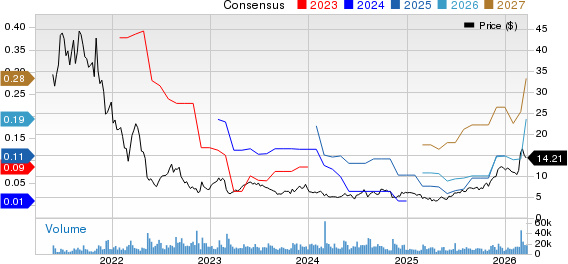
The stock has rebounded significantly since the lows.
DKI Analysis: Competing forces like AI and its tarnished reputation led to tutoring platform Chegg’s stock decline, highlighting the volatile nature of the education sector.