Nvidia’s Resilience Amid AI Competition: A Closer Look
The Nasdaq Composite index has surged in recent years, with artificial intelligence (AI) developments playing a major role in this growth. While the economy rebounds, AI advancements have been a pivotal force, streamlining tasks and boosting productivity.
Nvidia (NASDAQ: NVDA) is a prime beneficiary of this trend, having established itself as the leader in graphics processing units (GPUs) essential for running AI systems. However, recent reports indicate a Chinese start-up may be developing advanced AI systems using less capable chips and innovative training methods. Should these reports hold true, it poses a challenge for Nvidia, whose stock has skyrocketed nearly 500% in the last two years, bolstered by strong sales and impressive profits.
Where to invest $1,000 right now? Our analyst team just revealed what they believe are the 10 best stocks to buy now. See the 10 stocks »
Although the situation is worrisome, I believe Nvidia’s stock will rebound strongly once the initial fears dissipate. Here are three reasons supporting this belief.

Image source: Getty Images.
1. Scrutinizing the Details
Major tech companies are purchasing Nvidia GPUs at an unprecedented rate, with some reports suggesting that supply may be sold out for the upcoming year. These specialized chips deliver the necessary processing power for advanced AI algorithms.
However, the Chinese firm DeepSeek asserts it has achieved comparable results using less powerful processors at significantly lower costs. The start-up claims it developed its latest AI system for only $5 million, whereas competitors reportedly spend anywhere from $100 million to $1 billion. Such claims triggered a sell-off in Nvidia’s stock and many other firms involved in AI.
Yet, as Bernstein’s analyst Stacy Rasgon points out, skepticism surrounds DeepSeek’s assertions. In a note to clients, he questioned whether DeepSeek really “built OpenAI for $5M,” noting that many development costs weren’t accounted for in their pricing. Although Rasgon acknowledges DeepSeek’s system is likely cheaper than traditional options, it’s essential to view their claims with caution.
2. Comparing Apples to Oranges
Building AI capabilities in data centers, which constitute most of Nvidia’s chip sales, is largely driven by increasing demand. Most applications created are geared toward business usage.
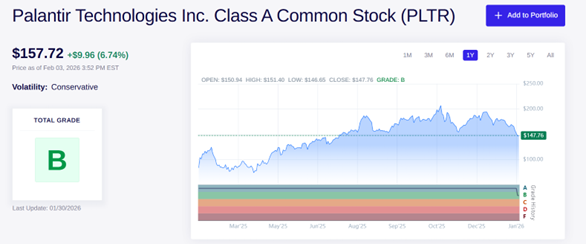
For instance, Microsoft quickly integrated AI features into its extensive software offerings, including the launch of Copilot, which enhances productivity. Similarly, Palantir Technologies has created its Artificial Intelligence Platform (AIP) to address real-world business challenges using client data. Many current applications are aimed at improving enterprise productivity.
Nonetheless, Wedbush analyst Dan Ives emphasizes that creating a competitive large language model (LLM) for consumers differs significantly from developing comprehensive AI infrastructure. He remains unconvinced that DeepSeek’s offerings will shift significant enterprise applications, stating, “No U.S. Global 2000 is going to use a Chinese start-up to launch their AI infrastructure.”
In summary, while these AI advancements merit attention, they are unlikely to disrupt the expanding adoption in the U.S. business market in the near term.
3. Nvidia’s Diverse Portfolio
It’s crucial to remember that Nvidia’s revenue predominantly stemmed from gaming graphics cards not long ago. Notably, early in 2022, gaming chip sales exceeded data center revenues. The rise of generative AI has drastically shifted this landscape and highlights Nvidia’s adaptability.
CEO Jensen Huang has skillfully guided the company through major technological transformations, such as its significant role in AI advancements. Presently, most of Nvidia’s revenue is attributed to equipping data centers for AI, but Huang is already focused on the future.
Nvidia also possesses extensive knowledge in the automotive sector, supplying both hardware and software for companies developing self-driving technology. Additionally, it boasts a comprehensive suite of applications designed to assist businesses with AI development. The company has invested extensively in communications, robotics, and drones.
Nvidia is involved in various sectors, and while its next breakthrough remains uncertain, history suggests it’s only a matter of time before it emerges.
Bonus Opportunity: Buying at a Discounted Price
After recent declines, Nvidia stock is currently available at 27 times next year’s expected earnings. This presents a chance for long-term investors to acquire shares of an innovative company with considerable growth potential—now at a reduced price.
Should You Invest $1,000 in Nvidia Right Now?
Before deciding to invest in Nvidia, consider this:
The Motley Fool Stock Advisor analysts recently highlighted the 10 best stocks for investors to consider now, and Nvidia was not included in that list. The selected stocks are expected to yield substantial returns in the years ahead.
For context, if you had invested $1,000 in Nvidia on April 15, 2005, you’d now have $725,740!*
Stock Advisor offers investors a straightforward guide to building a winning portfolio, providing ongoing analyst insights and featuring two new stock picks each month. The Stock Advisor service has significantly outperformed the S&P 500 since 2002.*
Learn more »
*Stock Advisor returns as of January 27, 2025
Danny Vena has positions in Microsoft, Nvidia, and Palantir Technologies. The Motley Fool has positions in and recommends Microsoft, Nvidia, and Palantir Technologies. The Motley Fool recommends the following options: long January 2026 $395 calls on Microsoft and short January 2026 $405 calls on Microsoft. The Motley Fool has a disclosure policy.
The views and opinions expressed herein are the views and opinions of the author and do not necessarily reflect those of Nasdaq, Inc.