The Resilience of the S&P 500: Historical Insights into Market Corrections
Editor’s Note: The stock markets are currently experiencing significant volatility due to ongoing tariff disputes. Recently, I shared the first installment of Brian Hunt’s essay, highlighting strategies for navigating downturns in the market.
This essay is vital reading. If you missed it, you can find the first part here.
In this second part, Brian Hunt points out that there have been 26 bear markets in the S&P 500 since 1928. Throughout this time, investors have faced wars, the Great Depression, and global pandemics, yet stocks have ultimately reached new all-time highs each time.
We appreciate your engagement with our leadership during this tumultuous period. Our firm remains optimistic about the U.S. markets and their potential to generate significant long-term wealth for investors who are patient and ready to seize opportunities.
Now, I’ll hand it over to Brian for further insights.
*******************
Hello, Reader.
For every challenge faced in America, there are countless innovators working to provide solutions. These individuals create groundbreaking products and services that enhance our daily lives.
Innovators have brought us essential inventions like the light bulb, television, pacemaker, airplane, and iPhone.
These creators build remarkable companies such as Starbucks, Facebook, Amazon, Whole Foods, Apple, Nike, and Google.
These enterprises not only generate jobs for millions but also offer valuable goods and services, creating immense wealth for their shareholders through innovation.
Importantly, most of these innovators operate in America. Contrary to the pessimistic views of some, renowned investor Warren Buffett asserts that America remains an outstanding place for business.
We benefit from well-established, deep, and liquid capital markets.
We adhere to rule of law and uphold rigorous accounting standards, ensuring transparency.
Innovation is actively nurtured, and property rights are respected.
Moreover, the U.S. boasts an extensive transportation network—a comparison with infrastructure in developing countries would dispel misconceptions about its quality.
The American consumer base is substantial and affluent, ready to embrace superior products and services.
The advances achieved by American entrepreneurs enable today’s average citizen to enjoy a standard of living that surpasses what royalty experienced a century ago.
Even individuals within lower income brackets have access to superior healthcare, nourishment, transportation, and information compared to those from 1919, regardless of their wealth.
In essence, free markets, innovation, and productive enterprises have driven extraordinary progress despite challenges like wars, recessions, and bear markets.
This trend has persisted for centuries and is expected to continue into the future.
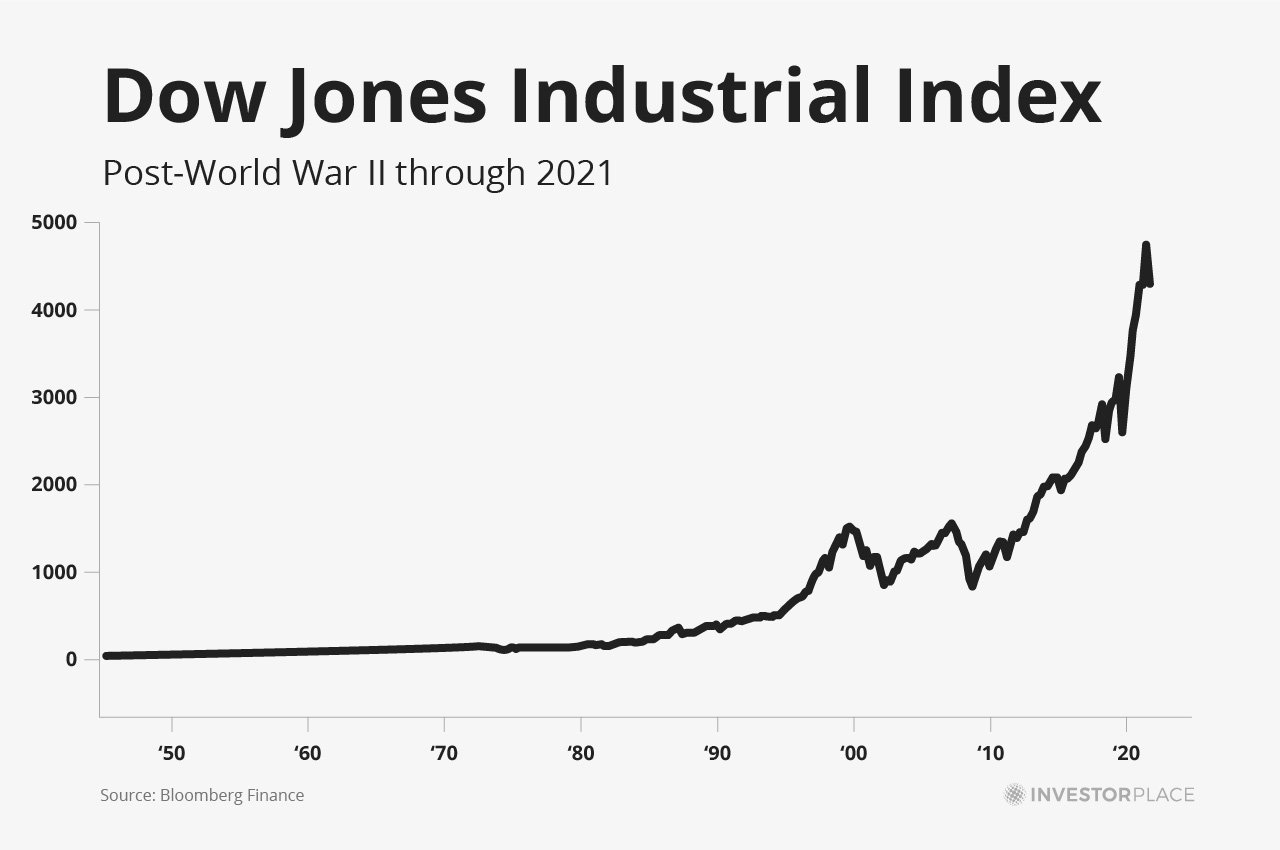
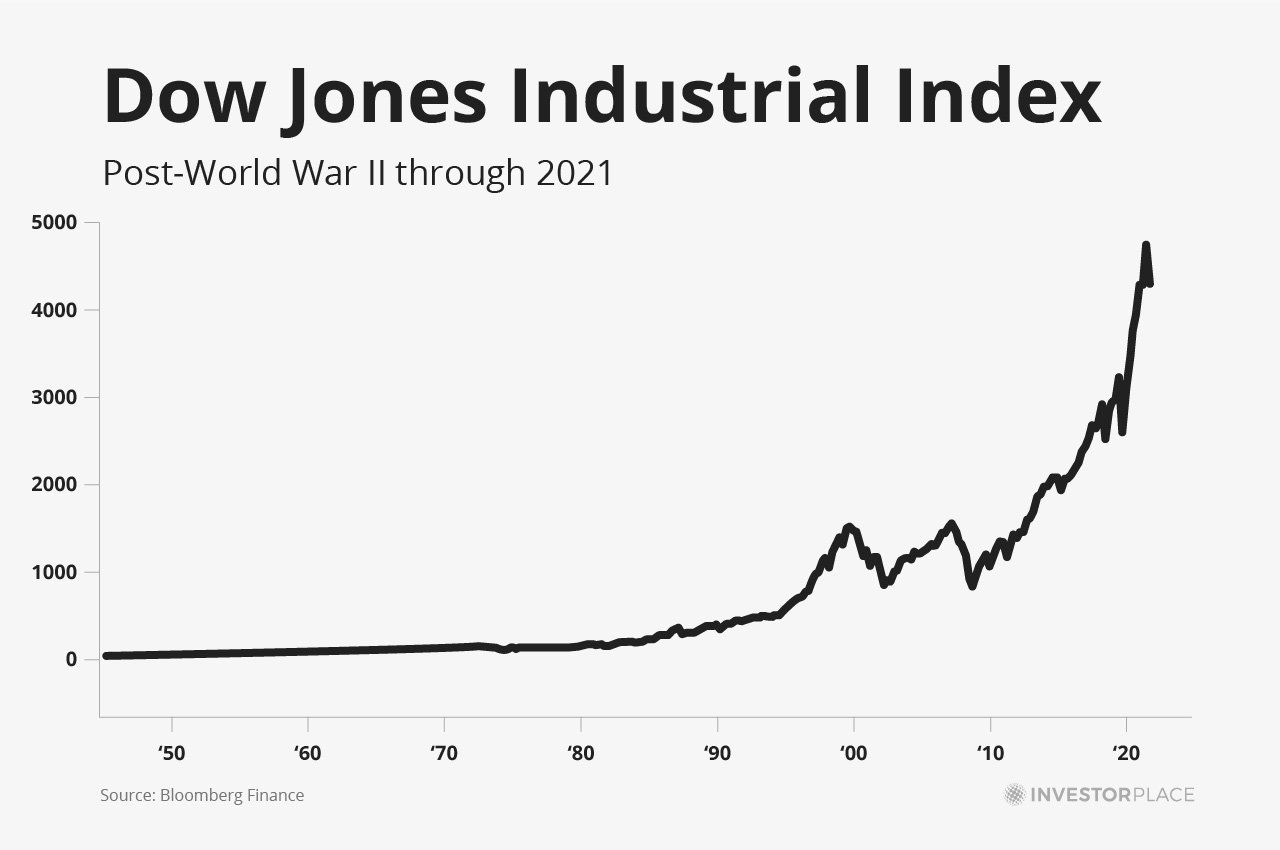
Below is a chart depicting the Dow Jones Industrial Index from post-World War II through 2021:
Incredible, isn’t it?
The stock market setbacks of 1987, 2000, and 2008 were painful but ultimately proved to be mere speed bumps in a long-term upward trajectory. The lesson is clear: over time, American prosperity rises, and the stock market follows suit.
With this perspective, my advice is to “make the trend your friend” and ignore the critics. Avoid panicking during market corrections, and resist the urge to sell quality stocks of innovative companies poised to make significant impacts.
During these corrections, I encourage you to focus on what truly matters: progress, transformative industry trends, creating value, and innovation.
History has shown us that shareholders in innovative companies that prioritize customer service have amassed considerable wealth.
This approach has proven to be the most reliable path to wealth accumulation in America for over a century. I believe it will continue to be the case for at least another century. This belief underpins our mission at InvestorPlace.
That’s why we share this essay with subscribers seeking “bear market survival” strategies.
Our approach centers on the insights mentioned above, maintaining a long-term focus, and seeking to acquire quality stocks at favorable prices.
Panic selling is not part of our “bear market survival” strategy.
I am convinced that when investors “deprogram” their fixation on market fluctuations and interest rates, and instead concentrate on history’s real indicators of success, they reach a higher level of financial understanding.
This is a crucial milestone in the journey to mastering finance.
The Next Time You’re Tempted to Panic, Look at These Eight Charts
Since 1928, the S&P 500 has experienced 26 bear markets, after which stocks have consistently reached all-time highs. The data here is unequivocal.
Today’s circumstances offer eight compelling examples showcasing why a thoughtful “bear market strategy” is essential to keep in mind, emphasizing long-term thinking and avoiding panic selling.
We believe these eight charts can counteract what we term “Short-Term-itis,” a harmful financial mindset.
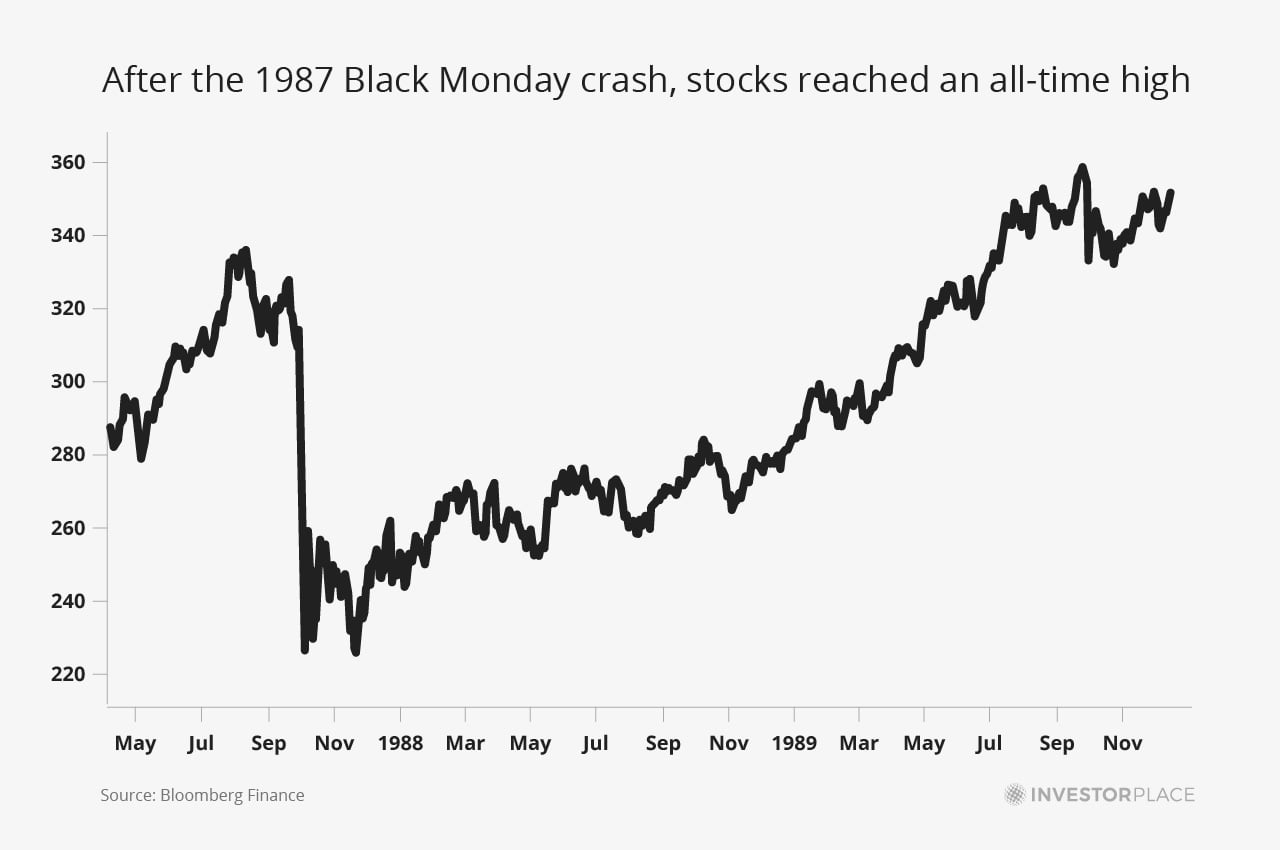
Take, for instance, the 1987 “Black Monday” crash, when the stock market plummeted 33.5% in just one day, inciting a global financial panic.
Nonetheless, less than two years later, the stock market reached an all-time high.
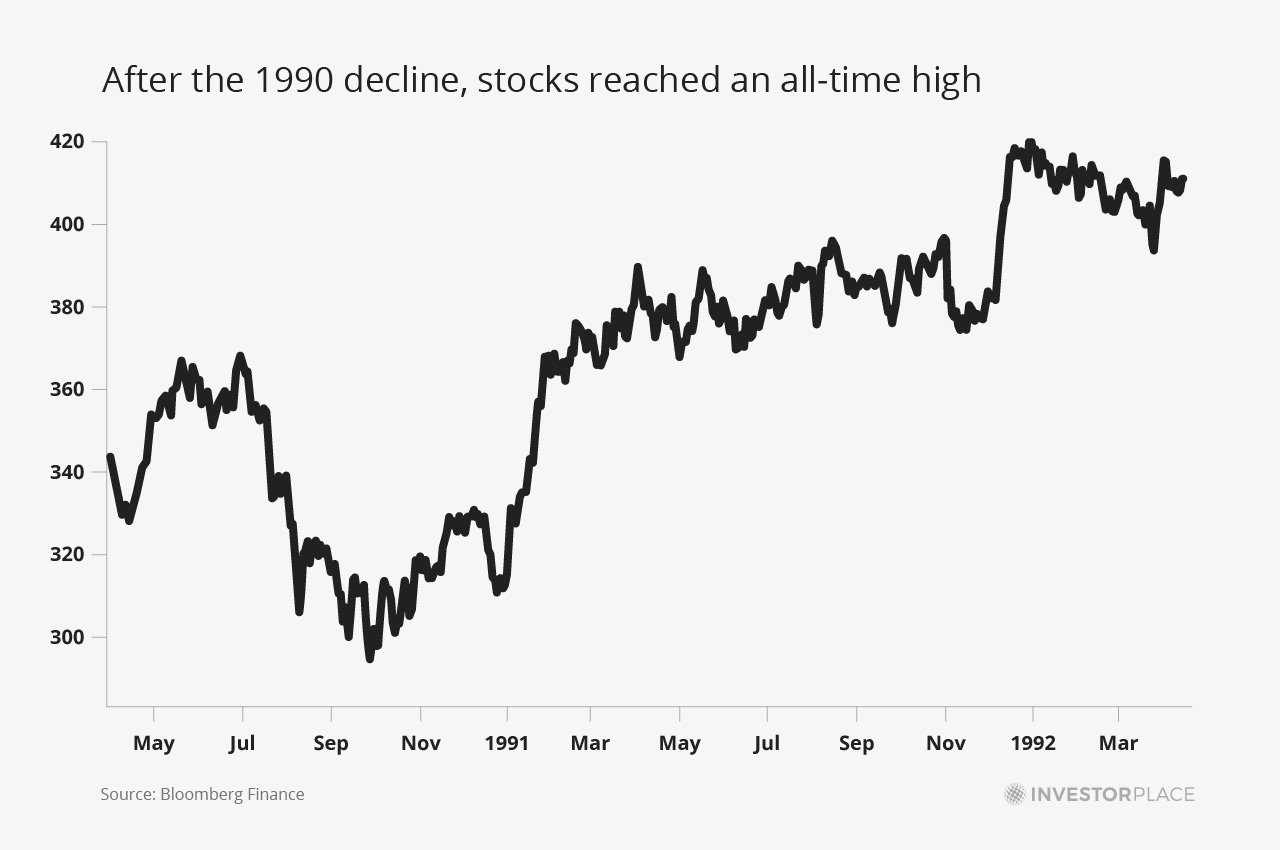
Another significant downturn occurred in 1990 due to concerns regarding a U.S. recession and the Gulf War, resulting in a 19.9% decline. However, the market rebounded and achieved a new all-time high within a year.
Historical Stock Market Recoveries: A Pattern of Resilience
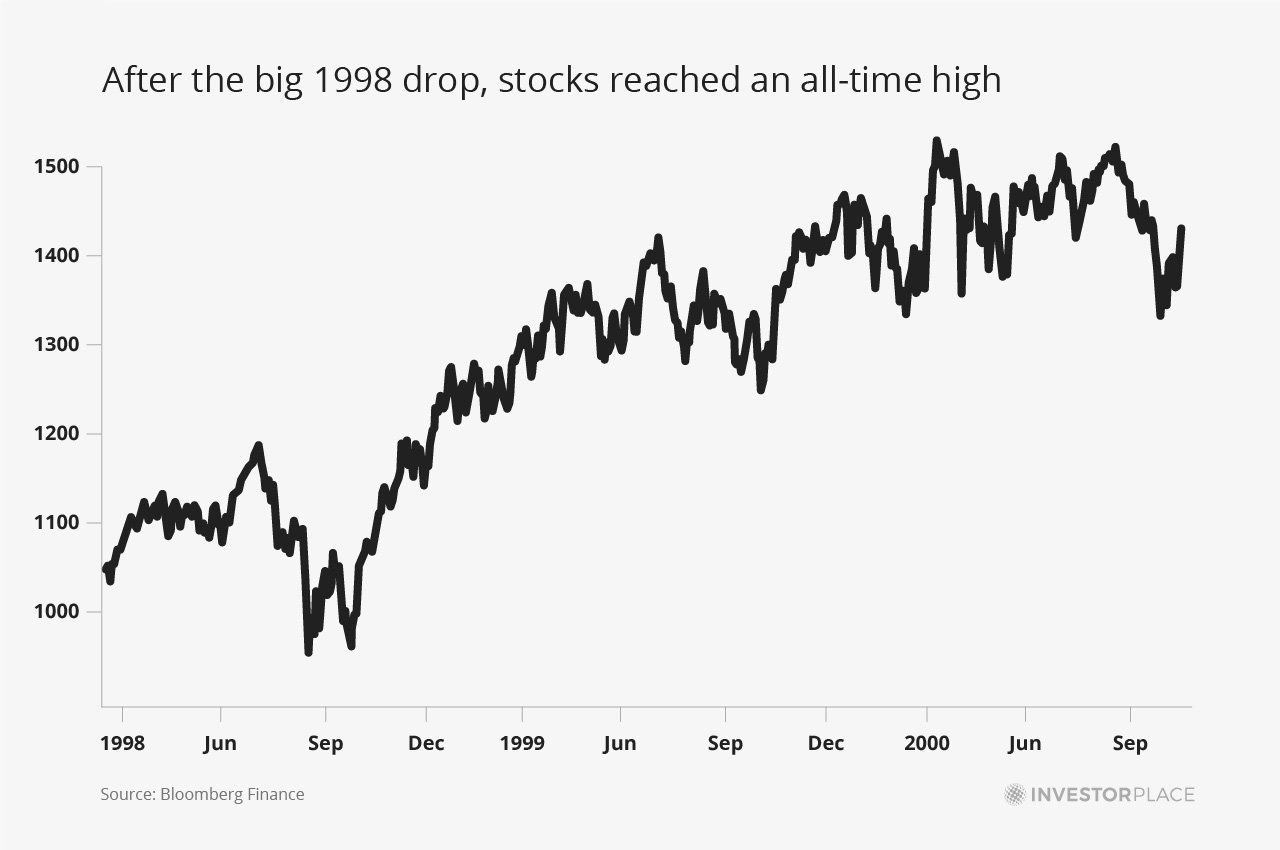
The 1998 market decline saw stocks drop by 19.3% within a few months. However, markets rebounded quickly and reached a new all-time high by early 1999.
Next was the bear market from 2000 to 2002, which followed the dot-com bubble that peaked in March 2000. This downturn was one of the worst in U.S. history but stocks ultimately recovered, reaching new highs in 2007.

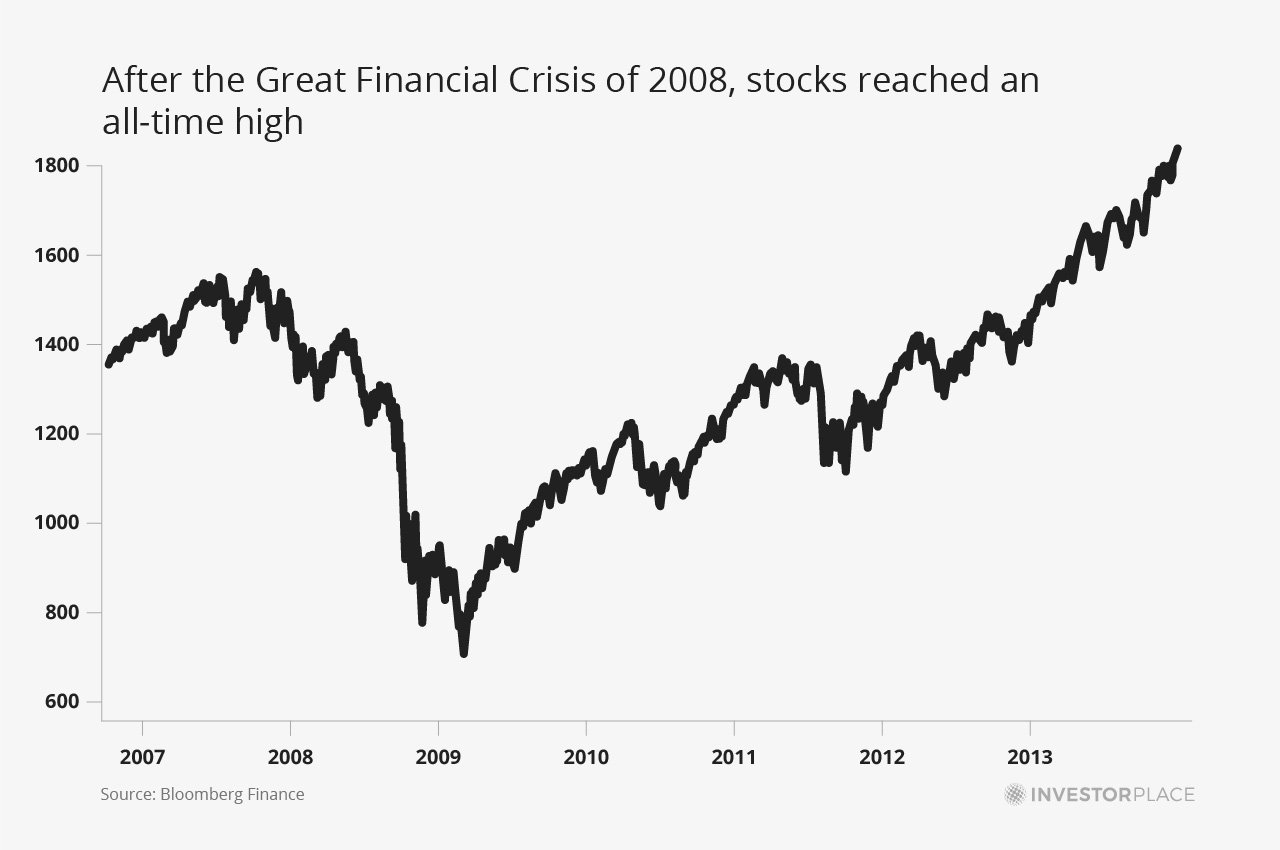
The Great Financial Crisis of 2008 also led to a sharp decline, with stocks plummeting by 56%. Nevertheless, this downturn was followed by a historic bull market that lasted for a decade, culminating in a new all-time high in 2013.
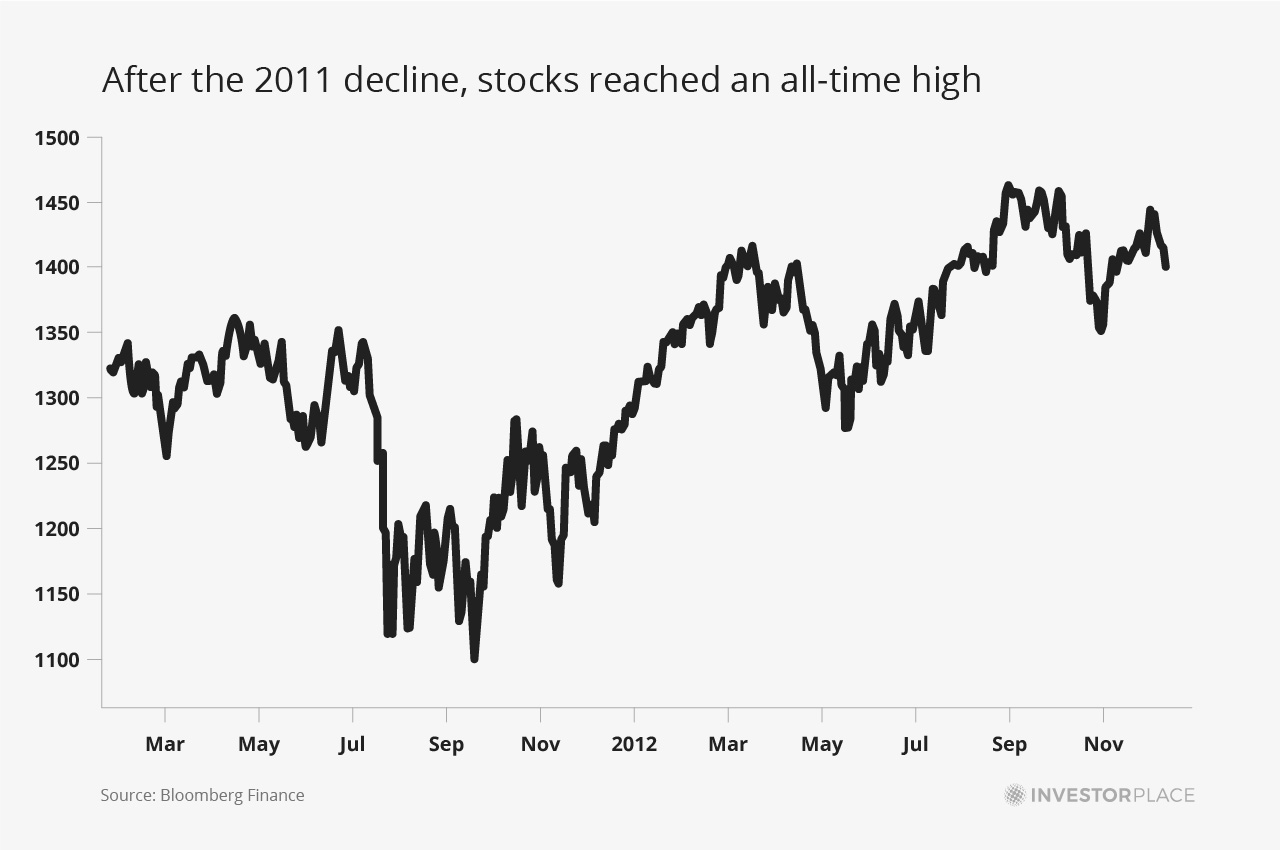
Even amidst the recovery from 2008, there was a 19% decline in late 2011, but this was quickly followed by a recovery that saw new highs by early 2012.
In 2018, a market drop of 19% occurred again, but by the summer of the subsequent year, stocks had rebounded to yet another all-time high.

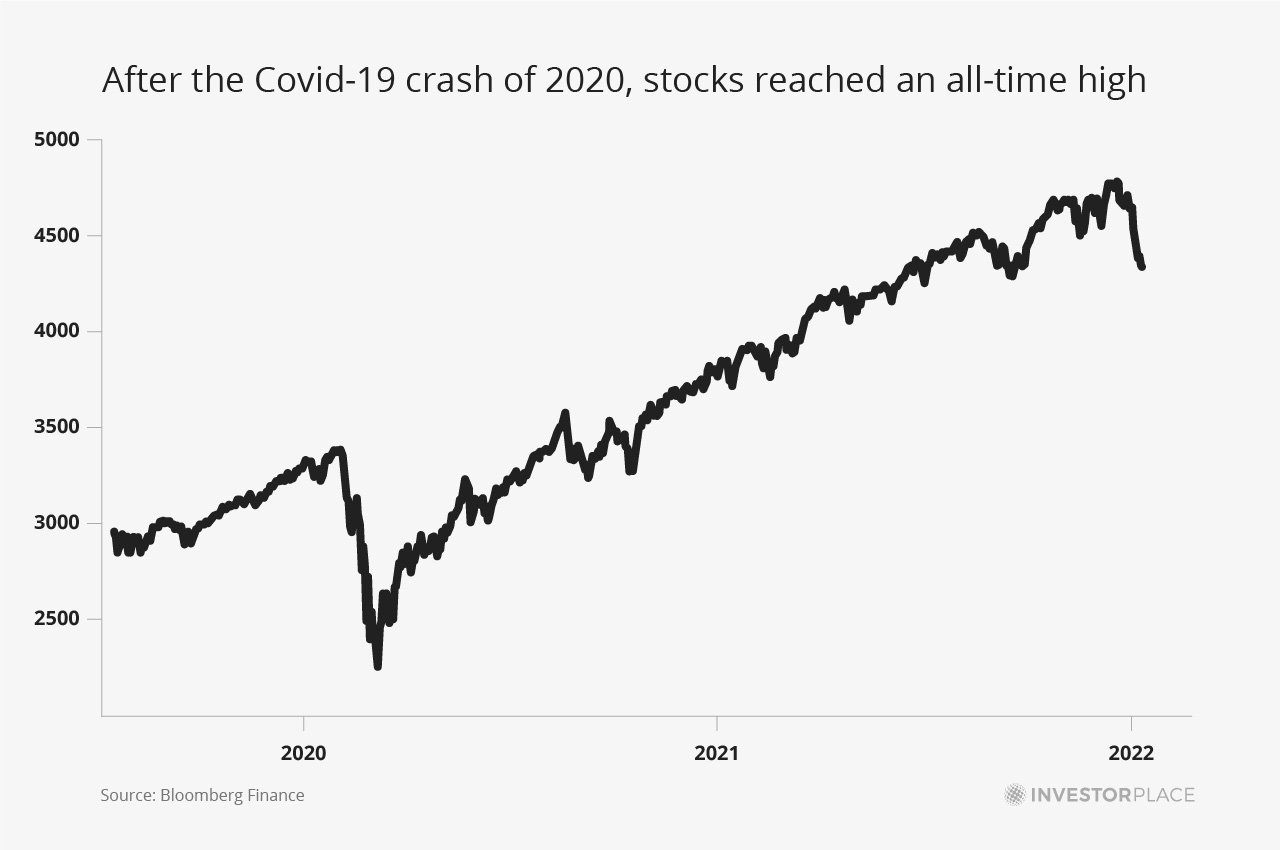
Finally, the COVID-19 pandemic triggered a rapid market drop of 53% within two months. However, thanks to government stimulus measures, the market rebounded sharply, ending 2020 at a new all-time high.
Summarizing the Market’s Resilience
The past 60 years have put the most significant financial disasters into perspective, highlighting some of history’s worst bear markets, including Black Monday in 1987, the dot-com crash of 2000, and the Great Financial Crisis of 2008.
Each of these downturns eventually led to new all-time highs, demonstrating a consistent pattern of recovery.
Every major stock market correction or crash has historically been followed by new records in market performance.
This historical trend underscores the importance of focusing on long-term progress during stock market fluctuations. Emphasizing transformational industry trends, value creation, and innovation remains vital for investors.
Shareholders in innovative companies that prioritize customer service have seen significant returns over the years.
In investment, remember the principle: it pays to believe in America’s economic potential.
A strategic “bear market survival” plan involves reviewing past events, maintaining a long-term perspective, and staying invested in stocks.
Regards,

Brian Hunt
CEO, InvestorPlace
5 Stocks Our Experts Predict Could Double In the Next Year
By submitting your email, you'll also get a free pivot & flow membership. A free daily market overview. You can unsubscribe at any time.