Tech Giants Struggle as Import Tariffs Take Their Toll
Currently, the “Magnificent Seven” tech giants are failing to deliver strong performances. This group, which includes Alphabet (NASDAQ: GOOG) (NASDAQ: GOOGL), Apple (NASDAQ: AAPL), Amazon (NASDAQ: AMZN), Meta Platforms (NASDAQ: META), Microsoft (NASDAQ: MSFT), Nvidia (NASDAQ: NVDA), and Tesla (NASDAQ: TSLA), that previously spurred market gains over the last two years is now facing significant declines.
Although these companies have not released particularly bad news, investors fear the impending effects of President Donald Trump’s new import tariffs. Recently, he unveiled a comprehensive plan to tax imports from various countries at rates higher than expected.
Where to invest $1,000 right now? Our analyst team just revealed what they believe are the 10 best stocks to buy right now. Learn More »
Investors face a dual challenge ahead: U.S. companies, including the Magnificent Seven, will likely see increased costs for the raw materials and finished goods they import. With Americans potentially cutting back on discretionary spending due to higher prices, these companies may also suffer from reduced consumer demand. The declines this year have been significant, with losses ranging from 13% for Meta to 40% for Tesla.
Given these circumstances, one must ask: is it still wise to invest in these established companies for the long haul? Let’s explore this question.

Image source: Getty Images.
Trump’s Tariff Announcement
To summarize the current tariff situation, Trump designated April 2 as “Liberation Day,” claiming his tariff proposals symbolize economic freedom for the U.S. Initially, in early March, he suggested tariffs on imports from Canada, China, and Mexico, then planned to announce the complete details a month later.
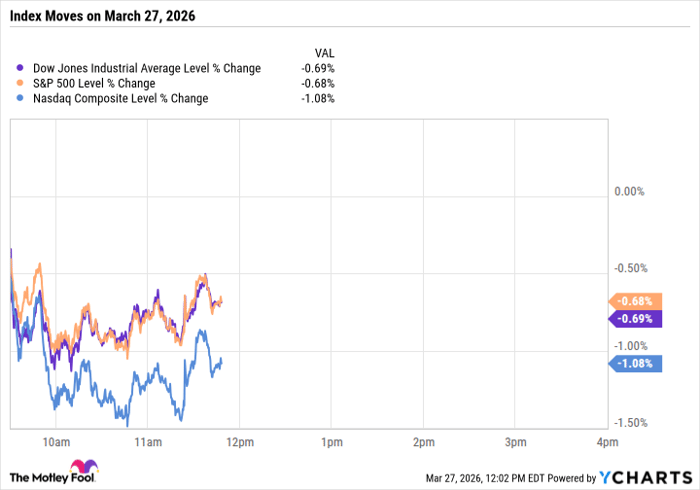
The announcement on April 2 surprised many, featuring a base tariff of 10% on all imports, with rates exceeding 20% and 30% targeting several nations, including Japan and Taiwan. Growth stocks, which thrive in robust economic environments, struggled significantly in the trading sessions that followed, causing the Nasdaq to enter a bear market with a drop over 20% from its recent high.
Now, let’s analyze the Magnificent Seven, which includes high-growth and profitable companies in varied tech sectors, such as artificial intelligence (AI), cloud computing, electric vehicles, and software. These firms are feeling the impact of the current climate for two key reasons. First, as growth-driven companies, they depend on economic strength for boosting their businesses and revenue figures. Recent forecasts suggesting that import tariffs could lead to a recession create additional challenges.
Nvidia and Import Challenges
Secondly, each member of the Magnificent Seven increasingly relies on imports. This dependence means higher costs due to the recent tariffs. For instance, Nvidia produces the majority of its chips in Taiwan, where a 32% tariff now applies. It’s crucial to note that the importer, in this case, Nvidia, is responsible for covering the tariff expenses.
Given these developments, players in the Magnificent Seven will likely experience pressure on their earnings. However, it’s important to recognize that I’m not suggesting investors sell or avoid these stocks.
Despite the challenges they may face in the coming months or quarters, these companies still represent strong long-term investments. They are established entities with significant market positions and commendable growth histories. More importantly, Trump’s tariffs will not jeopardize their long-term growth potential. For instance, the tariffs won’t block the anticipated AI revolution, which analysts expect will exceed $1 trillion in a few years. Each of the Magnificent Seven is well-positioned to benefit from this market expansion.
Riding Out Economic Turbulence
Moreover, the immediate situation might not be as dire as it appears. These companies have a track record of navigating economic headwinds, such as inflation, and may discover methods to mitigate the impact of the tariffs, possibly through cost-cutting strategies. Negotiations may also arise between the U.S. and other nations.
Crucially, valuations for each of the Magnificent Seven have declined significantly in recent weeks, allowing investors to access solid tech stocks at more appealing prices.

AAPL PE Ratio (Forward) data by YCharts. PE Ratio = price-to-earnings ratio.
The chart above illustrates that Alphabet and Meta Platforms are trading for less than 20 times their forward earnings estimates, while Nvidia is priced at about 20 times. This suggests now might be an advantageous time for investors to consider these tech giants, even if immediate rebounds take time. As a long-term investor, planning to hold these stakes for a minimum of five years will provide the firms with the time needed to navigate their current challenges and leverage their established strengths for future growth.
Ultimately, even though the Magnificent Seven don’t seem magnificent at this moment, they have the potential to shine in the future, positioning them as prudent long-term investments.
Investing in Nvidia: Considerations
Before making a purchase of Stock in Nvidia, reflect on this:
The Motley Fool Stock Advisor analyst team recently identified the 10 best stocks to buy now, and Nvidia was not included in that list. The stocks that made the cut are poised to generate significant returns in the coming years.
If you had invested $1,000 in Nvidia when it was first recommended on April 15, 2005, your investment would be worth $578,035!*
Stock Advisor offers investors a clear path to success, complete with portfolio-building guidance, regular updates from analysts, and two new Stock picks each month. The Stock Advisor service has more than quadrupled the S&P 500 returns since 2002*. Don’t miss out on the latest top 10 list, available when you join Stock Advisor.
See the 10 stocks »
*Stock Advisor returns as of April 5, 2025
John Mackey, former CEO of Whole Foods Market, is on The Motley Fool’s board. Suzanne Frey, an executive at Alphabet, is also on the board, as is Randi Zuckerberg, former Facebook market development director and sister of Meta Platforms CEO Mark Zuckerberg. Adria Cimino holds positions in Amazon and Tesla. The Motley Fool recommends and has stakes in Alphabet, Amazon, Apple, Meta Platforms, Microsoft, Nvidia, and Tesla. The Motley Fool’s options include long January 2026 $395 calls on Microsoft and short January 2026 $405 calls on Microsoft. The Motley Fool adheres to a disclosure policy.
The views and opinions expressed herein are those of the author and do not necessarily reflect those of Nasdaq, Inc.