Chase Coleman Adjusts Nvidia Holdings Amid Concerns for Datadog
For many investors, earnings season is an exciting time. During this six-week period, Wall Street’s leading companies reveal their financial performance. However, some argue that Form 13Fs filed by financial institutions provide a more insightful look into Wall Street’s operations.
No later than 45 calendar days after each quarter ends, institutional money managers managing at least $100 million in assets must file a Form 13F with the Securities and Exchange Commission. This form gives an overview of the trading activities of top money managers during the previous quarter—helping investors identify which stocks and trends are capturing the interest of successful asset managers.
Image source: Getty Images.
Warren Buffett tends to be the most widely followed asset manager. Nonetheless, Chase Coleman from Tiger Global Management also attracts significant attention. As of March 2025, he oversees nearly $26.6 billion in assets under management (AUM).
Investors watch Coleman closely because he is a growth-focused investor. His fund contains several high-growth tech stocks, including numerous artificial intelligence (AI) companies among its 45 holdings.
Chase Coleman Increases Stake in Nvidia
Significantly, Coleman increased his stake in Nvidia Nvidia (NASDAQ: NVDA) for the first time since the end of 2023. After Nvidia’s historic 10-for-1 stock split in June 2024, Tiger Global Management had 9,683,550 shares, a number that remained unchanged through 2024. However, during a volatile first quarter for tech stocks in 2025, Coleman added 1,284,000 shares, marking a roughly 13% increase.
Investors have flocked to Nvidia due to its dominance in the graphics processing unit (GPU) market for AI data centers. The company’s Hopper (H100) and new Blackwell GPU architecture supply most chips used for generative AI and large language models, making Nvidia a key player.
Despite its strong market position, Nvidia’s valuation has become more attractive as it has grown into its rising market cap. As of May 16, the company traded at 24 times forward earnings based on consensus EPS expectations for fiscal 2027. In March, its forward price-to-earnings (P/E) ratio dipped to around 19.
This decline was notable, with Nvidia’s nearly 30% drop in the first quarter being its steepest decline from an all-time high since the 2022 bear market, potentially influencing Coleman’s increased investment.
While Nvidia has delivered impressive returns, challenges remain. Increasing competition could threaten its market dominance, particularly as competitors claim parts of the AI data center space, which could impact Nvidia’s gross margins.
Historically, companies associated with groundbreaking innovations often face bubble-bursting events in their early expansion phases. Should an AI bubble burst, Nvidia would likely feel the repercussions more acutely than others.

Image source: Getty Images.
Datadog Exits Tiger Global Portfolio
While Coleman focused on increasing his Nvidia stake, he also reduced exposure to two high-growth AI stocks, including Datadog Datadog (NASDAQ: DDOG). According to Tiger Global’s 13F, all 979,400 shares, valued at nearly $140 million by the end of 2024, were sold in the first quarter.
Datadog attracted investors with its high growth rate, consistently exceeding 20%. Its platform helped manage public and private clouds, making it a favorite during the COVID-19 pandemic when remote work surged.
Furthermore, Datadog’s strategy of securing larger clients contributed to its premium valuation, particularly those generating at least $1 million in annual recurring revenue (ARR). Yet Coleman’s decision to sell likely stems from a softened growth outlook for 2025 and concerns about its valuation compared to its projected performance.
When Datadog announced its full-year outlook for 2025 in mid-February, it projected a midpoint of $3.185 billion in sales and adjusted EPS between $1.65 and $1.70. Comparatively, Wall Street anticipated EPS of $2.04 and sales of around $3.24 billion. Additionally, Datadog reported a 17% year-over-year increase in customers generating at least $1 million in ARR for 2024, falling short of investor expectations.
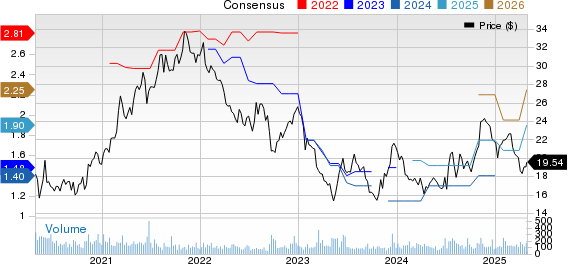
Although Datadog continues to grow, it operates at a valuation of nearly 13 times forecast sales and 69 times projected EPS for 2025, leaving little room for error.
Chase Coleman’s Tiger Global Exits Investment in Arm Holdings
Tycoon Sells Stakes Amid High Valuation Concerns
Chase Coleman, a prominent figure in the fast-paced AI stock market, has divested his investment in Arm Holdings (NASDAQ: ARM). As of March, Tiger Global Management held 300,000 shares but concluded the first quarter with none in its portfolio.
Arm’s Business Model: A Unique Approach
Arm Holdings distinguishes itself as a semiconductor company that thrives through its licensing and royalty framework. Rather than manufacturing semiconductors, Arm focuses on designing GPUs, CPUs, and system IP that major companies, like Nvidia, utilize for their own chip production. This model allows Arm to enjoy substantial profit margins with minimal recurring expenses.
This operational approach is largely insulated from economic downturns. With the rapid advancements in AI technology, the demand for energy-efficient chips is expected to provide steady business for Arm. Since the company does not produce physical chips, it avoids the fluctuations typically faced in the semiconductor sector, such as oversupply and shortages.
High Valuation Poses a Dilemma
Given its favorable positioning, one might wonder why Coleman chose to exit Arm Holdings. The answer appears to be rooted in the company’s significant valuation. As of May 16, Arm shares were trading at an astonishing 76 times the forecasted earnings per share (EPS) for 2025 and 30 times projected sales for this year. While companies with strong competitive advantages are often valued at a premium, paying 30 times projected sales may prove excessive.
Historically, no publicly traded company with a market capitalization above $100 billion has maintained a price-to-sales (P/S) ratio of 30 or more for an extended period. Previous market leaders that have experienced similar inflated ratios have ultimately seen their stock prices decline. There are no indicators suggesting that Arm will be an exception to this trend.
Conclusion
As the market for semiconductor technology continues to evolve, investors will closely watch both Arm’s performance and the implications of its high valuation. Coleman’s departure from this investment may signal cautious sentiment regarding the stock’s current pricing.
The views and opinions expressed herein are those of the author and do not necessarily reflect those of Nasdaq, Inc.
5 Stocks Our Experts Predict Could Double In the Next Year
By submitting your email, you'll also get a free pivot & flow membership. A free daily market overview. You can unsubscribe at any time.