Elon Musk Unveils Terafab Vision for Semiconductor Production
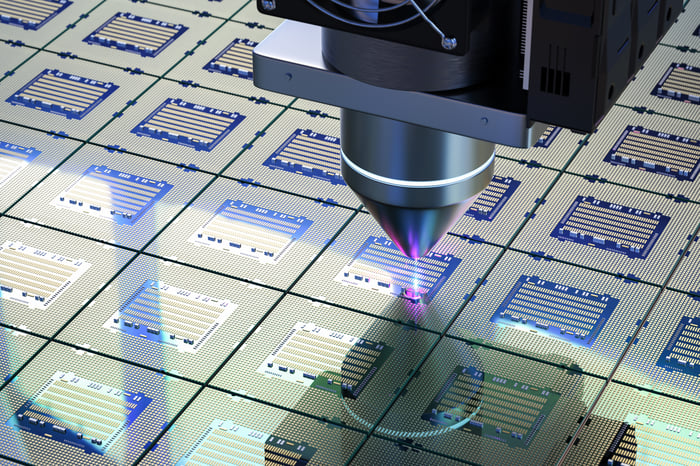
Elon Musk introduced his ambitious Terafab vision last week, aiming to produce a staggering terawatt of computing capacity annually. In contrast, the world’s current AI computing capacity is only around 20 gigawatts—about 2% of Musk’s projected needs. The Terafab initiative will primarily support Tesla and SpaceX, with the majority of chips destined for SpaceX’s ventures in space exploration and AI.
Musk’s vision includes a significant increase in chip production capabilities, targeting a need for between 10 to 100 times the chip resources needed for Tesla’s upcoming Optimus robots, expected to launch in 2027. While Tesla and SpaceX will benefit from this production, challenges in semiconductor manufacturing, including vast financial investments and technical expertise, raise questions about the feasibility of this project.
Investors are advised to exercise caution as significant capital—potentially trillions—will be required to realize the Terafab vision. Current valuations suggest that while Tesla is valued at $1.4 trillion and SpaceX at approximately $1.75 trillion, these figures barely scratch the surface of the investment needed for such an expansive manufacturing facility.
5 Stocks Our Experts Predict Could Double In the Next Year
By submitting your email, you'll also get a free pivot & flow membership. A free daily market overview. You can unsubscribe at any time.