
Positive Momentum:
- So-Young’s annual profit rebounded in the past year, reversing losses from the two previous years with a 19% revenue growth
- Revenue surge of 22.2% in the information services segment last year, driven by the new high-end service, So-Young Prime
By Edith Terry
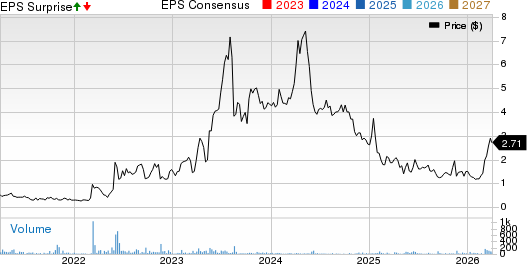
So-Young International Inc.’s SY latest quarterly results injected new life into its stock, witnessing a 4% uptick post-announcement. The minor revival, while commendable, pales in comparison to the company’s glitzy debut on the Nasdaq in 2019, fetching a whopping 20 times the current $1.08 price.
So-Young demonstrated a shift in trajectory post a string of setbacks, refocusing on elite clientele and distancing itself from smaller cosmetic surgery clinics, often under the regulatory radar. These maneuvers propelled the company back to profitability last year after two loss-making years.
The lackluster post-IPO performance coincided with Covid-19 curbs that forced many cosmetic surgery facilities to shutter or curtail operations, leading consumers to steer clear of non-essential medical procedures amid infection concerns. Regulatory scrutiny over medical aesthetics advertising from 2021 onwards exacerbated the conundrum.
The regulatory landscape tightened further, stipulating licensing prerequisites for medical aesthetics providers before promoting their services. With only 28% of industry physicians holding accreditation, just 13,000 of the 93,000 medical beauty institutions in China possess licenses, signaling substantial unmet requirements.
Celebrating the latest results reveal, So-Young CEO Jin Xing acknowledged last year’s tumult as “even more challenging” than pandemic times, attributing the company’s resilience to its distinct strategy for high-end services and products targeting sophisticated users.
Fourth-quarter revenue soared by 20% year-on-year to 390.6 million yuan ($55 million), despite a halving of net income. Notably, the full-year revenue of 1.5 billion yuan marked a 19.1% uplift from 2022, transforming the 22.2 million yuan non-GAAP net loss in 2022 into a 57.6 million yuan profit in the recent year.
Alongside the results, a $25 million share repurchase and a special cash dividend of $0.06 per American depositary share (ADS) were announced, enhancing the value proposition for So-Young shareholders. While this buoyant gesture was cushioned by a modest first-quarter revenue outlook, signaling a tepid low single-digit growth vis-a-vis the robust fourth quarter.
Jin underscored So-Young’s “strategic transformation,” including the high-end user-centric So-Young Prime platform. Launched in Q3 2022, So-Young Prime amalgamates product, doctor, and institution sources, underpinning a nascent initiative for “light aesthetics” clinics in tandem with external collaborators, hinging on a prototype clinic at So-Young’s headquarters.
Architecting Clinics:
The 20% revenue surge last year owes much to a 15.8% uptick in the information services arm, a primary beneficiary of the new So-Young Prime, per CFO Zhao Hui.
The headquarters’ model clinic, operational since August, epitomizes So-Young’s collaborative blueprint, breaking even within a brisk three months. Plans are afoot to inaugurate more than 10 akin clinics across six cities this year, envisioning a network of affiliated clinics with ongoing construction and operational facilities.
Tallying the broader partnership portfolio, So-Young orchestrated over 200,000 visits, pocketing 100 million yuan in external clinic revenues the preceding year.
A minor hiccup in So-Young’s stint was the gross margin erosion, slipping from approximately 68% in 2022 to 64% last year. The dip stemmed from slender So-Young Prime margins in its nascent stage and escalated sales of medical products and services with lower margins vis-a-vis information services.
Medical products and service sales constituted 22% of last year’s revenue, tallying 333.5 million yuan, overshadowing the 1 billion yuan information services domain. Conversely, reservation services witnessed a more than 20% downturn to 101 million yuan, attributed to heightened end-user subsidies.
The trilateral revenue sources essence elucidates So-Young’s strategic shift imperative. The company monetizes reservation services by channeling users to affiliated clinics akin to the heavily-regulated medical advertising realm.
Venturing into medical products—predominantly injectables—and establishing an in-house clinic network positions So-Young as a direct service and product dispenser, diverging from its intermediary promotional role.
The nascent progression towards a direct cosmetic service and product provider remains a work-in-progress. The luminous allure of the burgeoning sector, as younger demographics, including men, gravitate towards Botox and hyaluronic acid treatments, beckons financial viability with promising prospects.
According to So-Young’s 2019 prospectus, China’s medical aesthetic services industry swelled from 121.7 billion yuan in 2018 to a projected 360.1 billion yuan in 2023, notwithstanding the pandemic upheaval. Recent data from market peer iGengmei signals a 20% surge year-on-year, with the market siz estimating at 311.5 billion yuan in 2023.
Where does So-Young stand in contrast to its industry peers? With a price-to-earnings (P/E) ratio of 21, the company trails Yonghe Medical (2229.HK), a hair replacement pioneer, commanding a P/E of 38. In comparison, medical beauty purveyor Perfect Medical (1830.HK) trades at a meager P/E of 12.
On the right trajectory? A unanimous vote among three of four Yahoo Finance analysts who rate So-Young as a “strong buy,” with the fourth opting for a “buy.” Weathering the pandemic and regulatory turbulence, So-Young appears favorably poised to navigate the current landscape, at least in the interim.
This article is from an unpaid external contributor. It does not represent Benzinga’s reporting and has not been edited for content or accuracy.