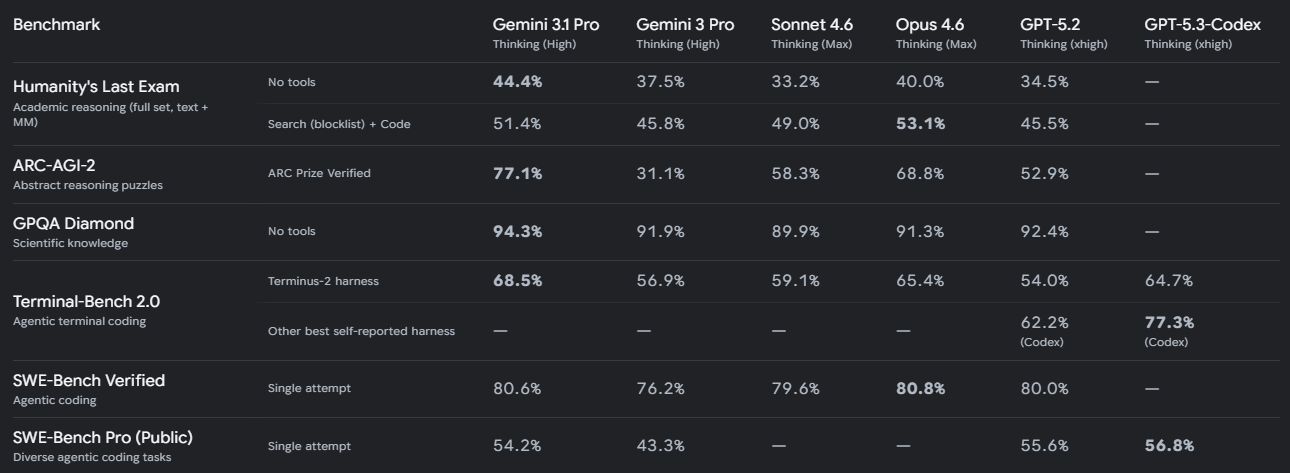
Artificial intelligence is experiencing a significant capability leap, as highlighted by Google’s Gemini 3.1 Pro benchmark data released in 2026. Key scores include 94.3% in scientific knowledge testing, 77.1% in abstract reasoning puzzles, and 14 hours of sustained productivity from AI agents in engineering tasks within just one year. This upward trend is prompting discussions among AI leaders about the likelihood of achieving artificial general intelligence (AGI) sooner than previously believed.
In 2026, hyperscaler capital expenditure is projected to reach $710 billion, driven by major tech firms like Microsoft, Alphabet, Amazon, and Meta, as they commit to building the infrastructure needed for advanced AI systems. The stock market reflects growing concerns in traditional software sectors, with the IGV software ETF down 24% this year, indicating a potential shift in how knowledge work may be performed as AI technologies evolve.
The METR data suggests that AGI could be realized within a timeframe of two years, indicating profound economic implications. As AI systems become capable of replicating knowledge worker tasks, the divide between those owning AI technology and those relying on employment may lead to significant societal changes. Investors are advised to focus on companies that are AI-native to capitalize on this transformational wave.
5 Stocks Our Experts Predict Could Double In the Next Year
By submitting your email, you'll also get a free pivot & flow membership. A free daily market overview. You can unsubscribe at any time.