
Kinder Morgan’s Earnings Report: Analysts Anticipate Positive Growth
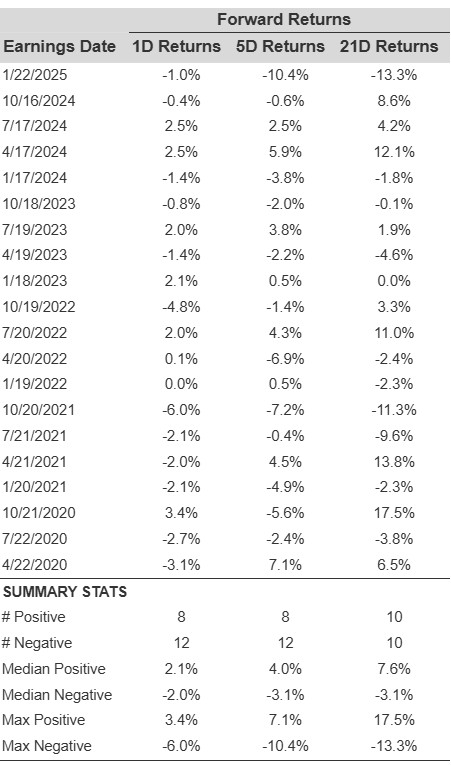
Kinder Morgan (NYSE: KMI) is a leading energy infrastructure company that specializes in the transportation and storage of natural gas, oil, CO₂, and bulk materials. The company is poised to report its fiscal first-quarter earnings on Wednesday, April 16, 2025. Analysts expect Kinder Morgan to announce earnings of $0.36 per share, generating sales of $4.02 billion. This projection indicates a 9% increase in earnings and a 5% rise in sales compared to last year’s figures of $0.33 per share and $3.83 billion, respectively. Historically, the stock has declined 60% of the time following earnings, averaging a one-day drop of 2.0% and a maximum decline of 6%.
As demand for natural gas continues to rise, driven by LNG exports, power generation, and advancements in AI, investors will carefully scrutinize Kinder Morgan’s results. The company’s current market capitalization stands at $59 billion, and revenue over the past twelve months reached $15 billion. The company reported $4.2 billion in operating profits and a net income of $2.5 billion. While much depends on the performance relative to expectations, understanding historical trends could benefit event-driven traders.
Using Historical Patterns for Trading Strategies
For event-driven traders, historical performance can provide an advantage. Strategies might involve positioning ahead of earnings releases or responding to market reactions afterwards. For those seeking lower volatility compared to individual stocks, the Trefis High-Quality portfolio could be a viable alternative, having outperformed the S&P 500 with returns exceeding 91% since its inception. See earnings reaction history of all stocks.

Image by Jim Black from Pixabay
KMI’s Historical Odds of Positive Post-Earnings Return
Insights regarding one-day (1D) post-earnings returns include:
- Over the past five years, there have been 20 earnings data points recorded, yielding 8 positive and 12 negative one-day returns, summing to a 40% likelihood of positive returns.
- This chance rises to 50% when examining the last three years.
- The median of the 8 positive returns is 2.1%, whereas the median of the 12 negative returns is -2.0%.
Additional data regarding the observed 5-Day (5D) and 21-Day (21D) returns following earnings can be found summarized in the table below.
Correlation Between 1D, 5D, and 21D Historical Returns
A strategic approach is to analyze the correlation between short-term and medium-term returns following earnings. Finding pairs with the highest correlation can guide trading decisions. For instance, if the correlation between 1D and 5D returns is robust, a trader might choose to go “long” for five days following a positive 1D return. Here is some correlation data based on both 5-year and recent 3-year histories. The correlation 1D_5D represents the relationship between 1D post-earnings returns and subsequent 5D returns.

KMI Correlation Between 1D, 5D and 21D Historical Returns
Discover more about the Trefis RV strategy, which has outperformed its all-cap stocks benchmark, combining the S&P 500, S&P mid-cap, and Russell 2000 to yield considerable returns for investors.
Invest with Trefis Market-Beating Portfolios
See all Trefis Price Estimates
The views and opinions expressed herein are those of the author and do not necessarily reflect those of Nasdaq, Inc.