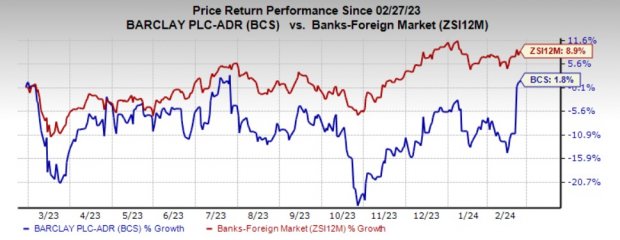
Barclays Plc, a titan in the banking realm, has found itself ensnared in a legal quagmire. The company faces a proposed class-action suit from shareholders, accusing it of securities fraud in connection with the sale of unregistered debt that surpassed regulatory limits. This misstep in the financial dance of regulation has drawn the unwanted attention of the Securities and Exchange Commission (“SEC”).
In a sweep of dramatic accusations, shareholders have pointed fingers at Barclays for failing to disclose internal control failures. This lapse birthed five years of unregistered securities sales totaling a staggering $17.7 billion. U.S. District Judge Katherine Polk Failla in Manhattan has validated the shareholders’ contentions, allowing them to move forward with allegations of executive negligence in reassuring investors about the bank’s adherence to securities laws.
The roots of this issue date back to 2022, when Barclays shelled out a hefty $361 million to settle civil claims with the SEC. A financial shower that did little to shield the company from the looming storm. Shareholders, representing buyers of the company’s American Depositary Receipts between February 2021 and February 2023, claimed that the unregistered sales dealt a blow to the stock price.
As the melodrama unfolds, Barclays admitted in March 2022 to bracing for a £450 million hit for issuing structured products beyond its registered limits. The bank spilled the beans that it had registered with U.S. regulators for the sale of investment products totaling up to $20.8 billion in August 2019, yet proceeded to unleash products worth a colossal $36 billion. A reckless wallflower in the financial ballroom, Barclays incrementally increased the overissued amount by an additional $2.4 billion in July.
In a bid to pick up the pieces, Barclays extended an olive branch by offering to repurchase the excess securities. By July 28, 2022, the company had earmarked £1.59 billion to address the over-issuance, seeking to ameliorate the consequences of its financial faux pas.
The repercussions loomed large as investors descended to claim their piece of the pie, with submissions covering securities worth $7 billion pouring in by September 15, 2022.
A Wider Net: Legal Woes Tangle Other Financial Giants
Barclays isn’t the sole dancer stepping on toes in the financial sphere. A symphony of sorrow echoed as five customers wrangled JPMorgan in a class-action lawsuit. Accusing the bank of charging exorbitant fees for checks that bounced due to no fault of their own. The discord erupted in a White Plains federal court, as customers decried JPMorgan’s predatory practices, terming their fees for returned checks as “junk fees.”
Meanwhile, across the financial landscape, HSBC Holdings plc found itself entangled in its own web of missteps. The Bank of England dealt a hefty blow, slapping HSBC with a £57.4 million fine for “serious failings” from 2015 to 2022 in safeguarding customer deposits. A stern rebuke that placed HSBC in the ignoble position of enduring the second-largest fine ever imposed by the regulatory body.
BoE’s Prudential Regulation Authority chimed in, admonishing HSBC for its failure to accurately identify deposits eligible for Britain’s Financial Services Compensation Scheme, designed to protect customer bank accounts up to £85,000. A lapse of such magnitude that the echoes of regulatory disapproval are bound to reverberate through the banking sector for years to come.
7 Best Stocks for the Next 30 Days
Just released: Experts distill 7 elite stocks from the current list of 220 Zacks Rank #1 Strong Buys. They deem these tickers “Most Likely for Early Price Pops.”
Since 1988, the full list has beaten the market more than 2X over with an average gain of +24.0% per year. So be sure to give these hand-picked 7 your immediate attention.
JPMorgan Chase & Co. (JPM) : Free Stock Analysis Report
Barclays PLC (BCS) : Free Stock Analysis Report
HSBC Holdings plc (HSBC) : Free Stock Analysis Report