High Yield Discovery
Amidst the trading frenzy last Friday, Bridgewater Bancshares Inc’s 5.875% Dep Shares Non Cumul Preferred Stock Ser A (Symbol: BWBBP) caught the eye of seasoned investors as its yield soared over the 8% benchmark. This yield was calculated based on a quarterly dividend, annualized to a tantalizing $1.4688. Shares were seen changing hands for as low as $17.11, painting a picture of opportunity for those with a keen eye for value.
Comparative Insights
Delving deeper into the numbers, these figures are especially compelling when viewed against the backdrop of the “Credit Services & Lending” preferred stock category. According to Preferred Stock Channel, the average yield in this category stood at 8.28%, slightly edging out BWBBP. Furthermore, as of the last close, BWBBP was trading at an intriguing 26.28% discount to its liquidation preference amount, a stark contrast to the 18.74% average discount seen in the same category.
Cautionary Notes
It’s essential for investors to keep in mind that BWBBP shares are non-cumulative. This means that in the unfortunate event of a missed payment, the company is not obligated to clear the backlog of missed dividends before reverting to common shareholders. The allure of high yields must be balanced with a prudent assessment of associated risks.
Historical Analysis
Casting a glance at the dividend history chart for BWBBP, one can witness the ebbs and flows of historical dividend payments. This visual aid provides valuable context when evaluating the current buzz around Bridgewater Bancshares Inc’s preferred stock.


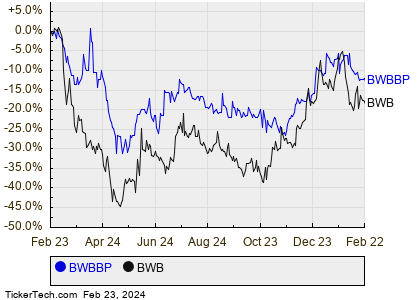
In Friday’s trading session, while the preferred stock BWBBP saw a marginal decline of about 0.9%, its common counterpart (Symbol: BWB) enjoyed a modest uptick of around 1.1%. This interplay between the two classes of shares hints at the complex dynamics at play within Bridgewater Bancshares Inc.
 Click here to find out the 50 highest yielding preferreds »
Also see:
Top Stocks Held By Chase Coleman
SVV Insider Buying
Funds Holding SPUS
The views and opinions expressed herein are the views and opinions of the author and do not necessarily reflect those of Nasdaq, Inc.
5 Stocks Our Experts Predict Could Double In the Next Year
By submitting your email, you'll also get a free pivot & flow membership. A free daily market overview. You can unsubscribe at any time.