Bristol Myers Squibb BMY and its partner 2seventy bio, Inc. TSVT, will face a monumental moment as the FDA convenes a virtual meeting of the Oncologic Drugs Advisory Committee (“ODAC”) to review data supporting the supplemental biologics license application (sBLA) for Abecma (idecabtagene vicleucel).
The sBLA aims to expand the label of Abecma for triple-class exposed relapsed or refractory multiple myeloma (RRMM) based on the results from the pivotal phase III KarMMa-3 study. The foremost players in the pharmaceutical industry anticipate that the ODAC will scrutinize data related to the secondary endpoint of overall survival (OS) from the study.
A Landmark Achievement
Abecma is a chimeric antigen receptor (CAR) T-cell therapy already indicated for adult patients with triple-class exposed RRMM after four or more prior lines of treatment, including an immunomodulatory agent, a proteasome inhibitor, and an anti-CD38 monoclonal antibody. BMY and TSVT, in unison, are developing and commercializing Abecma in the United States.
The KarMMa-3 study successfully met its primary endpoint, manifesting a statistically significant improvement in progression-free survival (PFS) compared with standard regimens. It significantly reduced the risk of disease progression or death versus standard regimens in patients with triple-class exposed RRMM.
The compelling final PFS data and interim OS data from the KarMMa-3 study were unveiled at the 2023 American Society of Hematology Annual Meeting and Exposition in December 2023.
In light of the FDA’s inability to deliver a decision on the sBLA for Abecma by the original target date of December 16, 2023, the regulatory body scheduled the ODAC meeting to review data supporting the sBLA for Abecma. What could this mean for Bristol Myers Squibb’s future?
International Recognition
This CAR T-cell therapy recently secured approval in Japan for patients with RRMM who have undergone at least two prior therapies, including an immunomodulatory agent, a proteasome inhibitor, and an anti-CD38 antibody, grounded in the KarMMa-3 study. Abecma struck gold by becoming the pioneering CAR T-cell therapy given the regulatory nod for use in earlier lines of therapy for patients with relapsed and refractory multiple myeloma.
The Committee for Medicinal Products for Human Use of the European Medicines Agency (“EMA”) also recommended Abecma’s approval for patients with triple-class exposed, relapsed, and refractory multiple myeloma after at least two prior therapies.
Not only that, regulatory applications for Abecma for this patient population remain under thoughtful review with the EMA and Swissmedic.
Challenges in the Industry
The shares of BMY have seen a 20.7% decrease in the past six months in comparison with no change for the industry.
It is essential to remember that the FDA recently directed Gilead Sciences, Inc., Johnson & Johnson, and Novartis NVS to add a “boxed warning” to the labels of their T-cell immunotherapies, per Reuters. The regulatory body sent letters to these entities, elucidating its identification of adverse events and clinical trial reports describing T-cell malignancies.
The FDA’s investigation ensued following reports received by the agency of T-cell malignancies in patients who had received treatment with BCMA- or CD19-directed autologous CAR T-cell immunotherapies. These cases not only resulted in the hospitalization of patients but also, in certain instances, led to fatalities as well.
To grasp the gravity of the situation, it is pivotal to appreciate that the agency has ascertained that the risk of T-cell malignancies is pertinent to all currently approved BCMA-directed and CD19-directed genetically modified autologous CAR T-cell immunotherapies, inclusive of Abecma and BMY’s Breyanzi (lisocabtagene maraleucel).
Reassurance Amidst Concerns
In response, Novartis declared that it would update the prescribing information for its CAR-T cell therapy, Kymriah, to encompass instances of T-cell malignancies occurring after treatment with Kymriah. Regardless, Novartis remains resolute in its confidence about the therapy’s profile and has not identified a causal relationship between Kymriah and secondary T-cell malignancies.
Opportunities and Potential
The stock of BMY holds a Zacks Rank #3 (Hold). A superior-ranked stock in the biotech domain at present is Puma Biotechnology, Inc. PBYI, which currently flaunts a Zacks Rank #1 (Strong Buy). A strategic consideration awaits, adding depth to the investor’s portflio.
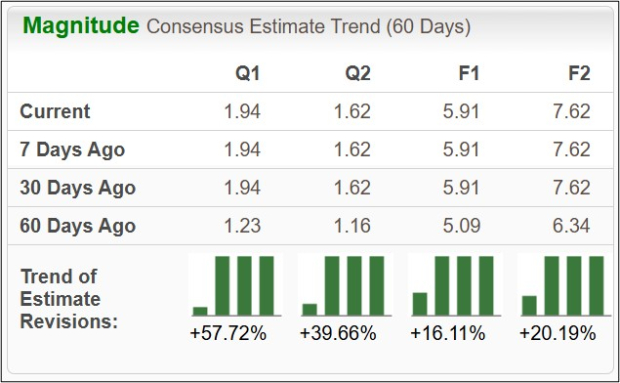
In the past 30 days, the Zacks Consensus Estimate for Puma Biotech’s 2023 earnings per share (EPS) has sustained constancy at 73 cents. Over the same time frame, the consensus estimate for Puma Biotech’s 2024 EPS has remained steady at 69 cents. Susbtantial gains have accompanied PBYI’s trajectory with a 2.5% rise in its shares over the past year.
PBYI has outperformed estimates in three of the last four quarters while falling short on one occasion, delivering a vigorous four-quarter average earnings surprise of 76.55%.
Final Recommendations
7 Best Stocks for the Next 30 Days
Just released: Experts distill 7 elite stocks from the current list of 220 Zacks Rank #1 Strong Buys. They deem these tickers “Most Likely for Early Price Pops.”
Novartis AG (NVS) : Free Stock Analysis Report
Bristol Myers Squibb Company (BMY) : Free Stock Analysis Report
Puma Biotechnology, Inc. (PBYI) : Free Stock Analysis Report
2seventy bio, Inc. (TSVT) : Free Stock Analysis Report
To read this article on Zacks.com click here.
The views and opinions expressed herein are the views and opinions of the author and do not necessarily reflect those of Nasdaq, Inc.