**Microsoft Reports Q2 Fiscal 2026 Earnings Amid Capital Expenditure Concerns**
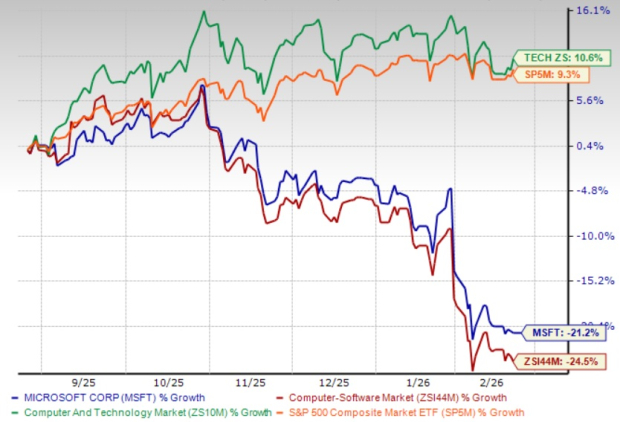
Microsoft’s fiscal second-quarter earnings for 2026, ending December 31, 2025, showed a revenue increase to $81.3 billion, a 17% rise compared to the previous year. Operating income also rose to $38.3 billion, up 21%, while Microsoft Cloud revenues exceeded $50 billion for the first time, driven by a 39% growth in Azure and other cloud services. However, the company’s stock dropped nearly 5% in after-hours trading, primarily due to its capital expenditure (capex) reaching $37.5 billion, a 66% increase year-over-year and above market expectations.
In the first half of fiscal 2026, Microsoft has spent $72.4 billion on capex, indicating a potential trajectory toward $100 billion in annual infrastructure investments. Two-thirds of the second-quarter capex went to short-lived assets like GPUs and CPUs. The commercial remaining performance obligation stands at $625 billion, with 45% linked to OpenAI commitments, highlighting future revenue potential but raising concerns about ongoing infrastructure costs.
Similar capital expenditure challenges are faced by Amazon, projecting about $200 billion for 2026, and Alphabet, forecasting $175-185 billion. Both companies are under investor scrutiny regarding whether their hefty infrastructure investments will yield corresponding returns amid tightening profit margins.