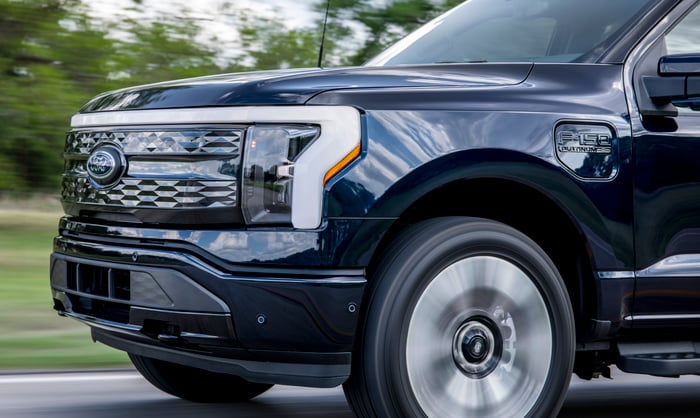
Ford Motor Company (NYSE: F) has announced plans to transition its all-electric F-150 Lightning truck into an extended-range electric vehicle (EREV), citing the need for a more economical approach amid major electric vehicle (EV) strategy adjustments. This decision, made against the backdrop of a $19.5 billion charge that led to an $11.1 billion net loss in the fourth quarter, reflects a necessity rather than a major strategic shift.
The EREV design allows for smaller, less costly batteries—which can potentially save around $6,000 in production costs compared to full EVs—by using a combustion engine solely to charge the battery when depleted. While some automakers have criticized EREVs as costly and complex, Ford intends to use this model to sustain its offerings until it unveils its Universal EV Platform with a new midsize EV truck in 2027, as it navigates a challenging transition to full electrification.
Ford’s full EV lineup currently consists of only three core products: the Mustang Mach-E, the former F-150 Lightning, and the E-Transit commercial van. The strategic move to EREVs may be seen as a temporary measure, designed to revitalize the F-150 Lightning brand in the short term while the company prepares for a more sustainable elétric future.