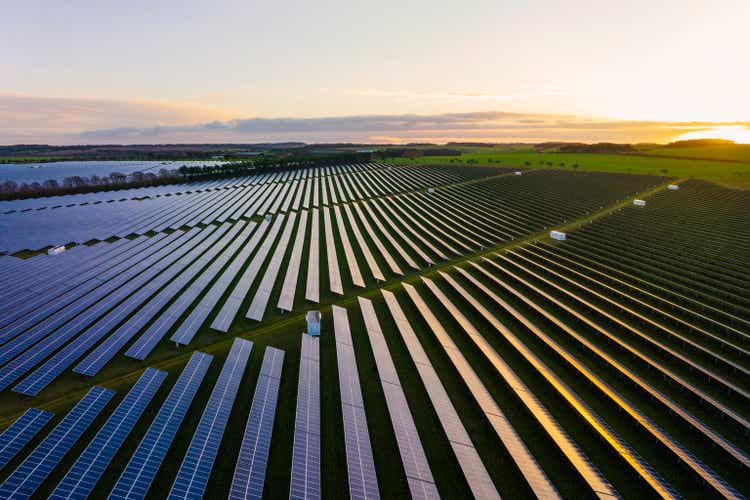
First Solar, Inc. (NASDAQ:FSLR) sets itself apart as the sole U.S.-based company among the top 10 solar manufacturers, shunning production in China, and is navigating a landscape of tariffs imposed on Chinese solar imports by the United States.
Although China is the global leader in solar product output, tariffs have limited its share of US module imports to under 0.1%, as indicated by the Solar Market Insight Report Q4 2023 by SEIA.
The company boasts a robust contracted backlog of 81.8 GW extending through 2030, amounting to a substantial $23 billion in aggregate value.
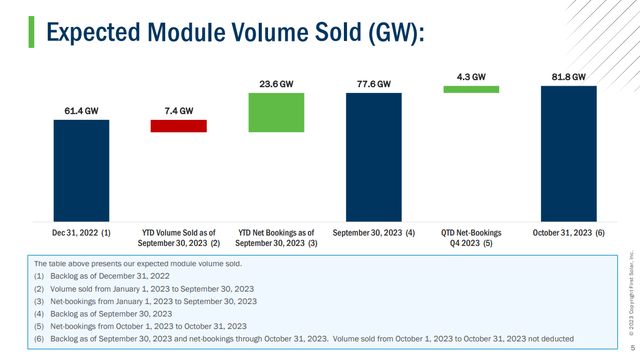
This backlog puts the company’s net sales guidance of $3.4 billion to $3.6 billion and 2023 volume sold guidance of 11.8 GW to 12.3 GW into perspective.
Crucially, the company’s fortunes are intricately tied to the Inflation Reduction Act (IRA), passed into law in August of 2022, which has underpinned a surge in demand.
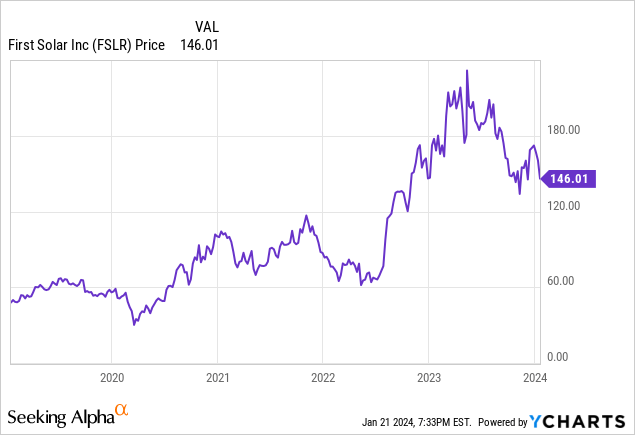
This surge has been crucial, especially in the face of rising interest rates, and continues to heavily influence First Solar’s stock performance in 2024.
The IRA is, in fact, responsible for unlocking significant benefits for First Solar, particularly on the supply side. This includes an estimated IRA credit of $0.17 per watt for each module produced in the U.S. and sold to a third party in Q3 2023.
Notably, the company booked $155 million of these credits in Q2 2023 and $205 million in Q3 2023, far surpassing its operating income for the same periods.
As these credits diminish the cost of sales, First Solar’s gross margins have seen a substantial uptick post the IRA’s enactment, leading to stronger profits in recent quarters.
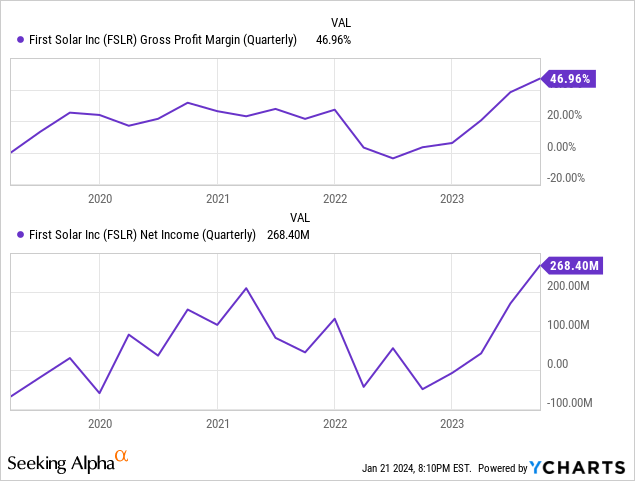
Looking ahead to 2023, the IRA is expected to continue fueling operating income, with a section 45X tax credit guidance of $670 million to $700 million, and an operating income projection of $770 million to $870 million, along with an EPS range of $7.20 to $8.
But the IRA’s impact isn’t limited to supply. It has also spurred a surge in demand for First Solar, further bolstering its backlog.
Outlook
The IRA’s effect has been pivotal in the face of waning inflation. With expectations of interest rates normalizing, solar utility demand stands to gain significantly.
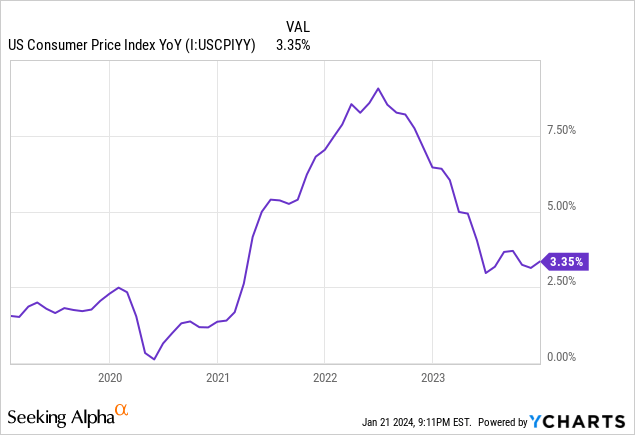
A potential decrease in interest rates could further buoy solar utility demand.
However, in the near term, First Solar’s production demand is unlikely to see significant gains, given the company’s sold-out status through 2026.
The upcoming election’s impact on the IRA is what truly matters for the stock. Analysts like Jeffrey Osborne of TD Cowen underscore the pivotal nature of the election, with the IRA lending both demand and supply of renewables. The sentiment closely aligns with the outcome of the election and its potential impact on the IRA, particularly for First Solar.
A Democratic victory would likely reinforce the IRA, while Republican success would pose a threat to the future of the act, particularly its solar benefits.
First Solar: Navigating Political Uncertainty and Market Speculation
The IRA and Its Impact on First Solar
Recent discussions among Republicans regarding potential changes to the Inflation Reduction Act (IRA) have stirred speculation about its effect on the solar industry, particularly on companies like First Solar. The prospect of narrowing down specific aspects of the IRA has injected an air of uncertainty into the market, leaving investors and analysts pondering the potential ramifications for the solar sector.
Market Speculation and First Solar’s Outlook
First Solar, despite enjoying a protective backlog, faces the challenge of an anticipated surplus in production output from 2026 through 2031. The looming election cycle further complicates matters, as market sentiments are likely to fluctuate based on the perceived impact of electoral outcomes on First Solar’s stock performance. It’s evident that the company’s future value is closely entwined with the unpredictable political landscape.

The Impending Expiration of Solar Benefits
Analysts’ projections have painted a sobering picture of First Solar’s earnings per share (EPS), with a concerning anticipated decline to $8.43 per share in 2032 from an expected $31.92 per share in the prior year. The impending expiration of solar benefits under the IRA calls for a recalibration of expectations, putting additional strain on the company’s financial outlook.
Market Resilience and Investment Prospects
Despite these challenges, the market appears relatively unfazed by the natural phase-out of the IRA’s solar benefits. Instead, the spotlight is firmly fixed on the swirling tide of election-related speculations. First Solar’s robust balance sheet, boasting a net cash balance of $1.3 billion as of Q3 2023, suggests a degree of resilience amid the prevailing uncertainty.
Analysts’ Projections and Prospective Investment
Looking ahead, analysts’ forward-looking price-to-earnings ratio (PE) for 2024 stands at 11.14, with an average EPS estimate of $13.10. Projections point to a potential rise in EPS to $21.05 in 2025 and a further increase to $30.85 in 2026. If these estimates materialize, it could present an attractive investment opportunity for discerning investors eyeing long-term growth potential.
Uncertain Terrain and Investment Recommendation
However, the uncertainty surrounding the impact of potential changes to the IRA precipitates caution. Given the pivotal role the IRA plays in shaping First Solar’s profits, the company’s stock is likely to sway in response to election-related developments. Consequently, it’s prudent to approach First Solar with a ‘Hold’ recommendation until the political fog begins to dissipate.
Strategic Portfolio Considerations
For those considering its inclusion in a portfolio, owning First Solar alongside innovative market stalwarts akin to the “Magnificent Seven” may enhance the potential to capitalize on groundbreaking advancements within the industry.
The Specter of Tariff Changes
Conversely, an additional specter that looms over First Solar’s horizon pertains to the hypothetical scenario of the U.S. government lifting tariffs on Chinese solar imports. While this prospect appears remote given the prevailing political climate, the potential impact remains a factor deserving of attention and vigilance.
5 Stocks Our Experts Predict Could Double In the Next Year
By submitting your email, you'll also get a free pivot & flow membership. A free daily market overview. You can unsubscribe at any time.