
NurPhoto/NurPhoto via Getty Images
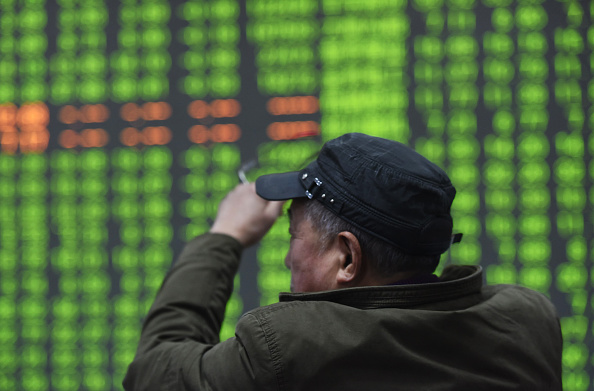
Amidst a tumultuous market, global hedge funds turned their sights to China last month, finding an unexpected silver lining in the battered Chinese equities. In January, amidst a broader rise in returns, hedge funds reaped a gain of 1.2%. Notably, there was a significant uptick in “net buying of Chinese equities (NYSEARCA:FXI) (NASDAQ:MCHI) (NYSEARCA:ASHR), a reversal of the trend of much of last year, even amid China markets posting losses,” noted Goldman Sachs’ global banking and markets team in a report.
The Shanghai Composite (SHCOMP) plummeted by 6% in January, marking a sharp decline after a staggering loss of over 11% in 2023.
Goldman Sachs observed, “On a global basis, all strategies posted a positive month of performance in January, with fundamental equity L/S and systematic managers leading the pack. Our factor model suggests that fundamental L/S performance was driven by alpha both on the long and short side, after several months of negative short side alpha.”
Furthermore, they added, “Systematic macro managers and CTAs also outperformed other strategies, benefitting from equity longs and commodity positions. Though generally positive, performance was mixed across other strategies including credit, event-driven, and discretionary macro.”
A regional disparity was evident as “Americas managers posted stronger gains than Europe and Asia,” reflecting a localized variation in the market dynamics.
Goldman Sachs concluded, “January continued the positive momentum, albeit in lesser magnitude. While large-cap US equities (SPY) (IVV) (VOO) (QQQ) (DIA) experienced an upswing, returns continued to be driven largely by a handful of mega-cap stocks, a similar dynamic to much of last year, and small/mid-cap stocks (IJR) (IJH) struggled, with the Russell 2000 (IWM) down by 3.9%.”
In the face of this complexity, “Corporate earnings were bifurcated, with some sectors up double digits and others down the same. While bond returns were essentially flat, rates rose on the back of positive economic data,” added Goldman Sachs, accentuating the uneven market landscape.