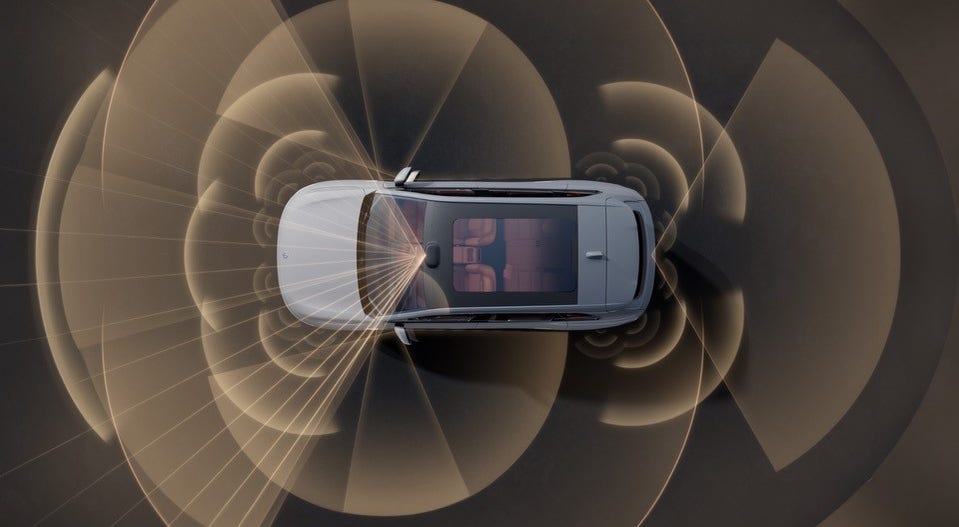

Embedded within Hesai’s HSAI LiDAR technology is an unwavering dedication to safety—a commitment grounded in the core tenet of perceiving the world with unprecedented clarity and exactness. Unlike traditional sensors reliant on cameras or radar, LiDAR harnesses light’s power to measure distances with remarkable precision. This empowers vehicles equipped with LiDAR to create intricate 3D maps of their environment, bestowing upon them an all-knowing awareness that transcends human confines.
In a time where road accidents extract an insufferable toll on human lives and societal prosperity, the need to integrate LiDAR into every vehicle becomes glaringly evident. Ponder over the stark statistics: as per the World Health Organization, road traffic accidents claim more than 1.35 million lives annually, with numerous others sustaining debilitating injuries. Brought to life by these somber figures are tales of shattered dreams, fractured families, and irreplaceable loss—a narrative that Hesai’s LiDAR technology holds the power to rewrite.
The foundation of LiDAR’s effectiveness rests in its unparalleled capability to avert accidents before they unfold. By furnishing vehicles with real-time, high-resolution data about their surroundings, LiDAR empowers advanced driver assistance systems (ADAS) and self-driving features to anticipate and respond to potential dangers with swift precision and unwavering accuracy. Whether it’s a pedestrian rushing across a poorly lit street or a cyclist hidden by dense fog, LiDAR-equipped vehicles possess the foresight to navigate such obstacles with elegance, precision, and ease.
Moreover, LiDAR’s resilience in operating under adverse conditions such as darkness, severe weather, or poor visibility deems it an indispensable guardian against the road’s unpredictability. While human drivers’ perception might be clouded by tiredness, distractions, or sensory limitations, LiDAR remains resolute in its alertness, ceaselessly scanning the surroundings and identifying threats with steadfast fidelity.
The genuine impact of LiDAR lies not solely in its theoretical promises but in its tangible ability to save lives. Numerous anecdotes and empirical studies attest to the life-preserving potential of LiDAR technology, emphasizing its position as a beam of hope in a hazardous landscape.
Envision a scenario of a family journeying home on a stormy night with visibility obscured by heavy rain and swirling mist. In the distance, a pedestrian endeavours to cross the road, ignorant of the imminent danger. In a split second, the vehicle equipped with Hesai’s LiDAR detects the pedestrian’s presence, gauging their trajectory and notifying the driver to take evasive action. Thanks to the swift intervention of LiDAR technology, tragedy is averted, and lives are preserved—a tribute to the transformative influence of proactive safety measures.
Furthermore, LiDAR’s role extends beyond accident prevention by capturing intricate data about the environment encompassing an accident. Before an accident, LiDAR enables the precise reconstruction of events, offering invaluable insights to enhance safety protocols, elevate infrastructure design, and hold culpable those accountable for avoidable tragedies—a value proposition some insurance companies perpetually seek.
Critics of LiDAR technology may raise concerns regarding cost, intricacy, or dependability, casting doubt on the feasibility of widespread adoption. Nonetheless, these objections fail to reckon with the relentless march of progress and the transformative power of innovation which has witnessed Hesai LiDAR technology becoming more compact, cost-effective, and efficient with each iteration.
Hesai has made remarkable progress in downsizing LiDAR sensors, enhancing their performance, and reducing production costs in recent years. As economies of scale drive down manufacturing expenses and technological advancements unlock new realms of efficiency, the barriers to integrating LiDAR into vehicles are steadily eroding. What was once deemed a lofty ambition is now palpably within reach—a testimony to human ingenuity’s resilience and the boundless vistas of technological innovation.
Standing at the cusp of an era defined by rapid technological progress and uncharted societal shifts, the urgency of embracing LiDAR technology in our automotive landscape grows ever more pressing. In a world where the pursuit of convenience must never compromise human life, LiDAR stands as a beacon of hope—a symbol of our collective resolve to safeguard the sanctity of every voyage, every destination, and every precious life.
This article was contributed by an external author and does not reflect the views of Benzinga. It is sponsored content for informational purposes only and should not be construed as investment advice.