Ford Faces Challenges Amid Electric Vehicle Transition and Tariffs
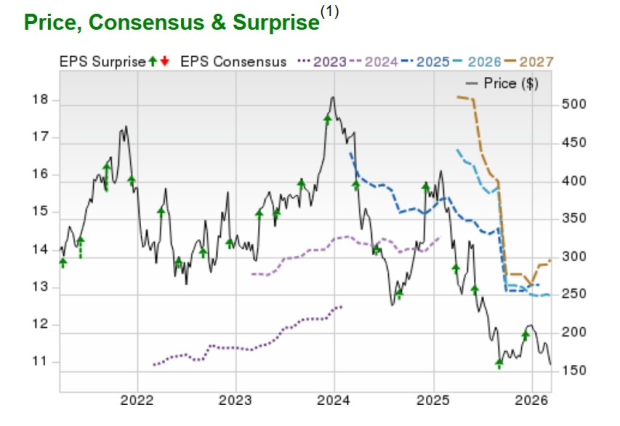
Ford Motor Company (NYSE: F) is at a turning point as it deals with various obstacles in the automotive market. The company’s electric vehicle segment has encountered difficulties, with its stock currently trading 33% below its 52-week high. Compounding these issues, the automotive sector is grappling with heightened trade tensions following President Donald Trump’s announcement of a 25% tariff on all imported vehicles and foreign-made auto parts.
The stock’s valuation appears appealing at present, complemented by an attractive dividend yield of 6%. However, the question persists: is this a smart investment for shareholders? We will explore the company’s current standing, potential future directions, and whether it merits a position in your portfolio at its current prices.
Where to invest $1,000 right now? Our analyst team just revealed what they believe are the 10 best stocks to buy right now. Learn More »
Analyzing Ford’s Business Model
Ford has a significant presence in the automotive industry. As reported by Car and Driver, the Ford F-Series trucks were the best-selling vehicles in the U.S. last year, totaling 732,139 units sold. The company was a pioneer in producing affordable vehicles for the general public and operates in 100 countries around the world.
Ford’s scale is considerable, as demonstrated by its $185 billion revenue in 2024. For comparison, Nvidia earned $130 billion in revenue last year. Despite this, Ford’s stock trades at a low valuation, with a price-to-earnings ratio of 6.9.
This low valuation is partly due to the company’s capital-intensive operations. Maintaining competitiveness demands substantial investments in skilled labor, technology, production facilities, and research and development. Additionally, Ford operates in a low-growth environment characterized by intense competition, reflected in its $5.9 billion net income from last year with a modest profit margin of just 3.2%.
Shifting Consumer Preferences in the Automotive Sector
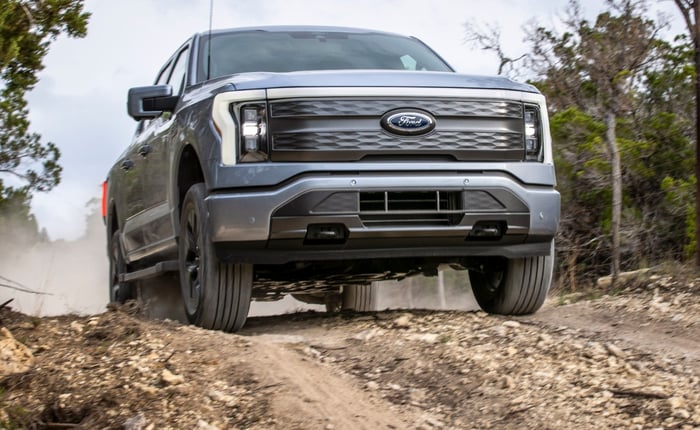
Like many of its peers, Ford has intensified its focus on electric vehicles (EVs) recently, driven by goals to reduce carbon emissions. The company established the Ford Model E division, which produces EVs such as the Mustang Mach-E and Ford F-150 Lightning.
Nevertheless, Ford has decided to scale back some of its ambitious EV plans. CFO John Lawler noted the modifications are due to “pricing and margin compression,” resulting in a reduction of capital expenditures for pure EVs from 40% to 30%.
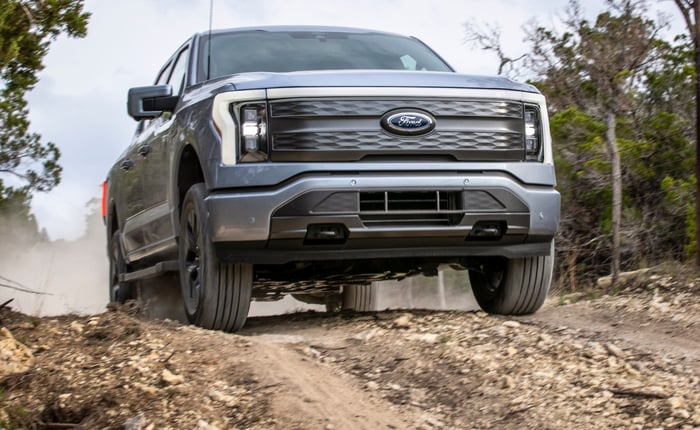
Image source: Getty Images.
With weaker-than-anticipated consumer interest, alongside pricing wars and other pressure points, Ford has delayed the launch of its next EV pickup truck until 2027. Furthermore, it has scrapped plans for a full-size, three-row EV SUV, opting instead for a hybrid version to align better with consumer demand. According to President and CEO Jim Farley, “hybrid trucks are a key growth area,” as they “allow us to capture the lion’s share of revenue and command pricing power within the pickup truck market.”
The Impact of Tariffs on Ford’s Prospects
On March 26, President Trump declared a 25% tariff on automotive imports to enhance domestic manufacturing. These tariffs complicate operations for automakers who rely on a global supply chain for many components.
However, there could be some silver lining for U.S.-based manufacturers like Ford. JPMorgan analyst Ryan Brinkman suggested that the tariffs might “materially lessen the burden” for U.S. automakers, providing a “significant reprieve” for firms producing finished vehicles domestically. His estimate of tariffs impacting Ford is now around $4.5 billion, down from $6 billion.
Should Investors Consider Ford Stock?
Ford’s move towards hybrid vehicles seems sensible given current market dynamics. The stock is priced attractively and offers a compelling dividend yield, which could appeal to investors.
Yet, the stock has struggled to generate returns, delivering just 81.5% total return (including reinvested dividends) over the past two decades—an annual return of only 3%.
The hurdles for Ford are not solely due to operational issues but also stem from the highly competitive nature of the automotive industry, where differentiating products can be challenging. While Ford remains a well-known brand, customers have countless alternatives. This competitive landscape, along with the capital-intensive nature of the business, contributes to its slim profit margins. For these reasons, it may be prudent for investors to consider diverting their investment elsewhere.
A Potential Second Chance for Earnings
Have you ever felt like you missed out on top-performing stocks? If so, you may find this news intriguing.
Occasionally, our expert analysts issue a “Double Down” Stock recommendation for companies they expect will see significant growth. If you worry you’ve missed your opportunity, the time to invest is now before it becomes too late. The data is compelling:
- Nvidia: If you invested $1,000 when we doubled down in 2009, you’d have $284,402!*
- Apple: If you invested $1,000 when we doubled down in 2008, you’d have $41,312!
- Netflix: If you invested $1,000 when we doubled down in 2004, you’d have $503,617!
Currently, we’re issuing “Double Down” alerts for three exciting companies, and such an opportunity may not come around again soon.
Continue »
*Stock Advisor returns as of March 24, 2025
JPMorgan Chase is an advertising partner of Motley Fool Money. Courtney Carlsen has no position in any of the stocks mentioned. The Motley Fool has positions in and recommends JPMorgan Chase and Nvidia. The Motley Fool has a disclosure policy.
The views and opinions expressed herein are the views and opinions of the author and do not necessarily reflect those of Nasdaq, Inc.