Boeing (NYSE: BA) is navigating a complex landscape in 2025, facing challenges while also presenting avenues for growth in its commercial aerospace and defense sectors.
Despite these hurdles, the company finished the year strong with a significant order from Pegasus Airlines, a clear sign that demand for Boeing planes remains robust. For investor success, Boeing must enhance its performance starting this year.
Where to invest $1,000 right now? Our analyst team just revealed what they believe are the 10 best stocks to buy now. See the 10 stocks »
In this context, let’s explore three critical factors for investors to monitor at Boeing in 2025.
Boeing’s 737 MAX Potential
The recent firm order of 100 Boeing 737 MAX planes from Turkey’s Pegasus Airlines demonstrates ongoing demand and bolsters Boeing’s backlog. By the end of November, Boeing’s total commercial airplane backlog reached 6,268, with 4,818 orders for the 737 MAX.
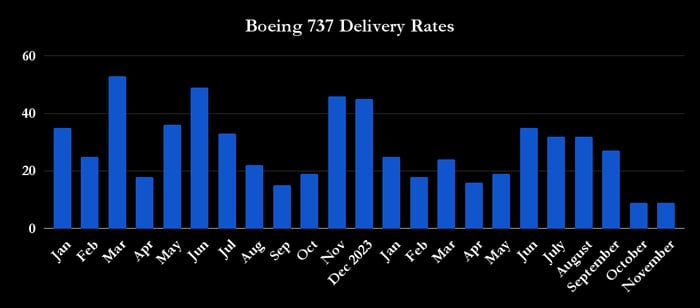
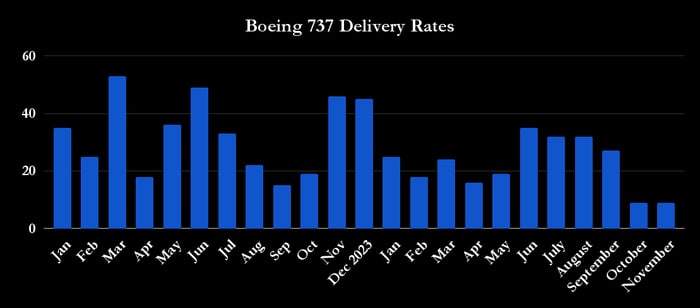
Earlier this year, Boeing aimed to achieve a stable rate of 38 deliveries per month for the 737 MAX by year-end, translating to 456 planes annually—a figure that indicates a 10-year backlog.
In 2025, Boeing will prioritize increasing 737 MAX production. The company faced challenges last year due to internal production slowdowns and strikes, which impacted delivery rates. A focus on improving delivery performance is essential.
Data source: Boeing presentations. Chart by author.
Reaching the initial goal of 38 monthly deliveries for the 737 MAX is a crucial step in recovery. Aligning with suppliers is vital, as Spirit AeroSystems, a fuselage supplier Boeing plans to acquire, currently faces financial challenges. Additionally, CFM International, the joint venture supplying the 737 MAX engines, failed to meet production targets last year due to supply chain issues.
Thus, achieving this initial delivery target would signal positive developments for Boeing’s stock, making it an important topic to watch for investors.
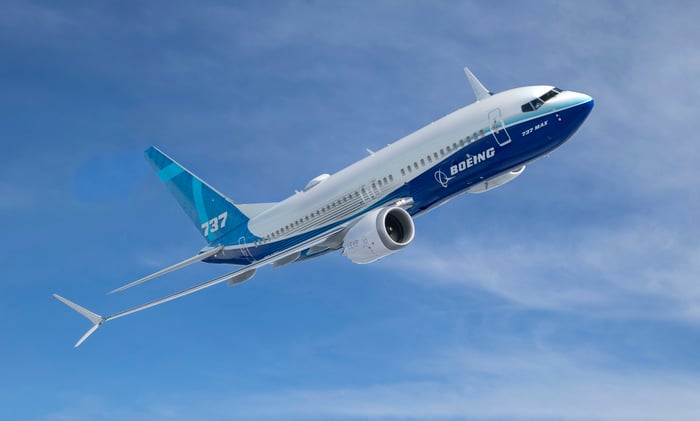
Image source: Boeing.
Addressing Struggles in Defense Programs
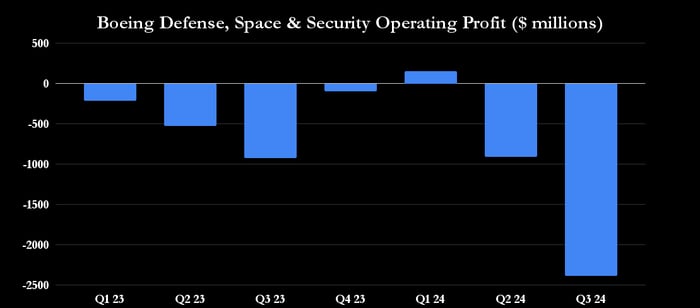
Challenges in Boeing’s defense, space, and security (BDS) division are notable, as outlined in the following chart.
Data source: Boeing presentations. Chart by author.
Leadership changes, notably the departure of former BDS CEO Ted Colbert, are indicative of broader issues in this segment. Challenges stem from cost overruns in fixed-price development programs, including the KC-46 tanker and the T-7 training aircraft, which collectively account for about 15% of BDS revenue. Cost issues with fighter and satellite programs contribute an additional 25% of revenue complications.
However, there’s potential for recovery. Strengthening profitability in the 60% of BDS that is already lucrative is the first goal, following the recent strike that impacted output. Investors could look forward to improved profitability in these areas as Boeing navigates its fixed-price programs.
Steering the 777X Back to Success
Boeing has over 480 orders for its 777X widebody aircraft, including 205 from Emirates. Unfortunately, this model, originally expected for delivery in 2020, is now delayed until 2026.
These delays create complications for airlines as they adjust their fleets, leading to significant financial implications for Boeing, including cash tied up in inventory before aircraft delivery.
On a positive note, the overall market demand remains strong. United Airlines’ Chief Commercial Officer Andrew Nocella recently highlighted that production lines for widebody aircraft will struggle to meet demand over the next several years.
Thus, maintaining the timeline for the first delivery in 2026 would be a key achievement for Boeing, boosting investor confidence.

Image source: Getty Images.
Aiming for Past Success
Both commercial aerospace and defense markets show favorable conditions. For Boeing to deliver substantial value to shareholders, attention must be paid to the factors discussed. With labor disputes resolved and new leadership in place, Boeing’s path forward is primarily within its control. However, success hinges on ramping up 737 MAX deliveries, restoring BDS profitability, and maintaining timelines for the 777X.
Is Boeing a Good Investment for $1,000 Right Now?
Before buying Boeing shares, potential investors should consider this:
The Motley Fool Stock Advisor analyst team has released its list of the 10 best stocks to invest in right now… and Boeing is not included. The companies that made the list are expected to yield significant returns in the future.
Consider the example of Nvidia, which was on this list on April 15, 2005… if you had invested $1,000 at that time, you’d have $823,000!*
Stock Advisor offers investors a straightforward strategy for success, including portfolio advice, regular analyst updates, and two new stock recommendations each month. The service has more than quadrupled the returns of the S&P 500 since 2002*.
See the 10 stocks »
*Stock Advisor returns as of December 30, 2024.
Lee Samaha has no position in any of the stocks mentioned. The Motley Fool recommends Alaska Air Group and GE Aerospace. The Motley Fool has a disclosure policy.
The views and opinions expressed herein are those of the author and do not necessarily represent those of Nasdaq, Inc.
5 Stocks Our Experts Predict Could Double In the Next Year
By submitting your email, you'll also get a free pivot & flow membership. A free daily market overview. You can unsubscribe at any time.