Key Points
-
Microsoft’s commercial remaining performance obligations have surged to approximately $625 billion, indicating significant revenue visibility primarily driven by AI workloads.
-
The company plans to allocate $190 billion on capital expenditures by 2026 to enhance capacity as it locks in essential resources like GPUs and long-term energy deals.
-
Microsoft is transforming its revenue model, shifting from software licenses to AI “agent” seats, which could expand revenue as adoption scales.
Microsoft (NASDAQ: MSFT) reported a record $625 billion in commercial remaining performance obligations, a 110% increase year-over-year, indicating strong revenue visibility for up to 2.5 years. Much of this growth is attributed to AI workloads and has positioned the company ahead of competitors like Amazon and Google Cloud, whose backlogs are notably smaller.
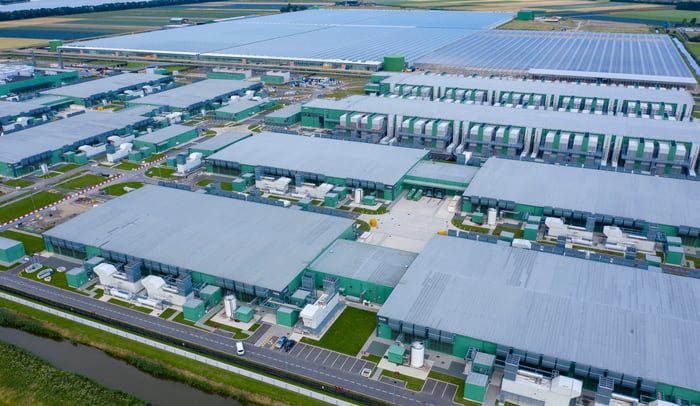
In terms of capital investments, Microsoft is set to spend approximately $190 billion by 2026, with two-thirds of its $37.5 billion in Q2 capex dedicated to short-lived assets like GPUs and CPUs. The company is also acquiring land for data centers, including around 3,200 acres in Cheyenne, Wyoming, and plans to secure 40 gigawatts of new renewable energy across 26 countries, aiming to match 100% of its electricity needs for the first time in 2025.
5 Stocks Our Experts Predict Could Double In the Next Year
By submitting your email, you'll also get a free pivot & flow membership. A free daily market overview. You can unsubscribe at any time.