Market Updates
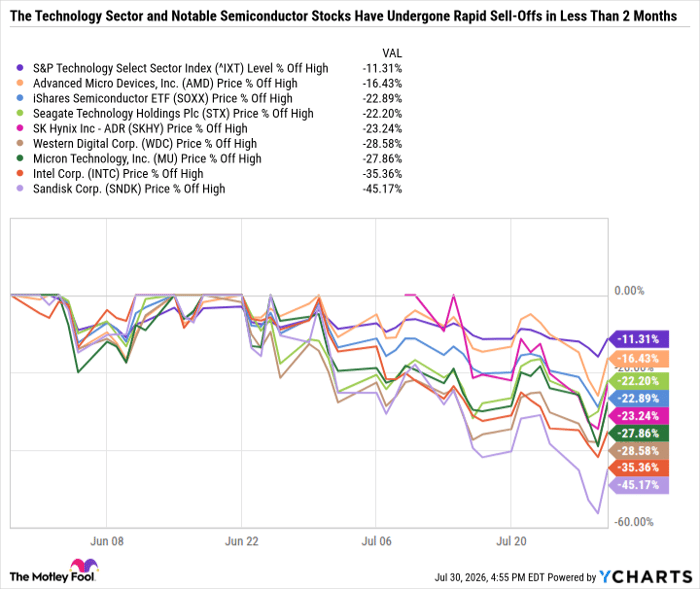
The Nasdaq Composite Index experienced its second correction of the year on July 29, closing at 24,442.94, marking a 10.1% drop from its June 1 high of 27,190.21. Market volatility has been exacerbated by a series of corrections, with three occurring in the last 16 months. In comparison, the S&P 500 and Dow Jones Industrial Average remain less volatile, each down 4% and 3.2% respectively from their recent highs.
The tech sector, particularly led by semiconductor stocks, has been a major contributor to this volatility. As of June 30, semiconductors accounted for 46.4% of the Vanguard Information Technology ETF. This concentration has made the Nasdaq sensitive to shifts in investor sentiment related to growth stocks, particularly those reliant on artificial intelligence. Increased frequency and severity of market corrections highlight the inherent risks associated with tech-dominated indices.
Investors should prepare for continuing volatility, as corrections are a common occurrence in growth-oriented markets. Historically, significant corrections in the Nasdaq, such as the one that saw a 26.5% drop in early April 2025, have been connected to broader economic concerns, making it crucial for investors to evaluate their risk tolerance accordingly.
5 Stocks Our Experts Predict Could Double In the Next Year
By submitting your email, you'll also get a free pivot & flow membership. A free daily market overview. You can unsubscribe at any time.