Market Turmoil Sees Nvidia and Magnificent Seven Struggle
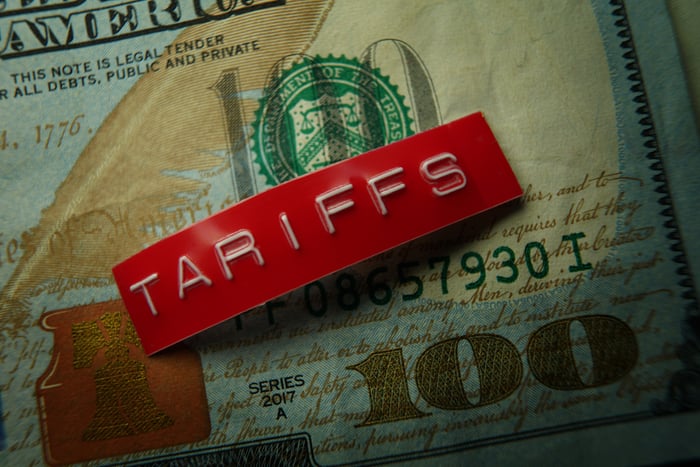
“Buckle up and hold on” has become a prevailing sentiment on Wall Street recently. Following President Donald Trump’s announcement of “Liberation Day” tariffs, the Dow Jones Industrial Average, S&P 500, and Nasdaq Composite have experienced some of their largest single-day point changes in history.
While the “Magnificent Seven” stocks had propelled the market forward for more than two years, they have faced significant downturns in this latest sell-off.
Where to invest $1,000 right now? Our analyst team just disclosed their views on the 10 best stocks to buy now. Learn More »
Topping the list of affected companies is Nvidia (NASDAQ: NVDA). This AI industry leader briefly became the world’s largest public company, boasting a market capitalization close to $4 trillion at the beginning of January. However, after reaching its peak on January 6, it has lost 26% of its value as of April 11, with a total drop of up to 36% noted by April 8.
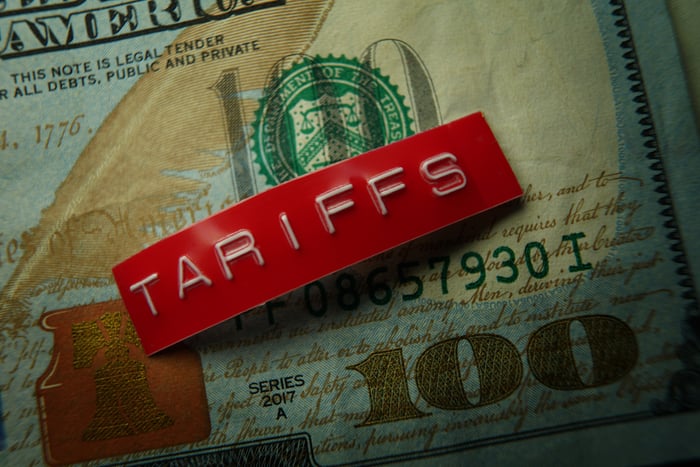
Image source: Getty Images.
Tariffs Present Challenges, But Aren’t Nvidia’s Top Concern
Some investors might quickly point to Trump’s tariff announcement as the cause of Nvidia’s decline. While he has mandated a 90-day pause on most countries’ tariffs, ongoing tariff conflicts between the U.S. and China could pose significant risks. Despite Nvidia’s lack of imports from China, the country remains a crucial market for sales. Retaliatory measures from China could involve sidelining Nvidia’s AI hardware.
Trump’s initial announcement also proposed an increase in tariffs on Taiwan, home to crucial chip manufacturer Taiwan Semiconductor Manufacturing (NYSE: TSM). TSMC specializes in chip manufacturing technology essential for AI-powered data centers. Fortunately, a recent update clarified that chips and chip-making equipment will be exempted from reciprocal tariffs.
Though these tariffs pose a challenge, they fall lower on the list of investor concerns. Several other factors are more pressing for Nvidia shareholders.
1. Internal Competition
Competition is a common issue for publicly traded firms. Nvidia currently dominates the GPU market with its Hopper (H100) and upcoming Blackwell architectures. However, external rivals like Advanced Micro Devices (NASDAQ: AMD) are making strides with their Instinct AI chips, often at lower prices than Nvidia’s offerings. Companies faced with long wait times for Nvidia’s chips may choose AMD’s more accessible alternatives.
A larger threat, however, comes from within. Many significant GPU orders for Nvidia originate from members of the Magnificent Seven, which includes major tech firms developing their own AI chips for internal use. While these internally made chips might lack Nvidia’s computing speed, they are cheaper and more readily available, threatening Nvidia’s market share.
As a result, despite continued new AI-GPU releases, Nvidia risks losing business to its own top clients, adversely affecting future orders and profit margins.
Stock chart displayed on a laptop.” src=”https://g.foolcdn.com/image/?url=https%3A%2F%2Fg.foolcdn.com%2Feditorial%2Fimages%2F814636%2Fstock-chart-crash-invest-broker-tablet-crypto-plunge-bubble-getty.jpg&w=700″>
Image source: Getty Images.
2. Historical Context
Another serious concern surpassing tariffs relates to historical trends in the market. For almost thirty years, new technologies have captured investors’ interest, but they often result in bubbles that burst. Investors frequently overestimate how quickly a new technology will see mass adoption leading to unrealistically high expectations.
Despite significant investment in AI infrastructure, businesses have yet to demonstrate strong returns from these expenditures or optimize their AI initiatives. It typically takes time for technologies to reach maturity, and the AI sector is still far from this stage.
If historical patterns repeat, a recalibration of investor expectations could negatively impact Nvidia significantly.

NVDA PS Ratio data by YCharts. PS Ratio = Price-to-sales ratio.
3. Valuation Concerns
Finally, valuation poses a critical issue for Nvidia. Last summer, its price-to-sales (P/S) ratio reached a peak of 42.39, similar to valuations seen in leading companies before the dot-com bubble burst. Although this ratio has halved to 21.06 since that time, it still remains twice as high compared to other leading Magnificent Seven stocks.
Moreover, Nvidia’s GAAP gross margins have begun to decline. While its GPUs previously commanded exceptional pricing power, the impending saturation of AI-GPUs may challenge this strength.
Nvidia’s Forecasted Gross Margin Decline Raises Investment Questions
Nvidia is poised to report a gross margin of 70.6% (+/- 50 basis points) for the fiscal first quarter of 2025, which ends on April 28, 2024. This figure marks a significant decrease from the peak of 78.4% reached in the previous fiscal year. Analysts are increasingly concerned about the company’s ongoing margin pressures as they face the dual challenges of reducing AI-GPU scarcity and an accelerated product replacement cycle.
A Slowdown in AI-GPU Demand
The decline in Nvidia’s margins can be attributed to waning demand for AI-GPUs coupled with their accelerated product release strategy. By aimed at launching a new AI-GPU annually, Nvidia risks rapid depreciation of older models. Moreover, this could diminish existing customers’ motivation to upgrade to the latest hardware, further impacting overall sales.
Investment Outlook for Nvidia
Though the long-term outlook for artificial intelligence solutions and Nvidia remains optimistic, short-term performance may fall short of investor expectations. This trend could persist irrespective of future tariff changes that might affect the tech industry.
Is Now the Right Time to Invest in Nvidia?
Before investing $1,000 in Nvidia, it’s essential to assess alternative opportunities:
The Motley Fool Stock Advisor analyst team has recently listed what they regard as the 10 best stocks for investment, notably excluding Nvidia. These stocks have the potential for substantial long-term returns.
For instance, Netflix was highlighted on December 17, 2004. An initial investment of $1,000 would have grown to approximately $495,226*! Similarly, when Nvidia was recommended on April 15, 2005, an investment of $1,000 would have ballooned to around $679,900*!
Currently, the Stock Advisor has an impressive total average return of 796%, significantly outperforming the S&P 500, which returns only 155%. Make sure you check out the latest top 10 list by joining Stock Advisor.
*Stock Advisor returns as of April 14, 2025
Sean Williams has no position in any of the stocks mentioned. The Motley Fool has positions in and recommends Advanced Micro Devices, Nvidia, and Taiwan Semiconductor Manufacturing. The Motley Fool has a disclosure policy.
The views and opinions expressed herein are those of the author and do not necessarily reflect the views of Nasdaq, Inc.