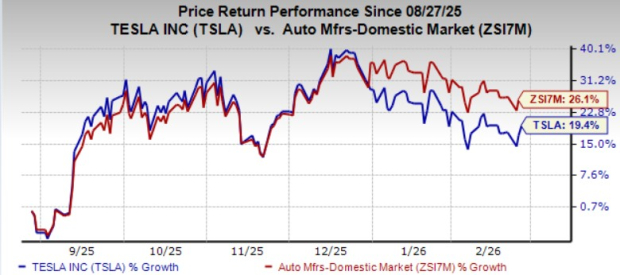
Tesla (TSLA) is facing significant challenges in Europe, with vehicle sales declining for the 13th consecutive month in January 2026, dropping to just over 8,000 units—a 17% year-over-year decrease. This decline comes despite the broader European Battery Electric Vehicle (BEV) market growing approximately 14% during the same period. In contrast, BYD Co Ltd (BYDDY) sold over 18,000 vehicles in Europe last month, highlighting intensifying competition.
CEO Elon Musk aims to reposition Tesla as a technology company focused on artificial intelligence (AI), autonomous driving, and robotics. However, Tesla’s robotaxi service, introduced in Austin, remains limited compared to competitors like Waymo (GOOGL), which operates at Level 4 automation across 10 cities. Tesla’s vehicles are still at Level 2 automation, raising concerns about its competitive positioning in the robotaxi space.
Financially, Tesla expects capital expenditures to exceed $20 billion in 2026, a substantial increase from about $8.5 billion in 2025, as it invests in new facilities and AI infrastructure. Yet, with deliveries declining by more than 8% in 2025 and no immediate revenue contribution from its long-term projects, there are heightened risks for investors.