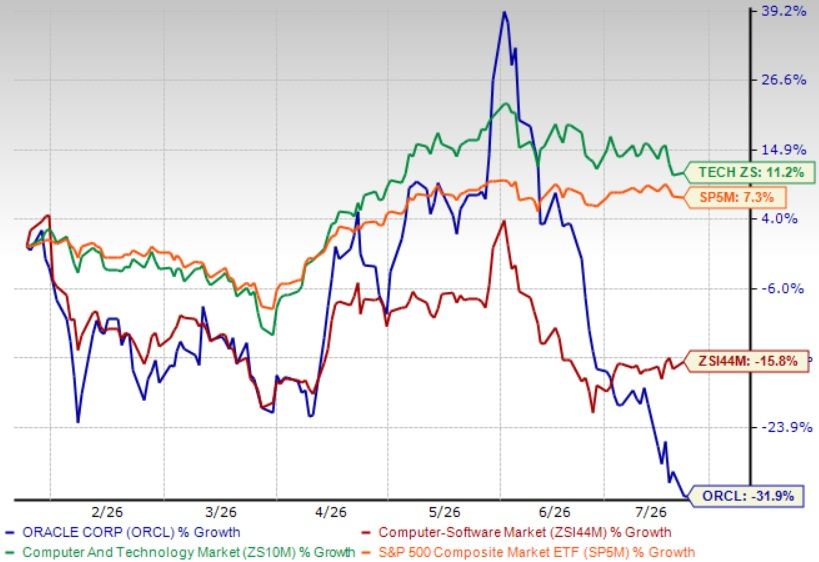
Credit rating agencies have downgraded Oracle Corporation (ORCL), with S&P Global Ratings lowering its long-term issuer credit rating to BBB- from BBB and reducing its short-term rating from A-2 to A-3. This downgrade follows Oracle’s aggressive investments in artificial intelligence, which have strained its financials, resulting in a negative free cash flow of $23.7 billion for fiscal 2026. Oracle’s credit default swap spread has climbed to 2.03 percentage points, its highest in nearly 18 years, as investors grow concerned about the viability of these AI investments.
Despite showing record revenues of $19.2 billion in the fourth quarter of fiscal 2026—up 21% year-over-year—with cloud revenues soaring by 47% to $9.9 billion, Oracle raised $43 billion in debt and $5 billion in equity during the fiscal year. The company’s remaining performance obligations reached $638 billion, a 363% increase from the previous year. Analysts anticipate that Oracle will generate approximately $90 billion in revenues in fiscal 2027 amid rising leverage concerns.
In contrast, major competitors Microsoft (MSFT) and Amazon (AMZN) maintain top-tier investment-grade ratings despite similar pressures from AI expenditures. Microsoft’s free cash flow declined to $15.8 billion, while Amazon saw its cash flow drop to $1.2 billion due to mounting capital expenses. Both companies have yet to experience a rating downgrade, though their escalating leverage highlights the widespread financial impact of AI infrastructure investments across the industry.
5 Stocks Our Experts Predict Could Double In the Next Year
By submitting your email, you'll also get a free pivot & flow membership. A free daily market overview. You can unsubscribe at any time.