Expect a W-Shaped Recovery Amid Unsustainable Chinese Tariffs
Tom Yeung with today’s Smart Money.
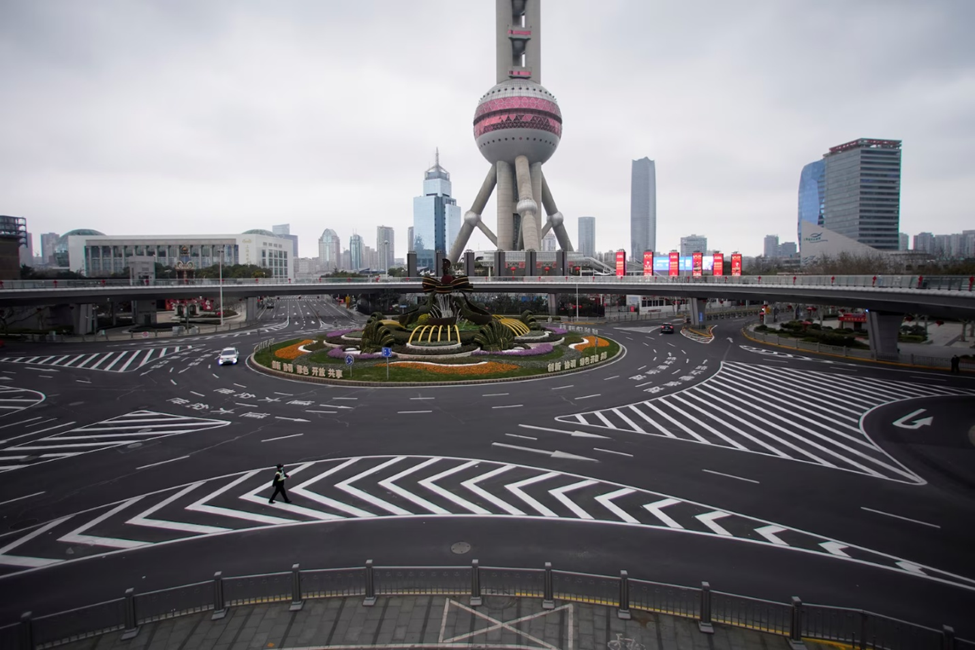
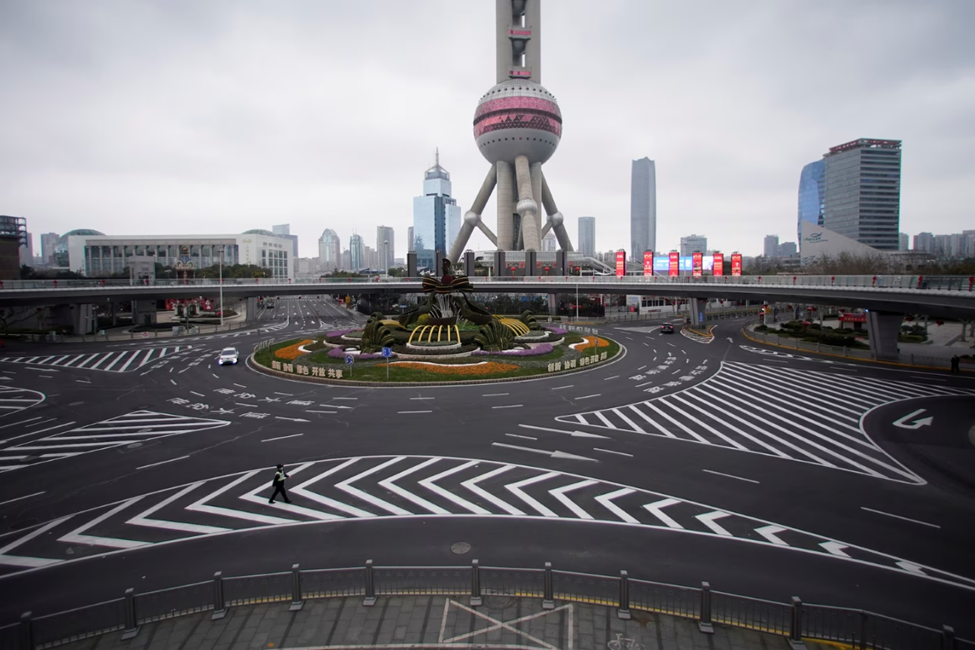
In February 2020, images of deserted locations in China began to circulate.
Empty subway stations and desolate malls painted a stark picture, showcasing urban solitude. Cities like Beijing, Hong Kong, and Shanghai were eerily quiet, as illustrated below.
Source
Just a month later, pandemic lockdowns imposed in the U.S. commenced.
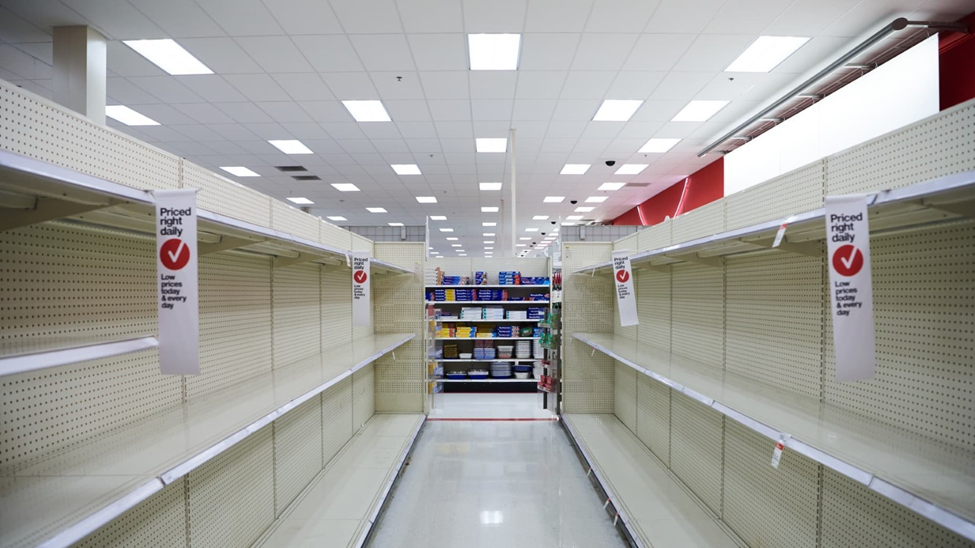
Today, similar visuals of desolation are emerging on American shores. Instead of desolate cities, it’s the store shelves that will bear the brunt of shortages.
Source
This shift signals that the U.S. is quietly running out of Chinese goods.
On Wednesday, the National Bureau of Statistics reported a significant drop in Chinese export orders for April—marking the lowest levels since the onset of the Covid-19 pandemic. Furthermore, container ship arrivals at the Port of Los Angeles are anticipated to plummet by 36% later this month. Retailers, meanwhile, will eventually deplete the pre-tariff inventories they’ve accumulated.
In this issue of Smart Money, we’ll analyze the ramifications of the ongoing trade war with China for consumers and investors alike.
Impact of the Trade War
In the coming months, retailers will exhaust their supplies of affordably imported goods, leading to widespread scarcity. Items we often overlook will suddenly become difficult to locate.
Toys and seasonal children’s products are likely to be the first casualties due to their quick turnover and dependence on Chinese manufacturing. This impact might occur as soon as next month.
Next in line will be fast fashion and inexpensive home goods, followed by apparel, footwear, electronic components, household appliances, and other items. Each month may unveil fresh challenges for American supply chains, as no other country possesses the manufacturing capacity of China that can swiftly fill the gap.
Of course, this is a hypothetical scenario.
President Donald Trump appears motivated by public opinion and stock market performance. He has previously retreated from imposing full “Liberation Day” tariffs following a significant sell-off on Wall Street and is likely to ease Chinese tariffs once retail panic ensues. After all, he did not secure the presidency by promising empty store shelves.
However, a retail crisis must manifest first.
Observing the past decade, it’s clear that Trump thrives on making notable deals and negotiating from a position of strength. This is concerning because he is pitted against a Chinese leader who also prioritizes projecting strength to his base.
Consequently, a sudden “grand deal” with China that reduces tariffs to a manageable range of 25% to 30% seems improbable. Both sides are hesitant to appear weak.
Instead, the upcoming months will likely feature a second downturn before any negotiations commence. Even then, a patchwork of tariff reductions may surface, leaving importers uncertain and hesitant to make substantial investments.
# Preparing for Supply Chain Challenges and a Potential Shortage
Ongoing trade tensions are forcing companies to reevaluate their reliance on China. As businesses move to rebuild supply chains outside China, we may face low inventories, decreasing consumption, and a potential “W-shaped” economic recovery.
Two Steps to Prepare for Trade Wars
Investors should take proactive steps in light of these developments. First, examine your portfolio for companies that depend heavily on Chinese imports. It may be wise to reduce your exposure to these firms. For example:
- Retailers. Companies like Amazon.com Inc. (AMZN) and Target Corp. (TGT) rely on China for 30% to 70% of their inventory. Increasing prices to offset tariffs could harm their brand reputation, forcing them to absorb costs and potentially suffer lower or negative profits.
- Apparel. Many clothing retailers have concentrated supply chains. For instance, Decker Outdoors Corp. (DECK), the owner of UGG, sources all its sheepskin from just two Chinese tanneries.
The next step involves guarding against a second dip in a potential “W-shaped” recovery. President Trump is likely to hold off on reducing tariffs until an issue arises, which could lead to a market pullback as investor panic unfolds.
During this period, it may be prudent to reduce risky investments, such as short-dated call options, unprofitable startups, and even major cryptocurrencies. Afterward, focus on acquiring high-quality stocks that we have discussed in prior newsletters.
Encouragingly, the second leg of the “W-shaped” recovery could materialize as soon as Wednesday, May 7. My colleague, Luke Lango, suggests that a significant event on that day could unleash approximately $7 trillion into U.S. stocks, potentially reshaping market dynamics and creating a summer “panic” akin to that seen in 1997.
This is the impetus behind his special 2025 Summer Panic Summit, scheduled for tonight at 7 p.m. Eastern. Luke will discuss why he views the May 7 event as a turning point and share a new selection of stocks he believes are positioned to benefit from this upcoming growth wave.
We anticipate valuable insights at the summit, so consider reserving your spot early.
Until next week,
Tom Yeung
Markets Analyst, InvestorPlace