Analyzing Qualcomm and Intel: Strengths, Challenges, and Future Prospects
Qualcomm Technologies Inc. (QCOM) and Intel Corporation (INTC) stand as key players in the semiconductor field. Qualcomm specializes in high-performance, low-power chip designs for a diverse range of applications, including mobile devices, PCs, automotive, AI, and more. The company possesses a significant intellectual property portfolio, covering technologies like 3G, 4G, and 5G.
On the other hand, Intel is well-known for both designing and manufacturing semiconductor solutions across various platforms, including its own products and those of third-party industrial and communication equipment makers. Its chipsets serve critical functions in data centers, edge computing, commercial PCs, and other applications.
As artificial intelligence (AI) increasingly permeates devices from PCs to smartphones to automotive systems, both Qualcomm and Intel are actively advancing their semiconductor offerings to enhance their market competitiveness. To gain deeper insights, let’s explore the strengths and weaknesses of both companies amidst emerging market trends.
The Competitive Edge of Qualcomm
Qualcomm is on a sustained path to achieving its long-term revenue goals, benefiting from solid traction in 5G technology, diversified revenue streams, and increasing visibility in its operations. The company is evolving from its traditional wireless communication roots into a leading provider of integrated processing solutions for the intelligent edge. Recently, it unveiled the Qualcomm X85 5G Modem-RF, featuring Qualcomm’s 5G AI Processor, designed to offer top-tier, battery-efficient 5G connectivity to Android users. This new product is gaining traction with major network operators.
Furthermore, Qualcomm is solidifying its presence in the mobile chipsets market with innovative additions to its Snapdragon portfolio, including the Snapdragon G3 Gen 3, G2 Gen 2, and G1 Gen 2 gaming chipsets. Major smartphone manufacturer Samsung has integrated the Snapdragon 8 Elite Mobile Platform into its premium S25 series devices. Additionally, Qualcomm has partnered with IBM to enhance enterprise-grade generative AI solutions for both cloud and edge devices, placing significant emphasis on developing advanced chipsets for AI-integrated PCs. The company has also pursued the acquisition of MovianAI to boost its foundational AI research.
Despite these efforts, Qualcomm faces stiff competition in the AI PC market from Intel, restricting its opportunities in selling integrated chipsets. Changes among OEMs in the premium segment have hindered Qualcomm’s growth potential in this area. Compounding this challenge is competition from Samsung’s Exynos processors in the premium smartphone market and MediaTek’s rising share in mid-range and budget devices. Additionally, Apple’s shift towards in-house chip development poses a significant threat. Lastly, Qualcomm’s substantial operations in China may be adversely affected by escalating Sino-U.S. trade tensions.
Intel’s Strategic Investments and Challenges
Intel is making strategic moves to boost its manufacturing capabilities as part of its IDM 2.0 (Integrated Device Manufacturing) strategy. The company is focused on solidifying its position in the expanding AI sector, recently launching its Xeon 6 processors equipped with Performance-cores (P-Cores) that can handle large AI workloads across multiple sectors. This family of processors is positioned as the best CPU for AI, offering a lower total cost of ownership.
Intel has also rolled out an advanced AI solutions suite, including Intel AI Edge Systems, Edge AI Suites, and Open Edge Platform software. These solutions aim to facilitate AI integration across various industries, such as manufacturing, retail, and smart cities. As the only major U.S.-based semiconductor designer and manufacturer, Intel benefits from support from the U.S. government for its innovative initiatives, having received $7.86 billion in direct funding from the U.S. Department of Commerce for its semiconductor manufacturing projects.
However, it’s important to note that a significant portion of Intel’s revenue comes from China. As the U.S. government tightens high-tech export restrictions to China, Intel faces increasing pressure from Beijing’s push for self-sufficiency in critical industries. Additionally, the company is falling behind in the competitive GPU and AI markets, facing stiff competition from peers like NVIDIA and AMD, which have seen substantial revenue growth due to high demand for their GPUs for AI development.
Comparative Estimates for QCOM and INTC
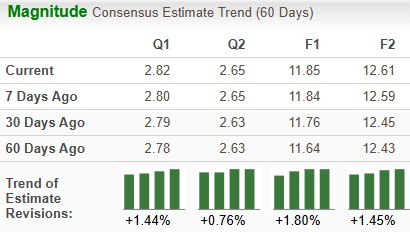
The Zacks Consensus Estimate forecasts that Qualcomm will see its 2025 sales and earnings per share (EPS) grow by 11.93% and 15.95%, respectively. Recently, EPS estimates have shown an upward trend over the last 60 days.
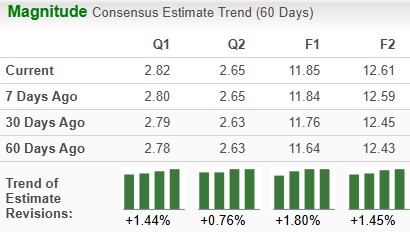
Image Source: Zacks Investment Research
Conversely, Intel is projected to see only 0.57% growth in sales for 2025, with EPS expected to recover to 47 cents per share following a loss of 13 cents per share a year prior. However, EPS estimates for Intel have been trending downward over the same period.
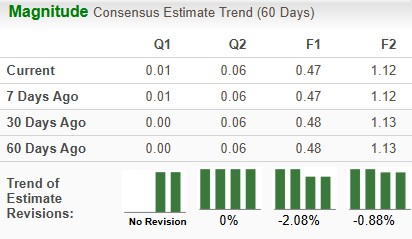
Image Source: Zacks Investment Research
Price Performance and Valuation Comparison
Over the past year, Qualcomm’s stock has decreased by 12.4%, while the industry overall has grown by 2.5%. In contrast, Intel’s stock has suffered a steeper decline of 39.5% during the same timeframe.
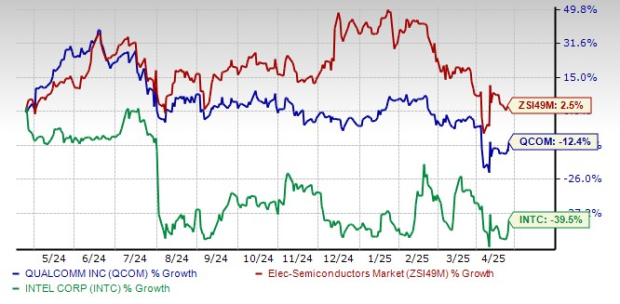
Image Source: Zacks Investment Research
From a valuation perspective, Intel appears more attractive than Qualcomm. Currently, Intel shares trade at a forward price/sales ratio of 1.56, significantly lower than Qualcomm’s ratio of 3.44.

Image Source: Zacks Investment Research
Which Company is the Better Investment: QCOM or INTC?
Qualcomm currently holds a Zacks Rank #2 (Buy), reflecting its promising outlook in the semiconductor industry…
Comparing Intel and Qualcomm: Financial Outlooks and Investment Potential
Intel currently holds a Zacks Rank of #3 (Hold) as it navigates a mixed financial landscape. The company has implemented a stringent cost-cutting plan and is seeing some traction in the AI PC market; however, the future remains uncertain.
Qualcomm’s Strong Performance
In contrast, Qualcomm has consistently exceeded earnings expectations in recent quarters. This streak highlights the strength of its business model and points to successful strategic expansions into sectors like automotive, IoT, and AI PCs. Despite facing competition, Qualcomm has maintained its leadership in the mobile chipset market.
Investors have shown increased confidence in Qualcomm, evidenced by upward revisions of earnings estimates. Given these trends, Qualcomm appears to be a more promising investment option at present.
Market Insights
Both companies are actively strengthening and diversifying their portfolios. While Intel works to stabilize its financial performance, Qualcomm seems to be reaping the benefits of its diverse market strategies.
As financial markets continue to evolve, it remains essential for investors to analyze key performance indicators and market positions to make informed decisions regarding their investments.