Deciphering Wall Street Recommendations for BLDR
When it comes to stock investments, the opinions of Wall Street analysts can significantly sway investor sentiment. The brokerage recommendations for Builders FirstSource (BLDR) stand at an average of 1.73 on the 1 to 5 scale, hinting at a Strong Buy to Buy sentiment, based on 15 brokerage firms’ assessments.
The Case Against Relying Solely on Brokerage Recommendations
While the brokerage recommendations might advocate for investing in BLDR, prudent investors should take these ratings with a grain of salt. Studies have shown that brokerage recommendations hold limited success in predicting profitable stock movements due to the inherent positive bias of these analysts towards the stocks they cover.
For investors seeking a more reliable indicator of stock performance, the Zacks Rank, a tool based on earnings estimate revisions, offers a credible alternative.
The Distinctiveness of Zacks Rank Compared to ABR
It’s essential to differentiate between the ABR and the Zacks Rank. While the ABR solely relies on brokerage recommendations and may carry a biased outlook, the Zacks Rank is based on a quantitative model centered on earnings estimate revisions, offering a more balanced and objective perspective.
Empirical research has shown a strong correlation between earnings estimate revisions and near-term stock price movements, reinforcing the credibility of the Zacks Rank as an investment tool.
Evaluating BLDR’s Investment Potential
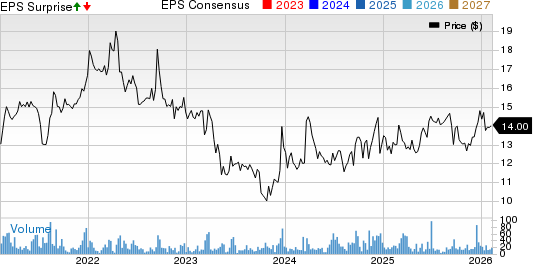
Currently, the Zacks Consensus Estimate for BLDR remains unchanged at $13.80 for the current year, reflecting analysts’ steady views on the company’s earnings prospects. Despite this, the recent consensus estimate change has led to a Zacks Rank #3 (Hold) classification for Builders FirstSource.
Given the disparity between the Buy-equivalent ABR and the Zacks Rank #3, investors should exercise caution when considering an investment in BLDR.
It is important to note that the Zacks Rank is a quantitative indicator and is visibly more resistant to the influence of biased opinions, offering a level-headed assessment of a stock’s investment potential.