Surge in Options Trading: Corning, ITT, and Applovin Make Waves
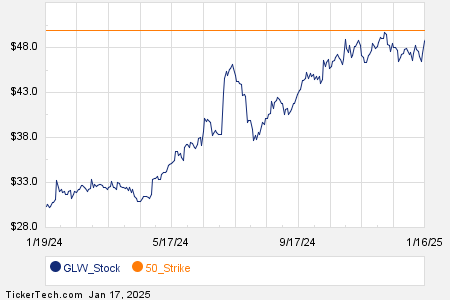
The Russell 3000 index saw significant options trading activity today, particularly in Corning Inc (Symbol: GLW). A total of 20,526 contracts were exchanged, equivalent to about 2.1 million underlying shares. This figure represents approximately 54.4% of GLW’s average daily trading volume of 3.8 million shares over the past month. The $50 strike call option expiring on February 21, 2025, stood out with 5,711 contracts traded, accounting for about 571,100 underlying shares. The chart below illustrates GLW’s trading history over the past twelve months, highlighting the $50 strike in orange:

In a similar vein, ITT Inc (Symbol: ITT) recorded an options trading volume of 2,015 contracts. This trading volume corresponds to approximately 201,500 underlying shares, making up about 52.9% of ITT’s average daily trading volume of 380,575 shares over the last month. Notably, there was high activity in the $155 strike call option, with 990 contracts traded today, reflecting about 99,000 underlying shares. Below is the chart showing ITT’s trading history, with the $155 strike indicated in orange:

Meanwhile, Applovin Corp (Symbol: APP) is experiencing a robust options trading environment, with 21,513 contracts traded today. This amounts to approximately 2.2 million underlying shares, or 52.1% of APP’s monthly average daily trading volume of 4.1 million shares. The $350 strike call option expiring January 17, 2025, attracted significant attention as well, with 1,567 contracts traded, representing around 156,700 underlying shares. The chart below outlines APP’s trading history for the past twelve months, with the $350 strike highlighted:

To explore the various available expirations for GLW options, ITT options, or APP options, visit StockOptionsChannel.com.
 Today’s Most Active Call & Put Options of the S&P 500 »
Additional Resources:
- Earnings Calendar
- TTHI Historical Stock Prices
- SOWG Average Annual Return
The views and opinions expressed herein are those of the author and do not necessarily reflect those of Nasdaq, Inc.