
Crucial Insights:
- JinkoSolar faced declining margins in Q4, saved by government subsidies
- Solar industry consolidation expected, with top 10 holding 90% market share by 2024 end
By Doug Young
Thank goodness for government subsidies.
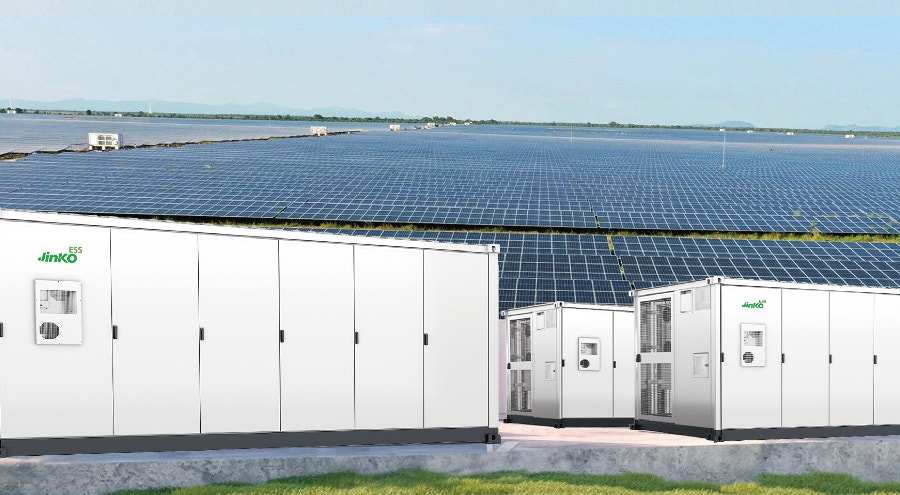
The safety net of subsidies likely prevented JinkoSolar Holding Co. Ltd. JKS from falling into the red during the final quarter of last year. As the leading solar panel maker navigates through a maelstrom of plummeting prices, the company envisages further challenges in 2024, anticipating an accelerated consolidation within a sector grappling with an oversupply crisis.
Despite maintaining profitability in the last quarter of the previous year, JinkoSolar’s recent financial report failed to excite investors. Post-announcement, the stock plunged by 10.5% over two trading days, marking a 34% year-to-date decline. This stark descent contrasts sharply with the 1.6% dip for the iShares MSCI China ETF, reflecting a broader malaise within the offshore-listed Chinese equities.
While JinkoSolar’s struggles amid solar turmoil are somewhat expected, the company’s underperformance is quantifiable. Sporting a meager price-to-earnings (P/E) ratio of 2.3 post-selloff, the stock lags behind counterparts like Canadian Solar CSIQ, and China-listed entities such as Longi (601012.SH) and JA Solar (002459.SZ) significantly.
One possible factor behind JinkoSolar’s muted performance could be its heavy reliance on the Chinese market, which contributed to half of its Q4 sales. With China anticipated to decrease its solar plant constructions significantly, JinkoSolar and its peers are grappling with overproduction-induced price erosion.
In a fervor to satisfy escalating solar energy demand, JinkoSolar and rivals ramped up production capacities exponentially in recent years, leading to a glut that is squeezing prices. Chairman and CEO Li Xiande remarked, “As module prices fell more than expected in the fourth quarter and nearly 50% of our modules were sold to the Chinese market at lower prices, gross margin for the fourth quarter decreased significantly to 12.5% from 19.3% in the third quarter.”
The stark price drop is evident in JinkoSolar’s sales volume increase in Q4 versus the modest revenue growth. Despite a 66% rise in product shipments year-over-year to 27.9 MW, revenue only nudged up by 9.4% to 32.8 billion yuan ($4.6 billion).
The ray of hope for JinkoSolar was a substantial surge in subsidy income, offsetting the profit decline and leaving the company in the black with a net profit of 29.3 million yuan.
Inevitable Industry Evolution
Despite the reliance on governmental aids to maintain profitability, analysts are optimistic about JinkoSolar’s future financiers. Forecasts suggest the company, alongside peers, will sustain profits in the face of escalating production capacities. Despite estimating a 45-60% rise in product capacity this year, JinkSolar predicts a more modest 34% bump in total module shipments, reaching between 100 GW and 110 GW.
This projection denotes a considerable slowdown compared to the previous year when module shipments surged by 76% to 78.5 GW from 44.5 GW in 2022.
Anticipated construction deceleration aligns with Wood Mackenzie’s prediction of an industry slowdown post-years of rapid expansion. New installations are projected to stagnate or shrink in subsequent years, diverging from BloombergNEF’s bullish outlook for 2024 growth.
As the sector braces for a new reality of muted growth, JinkoSolar foresees hastened consolidation within the industry in the impending year. The company anticipates the top 10 manufacturers will command 90% of the global sales pie by the end of 2024, up from a 70% slice in 2023.
Positioned as a frontrunner in this industry evolution, JinkoSolar’s healthy cash reserves bode well for weathering the storm. With nearly 20 billion yuan in cash and short-term investments by the close of 2023, the company stands resilient against potential financial strains.
However, concerns linger around the company’s rising accounts receivables and inventory. Ballooning receivables reaching 22.7 billion yuan in Q4 2023 posed at 71% of its revenue, a substantial hike compared to the previous year’s 56%. Concurrently, inventory grew by 4% to 18.2 billion yuan, indicating a significant product surplus amid plummeting prices.
All considered, JinkoSolar’s undervalued stock reflects the broader sectoral pessimism amidst a necessary market correction. The current price may offer an attractive value, with substantial growth potential post-industry recalibration over the upcoming years.
This article is from an unpaid external contributor. It does not represent Benzinga’s reporting and has not been edited for content or accuracy.
5 Stocks Our Experts Predict Could Double In the Next Year
By submitting your email, you'll also get a free pivot & flow membership. A free daily market overview. You can unsubscribe at any time.