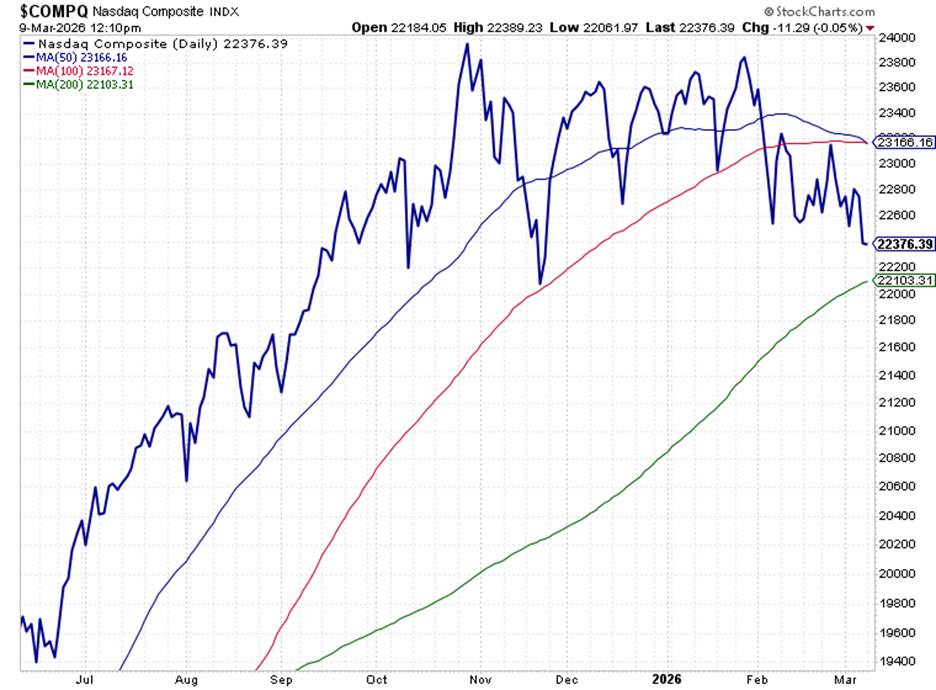
Oil prices surged over the weekend, with U.S. benchmark West Texas Intermediate crude reaching approximately $115 per barrel amid escalating Middle Eastern conflicts. As of Monday, prices have cooled to around $96 per barrel, causing major U.S. stock indexes to initially drop over 1%. By midday, the S&P, Dow, and Nasdaq are testing key technical support levels near their 200-day moving averages, creating an uncertain trading environment. The broader implications of these fluctuations raise concerns about potential Federal Reserve actions, given that the U.S. economy reported a loss of 92,000 jobs in February.
The conflict in the Middle East has led to significant disruptions in oil tanker traffic through the Strait of Hormuz, a critical route for global oil shipments. Additionally, geopolitical tensions escalated after reports of airstrikes in Tehran and the injury of Iran’s new leader were made public. Analysts caution that the oil market, having surged recently, may be due for a correction, especially with rising energy prices potentially exacerbating inflation while job growth slows.
Investors are advised to remain vigilant as market conditions fluctuate. With conflicting trends in oil prices and labor market data, the Federal Reserve faces a challenging decision on interest rates that could further impact both inflation and economic stability.