The Growing Wealth Gap and the Rise of Humanoid Robotics
Recently, two contrasting headlines from the Wall Street Journal caught my attention:
“Credit-Card Companies Brace for a Downturn”
“$1 Trillion of Wealth Was Created for the 19 Richest U.S. Households Last Year”
The first article notes:
There are some early warning signs. Consumers are holding off on nonessential splurges such as vacations…
Consumer sentiment has been sinking over the past couple months, fueling concerns that it will cause people to slow their spending.
In contrast, the second article states:
The wealthiest have gotten richer and control a record share of America’s wealth…
The growth in wealth of the richest Americans has far outpaced that of all other U.S. wealth groups.
Regular readers may know the term “Technochasm,” coined by macro investing expert Eric Fry. It describes the widening wealth gap intensified by cutting-edge technology and AI.
In the coming years, this gap is expected to expand dramatically. A generational shift driven by next-gen technology will transform businesses and society as a whole.
For investors, anticipating this shift is vital for positioning portfolios effectively and navigating the expanding Technochasm.
Investment strategies can vary. Investors may choose to make concentrated bets on potential winners or opt for broader ETFs, appreciating John Bogle’s advice: “Don’t look for the needle in the haystack. Just buy the haystack!”
Regardless of the approach, the main takeaway is clear: invest in “embodied AI,” more commonly referred to as humanoids.
Identifying Key Winners Amid Onshoring Trends
In our April 16 Digest, we discussed the implications of onshoring, specifically identifying the real beneficiaries:
The companies that leverage robotics and the investors who recognized this trend.
This conclusion is well supported. Reshoring drives up payroll, real estate, and energy costs. Currently, CEOs face a dilemma: absorb the increased expenses or pass them on to consumers, potentially lowering demand.
A third option emerges: replace human workers with robots.
This comparison clearly outlines the benefits:
Humans incur high salary costs, benefits, sick days, and more, while robots require a one-time capital expenditure and have minimal ongoing maintenance costs, executing tasks perfectly without breaks.
Given this scenario, it seems likely that onshoring will accelerate the shift toward robotics and humanoid integration, unless strict policies intervene.
In conclusion, our technology expert Luke Lango noted:
The trade war may have lit the match. But the fire now spreading across this country is an economic one, unleashing a new 21st-century Industrial Revolution powered by AI, fueled by necessity, and backed by policy.
The Current Landscape of Embodied AI
Let us dive deeper into Luke’s insights:
Thanks to incredible advances in AI, robotics, and automation, we now have the technology to revolutionize American manufacturing right now.
Humanoid robots can engage physically: walking, lifting, building, and problem-solving in real-world scenarios.
This is not speculative. Here are notable developments:
Tesla (TSLA) is at the forefront with Optimus, its humanoid robot already performing tasks in factories.
Nvidia (NVDA) launched Project GR00T, a new suite of AI models tailored for robotics.
Meta (META) initiated a humanoid AI division focused on creating the “iOS of robotics.”
Apple (AAPL) is investing into smart home robotics.
Alphabet (GOOG) is funding humanoid robotics startups such as Apptronik.
OpenAI is exploring the development of its own robots.
Microsoft (MSFT) supports Sanctuary AI, which has completed its first commercial delivery using a humanoid robot.
Big Tech is not just observing these advancements; they are investing heavily.
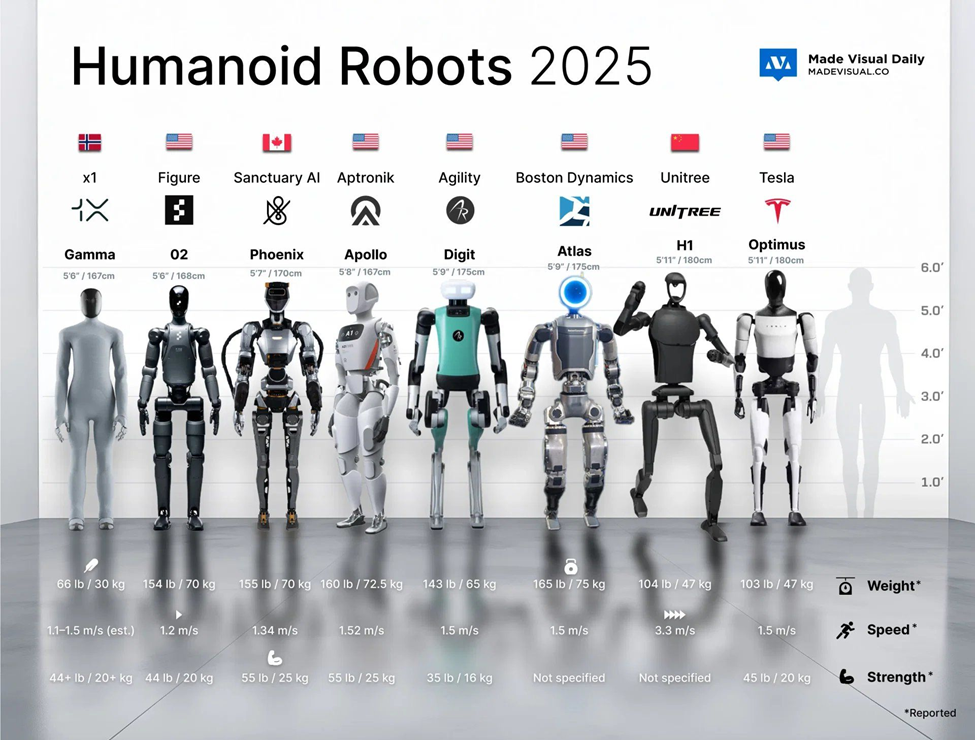
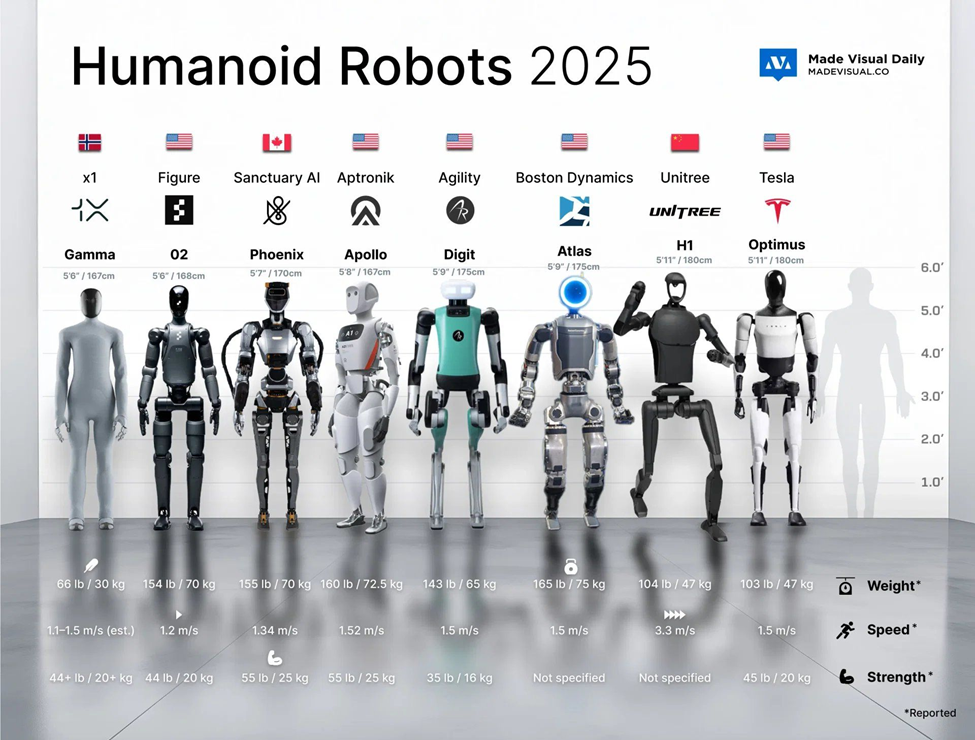
A visual representation detailing the current state of this technology is provided below:
Source: Evan @StockMKTNewz
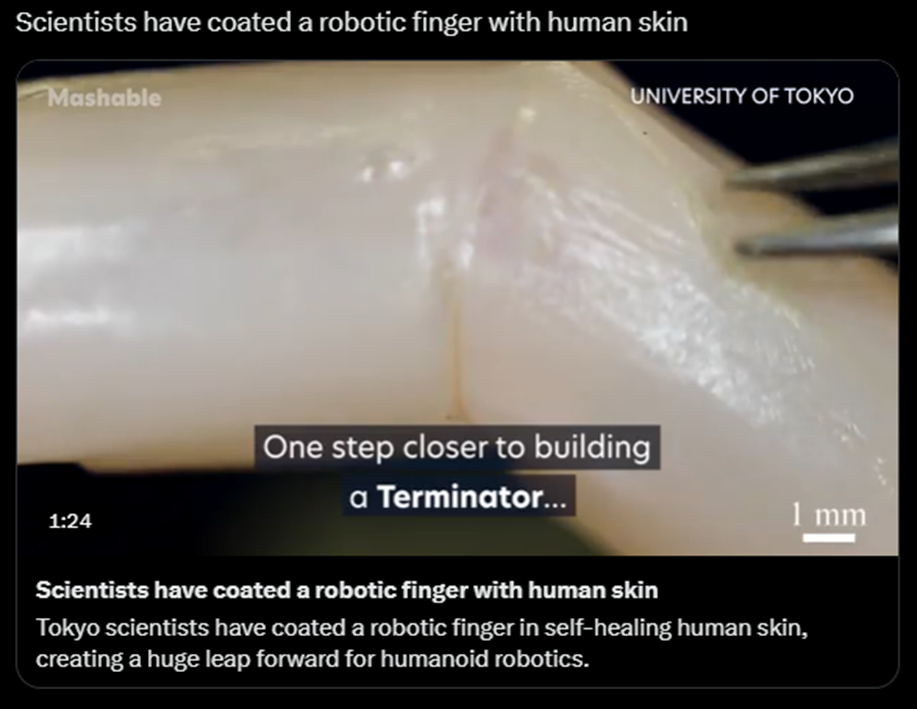
This movement goes beyond traditional robotics. Reports indicate that Japanese scientists have developed a robotic finger covered in self-healing human skin, marking a significant advancement in humanoid technology.
(For humor, please disregard the reference in the graphic to a “Terminator.”)
Source: Mashable
The Future of Humanoids: Changing Lives Beyond Manufacturing
Humanoids Impacting Daily Life
In previous editions, we discussed how companies like Amazon and Walmart are embracing robotic workforces in their warehouses. This trend is set to continue as humanoids begin to affect our everyday lives in diverse ways.
Household and Personal Assistance
Robots are evolving from basic vacuum cleaners into multifunctional personal assistants. Soon, your robot companion could help with everyday tasks such as picking up dry cleaning, preparing meals, and even walking your dog.
Beyond mundane tasks, innovative applications are emerging. For example, startups are developing robotics specifically designed for the visually impaired. One company has introduced a robotic guide dog, while another created a guide robot resembling a Roomba.
Elder Care Solutions
As the global population ages, humanoid robots will provide critical support for senior citizens. They can assist with medication management, help seniors stay socially engaged, and promote mobility.
Notably, some robots aim to offer companionship, helping to ease loneliness among elderly individuals living alone. Social robots, like ElliQ, can hold conversations, provide reminders, and suggest activities, fulfilling essential social needs.
Enhancing Customer Service
In customer-facing roles, humanoid robots are already being implemented in hotels and airports. They serve as receptionists, concierges, and information guides.
Equipped with natural language processing and facial recognition, these robots can personalize guest experiences, manage check-ins, and even serve meals—without the risk of absenteeism.
Revolutionizing Education
Within the educational sector, robots can offer individualized tutoring, support for special needs students, and create engaging lessons with interactive media. Their reliability and flexibility make them valuable partners for educators, whether in traditional settings or remote classrooms.
Humanoids are indeed on their way—and they are poised to impact numerous aspects of society.
Investment Opportunities in Humanoids
Significant technological development is occurring within major tech firms working on humanoid robots, but investors should also keep an eye on smaller companies developing essential components.
For instance, consider AI chipmakers and sensor manufacturers that produce GPUs, LiDAR systems, and edge processors necessary for real-world AI applications.
Moreover, there are software platforms for robotics, similar to how iOS operates for smartphones. A leading “robot OS” will likely arise to manage teams of machines in synchronized operations.
This market presents vast investment potential, which cannot be fully addressed in a single article.
Getting Started with Investments
We previously shared accessible avenues for investment in this space. As mentioned in a past issue, Brian Hunt, a senior analyst, highlighted the advancements seeded in humanoid technology and the incredible opportunities it holds for wealth generation over the next five to ten years.
As a straightforward investment strategy, consider researching the five largest AI/robotics ETFs and investing equally in them, possibly adding QQQ for diversification. This long-term approach allows you to benefit while scaling back on day-to-day concerns.
Future corrections may be challenging, but they are expected to be temporary. The momentum behind humanoid technology is likely to drive significant returns.
Understanding Timing in Technology Adoption
While the rapid pace of this technology’s arrival is impressive, we are still several years away from humanoids performing complex tasks in our kitchens. However, we can expect iterations of “agentic AI” in the next year, able to manage travel arrangements, subscriptions, and personal finances.
Take action today; this is an early investment opportunity. It’s likely that in five years, conversations surrounding robotics stocks will resemble those currently around AI chip stocks, with early investors reaping the most rewards.
The Broader Workforce Impact of Humanoids
This commentary is already quite detailed, but there is much more to explore regarding humanoids’ effects on the labor market, which will be covered in future issues.
Consider the range of jobs where humanoids may soon take over tasks: tutors, nurses, doctors, factory workers, truck drivers, customer service agents, and many more.
Should humanoids assume these roles, the salary expenses currently recorded on corporate balance sheets may shift, ultimately benefiting management and investors.
This raises questions about income disparity, where many Americans struggle with credit card debt while others accumulate wealth from robotic efficiencies.
We will delve deeper into these themes soon.
Have a good evening,
Jeff Remsburg
The free Daily Market Overview 250k traders and investors are reading