T-Mobile’s Growth Continues to Outpace Competitors Amid Industry Disruption
As a disruptor in the telecommunications sector, T-Mobile US (NASDAQ: TMUS) embraces its identity as the “Un-carrier.” This label emerged in March 2013 when the company aimed to set itself apart from established telecom giants such as AT&T Inc. (NYSE: T) and Verizon Communications Inc. (NYSE: VZ).
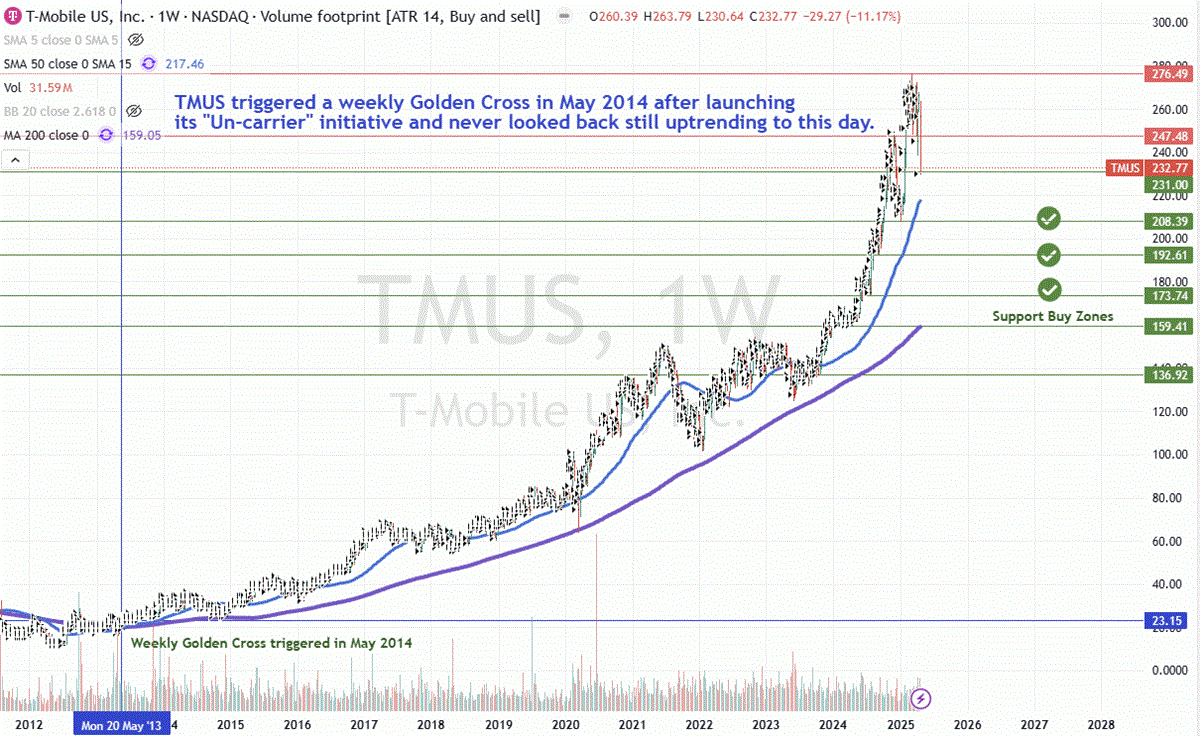
T-Mobile has pioneered many of the consumer-friendly policies now standard in the wireless industry. Its strategic marketing and operational changes have fueled the stock’s significant upward trajectory, showing consistent growth since 2014.
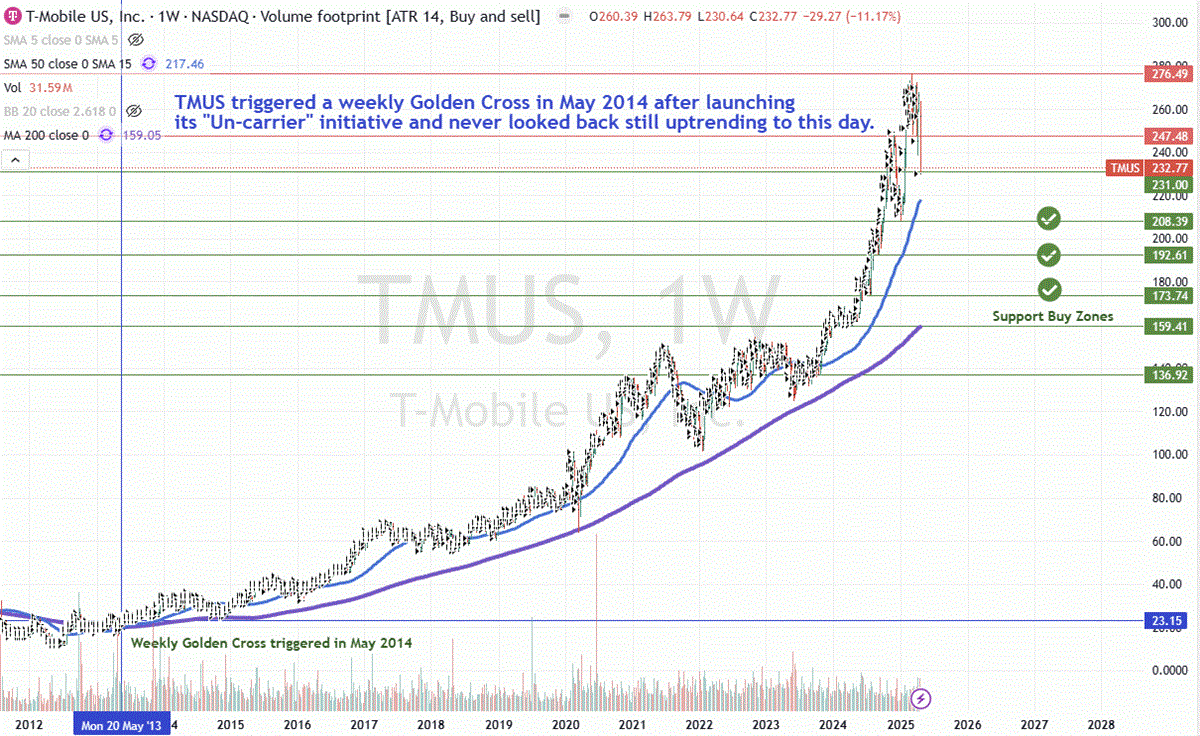
The stock has risen from $23.15 to an impressive all-time high of $276.49, indicating that T-Mobile remains a strong prospect for a buy-the-dip strategy during market fluctuations.
Transformative “Un-Carrier” Policies Change the Game
The label “Un-carrier” signifies a departure from traditional telecom practices, such as long-term contracts burdened with termination fees, hidden charges, and poor customer service.
T-Mobile reversed this model, offering no contracts, no termination fees, transparency, and excellent customer service. They even incentivized customers by offering to buy out contracts from AT&T and Verizon.
Notably, T-Mobile introduced “unlimited data plans” and bundled perks like complimentary Netflix Inc. (NASDAQ: NFLX) subscriptions and free international roaming. For younger smartphone users, it may seem astonishing that customers once paid by the minute for calls.
Validation through Price Action
Historically, few companies have successfully disrupted entrenched industries. T-Mobile’s initiatives were so well-received that traditional carriers were compelled to adopt similar policies to retain market share. The immediate success of T-Mobile’s “Un-carrier” strategies pressured AT&T and Verizon to eliminate termination fees, ensure clearer pricing, and offer installment plans and bundled benefits.
This shift contributed significantly to the strong performance of T-Mobile’s stock over the past 12 years.
Is Growth Peaking? Unlikely
[content-module:Forecast|NASDAQ:TMUS]
The question of whether T-Mobile’s growth has peaked arises with each earnings report. In its fiscal first quarter of 2025, T-Mobile recorded an impressive earnings per share (EPS) of $2.58, surpassing analyst expectations by 11 cents. This marks the best Q1 in the company’s history, highlighting a remarkable 29% year-over-year (YOY) EPS growth.
Revenues grew by 6.6% YOY to $20.89 billion, exceeding consensus forecasts of $20.63 billion. Adjusted free cash flow skyrocketed by 31% YOY to $4 billion, representing the strongest Q1 to date. Core adjusted earnings before interest, taxes, depreciation, and amortization (EBITDA) increased 8% YOY to $8.3 billion, also marking a record Q1.
In contrast, AT&T reported EPS of 51 cents, falling short of expectations by 2 cents, with revenues rising just 2% YOY to $30.6 billion. Meanwhile, Verizon exceeded estimates with a Q1 2025 EPS of $1.19, bolstered by a 1.5% YOY revenue increase to $33.5 billion.
T-Mobile added 1.3 million new customers, outperforming its rivals in the industry and achieving its best first quarter ever. High-speed internet net additions rose by 424,000, setting new company records.
The data clearly indicates that T-Mobile continues to grow, outperforming AT&T and Verizon on multiple fronts.
CEO Mike Sievert stated, “A record number of customers chose the Un-carrier in Q1—we saw growth in postpaid gross additions year-over-year across the board. Our High-Speed Internet segment led the industry for the 13th consecutive quarter, fueling tremendous financial performance and our highest-ever Q1 Adjusted Free Cash Flow.”
T-Satellite Initiative with SpaceX Enhances Connectivity
T-Mobile has partnered with SpaceX to utilize their Starlink satellites for direct-to-cell (DTC) connectivity. This collaboration seeks to expand T-Mobile’s coverage and resolve issues with dropped calls in areas lacking coverage, advancing universal connectivity. The project is currently in beta under the name T-Satellite and uniquely connects modern smartphones with terrestrial and satellite networks.
The service currently facilitates text messaging, with plans to extend to voice and data. AST SpaceMobile Inc. (NASDAQ: ASTS) already offers video calls through its satellite network and has established agreements with AT&T and Verizon, alongside over 45 mobile network operators (MNOs).
The views and opinions expressed herein are the views and opinions of the author and do not necessarily reflect those of Nasdaq, Inc.