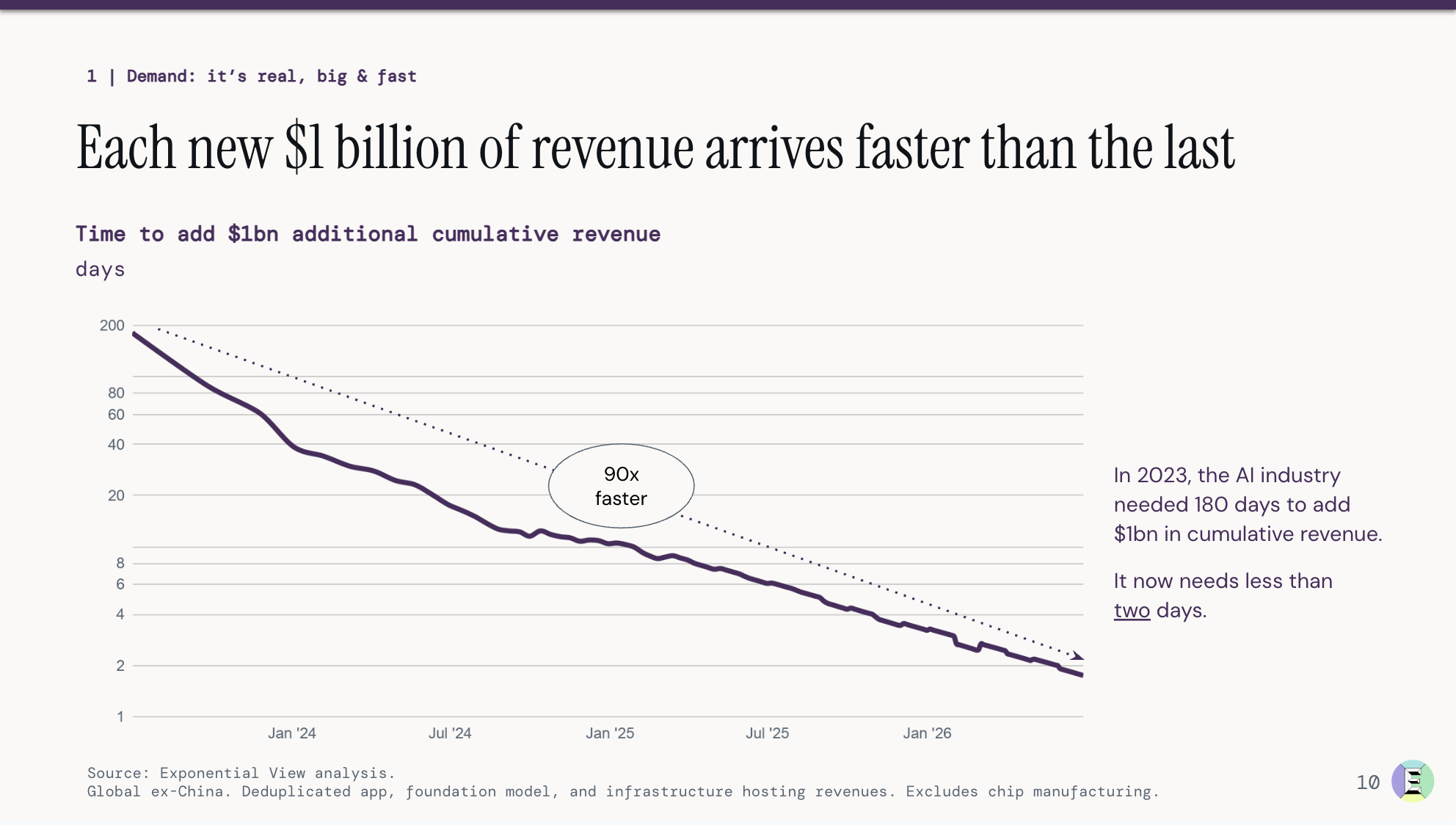
The AI economy is estimated to generate $175 billion in annualized revenue, signifying a growing demand among customers for AI technology. This figure excludes non-core components like chip sales and legacy software, thereby reflecting genuine market interest. The revenue from the AI economy is scaling quickly, with a noted acceleration: in 2023, it took 180 days to add $1 billion in revenue, while today it takes less than two days. This rapid growth positions AI as a potentially transformative force across industries.
Investment in AI infrastructure is also projected to rise sharply, with estimates suggesting capital expenditures could hit $1.6 trillion by 2027. Major players like Microsoft reported $90 billion in revenue, with its cloud services growing by 27%, while Taiwan Semiconductor generated $40.2 billion in Q2 revenue. The ability of AI to generate revenue is beginning to balance the costs associated with infrastructure development, suggesting a shift away from speculative development toward a more sustainable economic model.
Despite the promising growth, investors should proceed cautiously. Reports indicate that while demand is significant, margins could face pressure, making stock selection crucial. The environment for AI investments is evolving, and careful assessment of which companies can convert demand into long-term profits will be essential.
5 Stocks Our Experts Predict Could Double In the Next Year
By submitting your email, you'll also get a free pivot & flow membership. A free daily market overview. You can unsubscribe at any time.