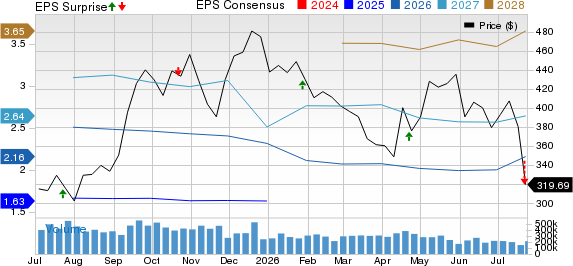
Tesla’s shares fell more than 14% following its second-quarter 2026 earnings report, which revealed adjusted earnings of 33 cents per share—17.5% lower year over year and below the expected 50 cents. Despite achieving a record 480,126 vehicle deliveries, strong automotive margins were squeezed, declining to 16.3% due to price reductions. The energy segment similarly faced margin pressures, with gross margins dropping to 20.4% from 39.5%.
Management anticipates 2026 capital expenditures to exceed $25 billion, emphasizing concerns over rising costs associated with production growth, particularly in battery packs and electronic components. Tesla’s rising number of Full Self-Driving (FSD) customers reached 1.48 million, a 56% year-over-year increase, while the company’s balance sheet shows $43.5 billion in cash and short-term investments, providing financial flexibility amidst these challenges.
Wall Street’s average price target for Tesla stands at $417.91, suggesting a potential upside of approximately 31%. As the company navigates near-term hurdles, investors are advised to consider Tesla’s long-term growth prospects in EVs, autonomy, and energy, despite the recent declines in its stock value.
5 Stocks Our Experts Predict Could Double In the Next Year
By submitting your email, you'll also get a free pivot & flow membership. A free daily market overview. You can unsubscribe at any time.