The Shift from Cash to Bonds
“While it’s easy to get attached to high-yielding cash, especially when it yields more than some bonds, it’s also important to understand why it may be time to move into bonds. The bottom line is that holding cash while waiting until there’s more certainty in the economic outlook, the Federal Reserve’s (Fed) path, or the geopolitical environment could cost total return relative to bonds based on the past six interest-rate hiking cycles.” – Wellington Management
Money flows into money market funds have been significant as investors seek to capitalize on 5%+ rates on their cash. As we move through the remainder of this cycle it is likely that the Fed will keep rates elevated for a period of time to dampen any remaining inflation in the system and get the rate back to the 2% target. Unfortunately for cash investors as the Fed does embark on reducing rates, they will see the rates paid on their cash fall. This can be combatted by investors seeking to increase duration even modestly to lock in higher rates for longer.
If inflation is falling, the Fed has to change its nominal rate, so I could see the Fed cutting by 100Bps this year to maintain a neutral rate, but we are unlikely to see the six cuts the market is currently pricing in. The one exception for this, is if we see a material change in the economic data that would warrant further cuts in rates.
Wellington Management looked at past rate cycles and found the following:
Our analysis looks at two timeframes. The first one starts at the last interest-rate hike in each Fed tightening cycle since 1983 (Figure 1). The second one starts at the first hike of each Fed-tightening cycle since 1983 (Figure 2).
Why has the experience in bonds been superior to cash? There are three key reasons:
1. Whether or not the investment horizon begins with the first hike or the last hike of each Fed-tightening cycle, it incorporates the next Fed easing cycle when the yield curve steepens with short-term rates falling.
2. The market anticipated rate cuts in each tightening cycle three to 13 months before the next rate cut, adding positive return in this period. Thus, an investor wanting to time the entry into bonds needs to be early. While bonds may not fare as well as cash if you’re early, we show that bond returns are comparable to cash in the short term, and the ensuing easing cycle more than compensates.
3. Cash also tends to suffer during easing cycles as its yield drops along with Fed interest-rate cuts.
We analyzed the three-year total returns of cash, Treasuries, bonds (as represented by the Bloomberg Aggregate Bond Index), and corporate bonds (as represented by the Bloomberg US Corporate Bond Index) starting from the last hike of each of the past six full US Fed interest-rate tightening cycles since 1980. We also ran the same analysis giving cash an “advantage.” To do this, we began our total return analysis from the first hike instead of the last hike.
They continue showing the results of their study of rate cycles. While all bond strategies outperformed cash, what is most interesting to me is how corporate bonds outperformed Treasury bonds due to spread compression.
Figure 1 illustrates that returns for all the bond strategies we observed were around double the returns of cash. Figure 2 shows that returns for the bond strategies were seven to 10 percentage points better than cash. In both analyses, corporate bonds outperformed Treasuries and the Bloomberg Aggregate Bond Index due to their higher yield and periods of spread compression, which added net positive return.
The Current Economic Landscape
The economy has defied the bears entirely, clocking in double digit returns in 2023, and expected to produce positive returns in 2024. With such a backdrop, investors may wonder, why should I bother with fixed income securities?
Investors ask this question of course because of their naivety, and lack of knowledge of investment history. Investors in the 1920’s asked themselves the same question, it is perennial that an investor should ride the waves of greed and fear all through their investment lives.
As Charles Mackay taught us in Extraordinary Popular Delusions and the Madness of Crowds, people think in herds, this herd behavior is one of the driving forces behind the momentum of market movements.
Recency bias takes over and investors believe the stocks that have been going up every year, will continue going up in perpetuity. Any student of market history knows this is not the case. There will be a reversion to the mean, and a return to sanity of the herd.
The case for bonds is a case to break free from the cycle of greed and fear, and instead follow an evidence-based framework that aims for an investor to be compensated for the risk they are taking, know their rate of return, and their maturity date. To move away from risk when investors are not paid to take it, and towards risk when they are. The idea that stocks should produce a premium return vs. bonds in all periods, is simply not the case.
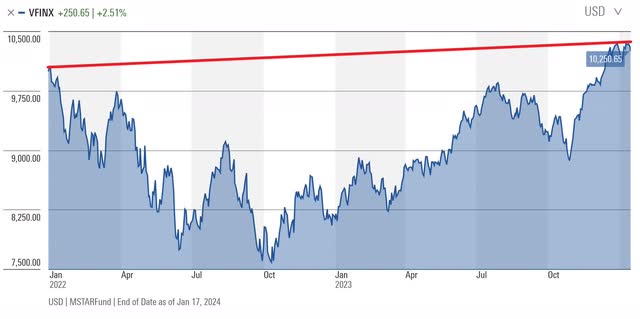
Investors may produce outsized returns with stock portfolios, but what they do not seem to realize, is that much of this return comes from uncompensated risk. Take the S&P 500 index fund from Vanguard (VFINX).
The Case for Alternative Investments in the Current Financial Landscape
As we reflect on the historical returns of this century, it is notable that the 6.91% return outpaced inflation and the total bond index return of 4.08%. However, a closer examination reveals the unacknowledged truth. Investors failed to recognize that they took on more than double the risk compared to the compensation provided by the stock market. The Sharpe ratio of 0.40 indicates that investors were inadequately compensated for the risk they assumed. The standard deviation of returns stood at 15.03, signifying significant risk. Furthermore, the absence of a guaranteed equity risk premium was seldom pondered upon.
This scenario presents a compelling argument for incorporating alternative investments as the third pillar alongside stocks and bonds. As stocks remain stagnant at the same level for the past two years, adjusted for inflation, they have yielded a negative real rate of return.
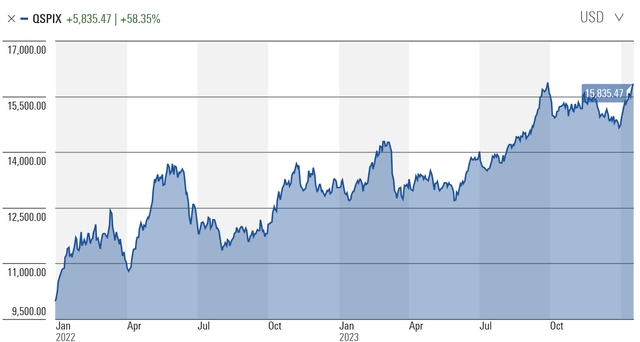
Conversely, an investor who integrated AQR Style Premia (QSPIX) as part of a total alternative strategy witnessed more than a 58% gain in their portfolio during the same period.
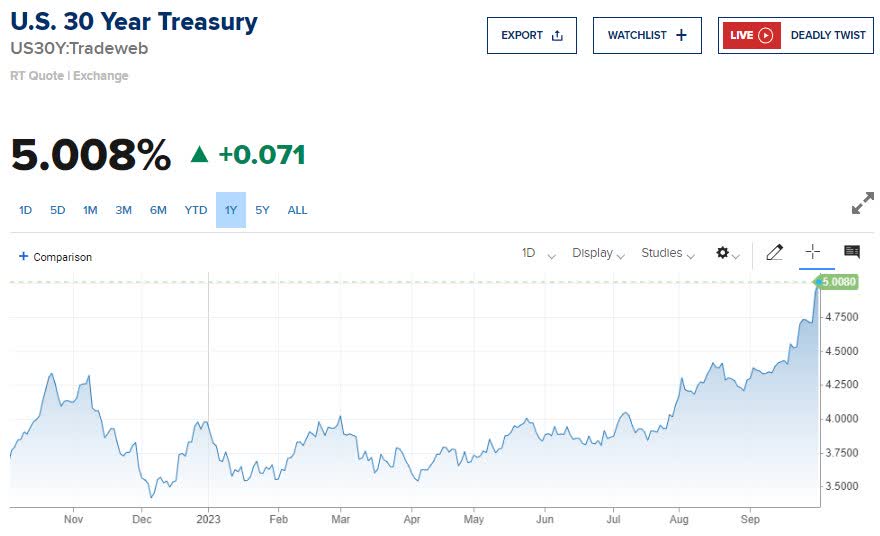
Given the prevailing environment with government bond rates exceeding 5% and even higher in corporate credit, the anticipated returns for investors are exceedingly favorable compared to recent times. Notably, investors could have secured a 5% yield on a 30-year bond just last year.
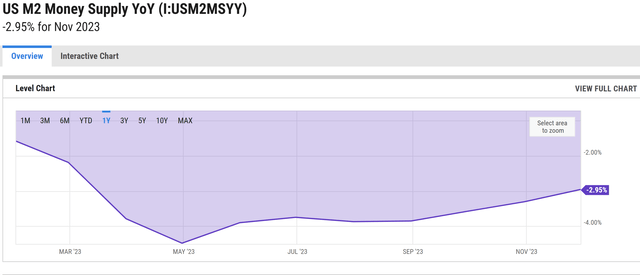
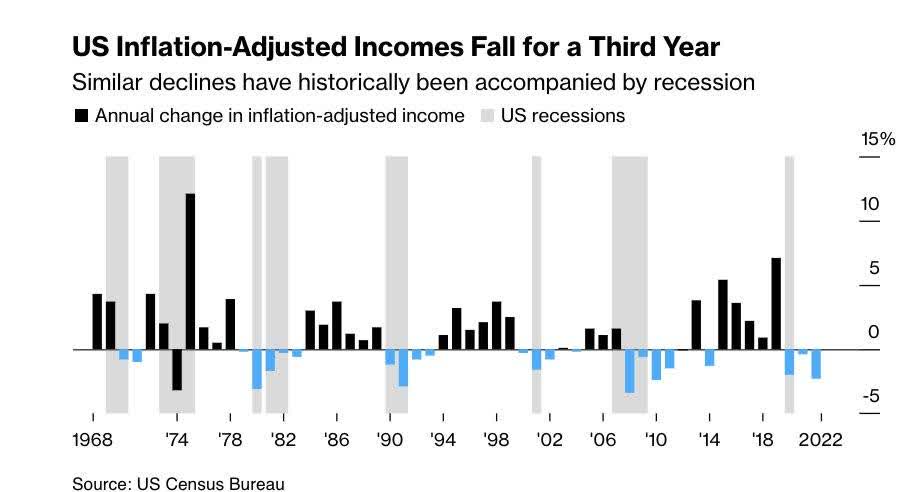
Furthermore, an economic rationale supports bonds as the ideal asset at present. Leading indicators such as the number of individuals holding multiple jobs, inflation-adjusted wages, credit card balances, delinquencies, and, notably, M2, all point toward an impending recession and a looming deflationary period.
During a deflation, US Treasury bonds, notes, and bills emerge as the most suitable assets to hold. For retirement investors with a low-risk tolerance, an asset of high quality, negatively correlated with stocks during market downturns that thrives amid deflationary conditions, serves as a pivotal component of a well-diversified portfolio.
Proposed Strategy and Conclusion
For investors seeking to expand their bond portfolio, a barbell approach that combines high-quality long-term US Treasury bonds with corporate credit and high-yield bonds at the shorter to intermediate end is recommended for this cycle. Additionally, expanding beyond the US borders presents numerous opportunities in the global corporate bond markets on a hedged and unhedged basis.
Preferably, individual securities are favored to tailor duration and yield in alignment with specific needs and portfolio objectives. For those with limited expertise or time, an array of bond funds are available as viable alternatives to construct an optimal portfolio.
In summary, cash-holding investors have a genuine opportunity to extend their duration not only for higher long-term yields but also to capture potential capital gains, as evidenced by past cycles. Moreover, stock investors who have not realigned their portfolio can now diversify with fixed income, a decision that has the potential to yield superior returns throughout a complete investment cycle.