Federal Reserve Chair Jay Powell expressed uncertainty regarding the economic impacts of rising oil prices, stating at a recent press conference that “nobody knows” how these changes will affect inflation rates. As of now, futures markets indicate a diminishing likelihood of rate cuts, with concerns about potential stagflation growing amidst predictions of inflation resurgence, underscored by a jump to $100 per barrel for oil—a situation not anticipated earlier this year.
In light of these developments, recent data reflects a notable stagnation in job creation within the private sector, with essentially zero new jobs added over the past six months. Simultaneously, advancements in artificial intelligence (AI) are reshaping employment dynamics, as businesses are reporting significant reductions in costs and changes in workforce needs. For instance, one entrepreneur noted a 70% expense reduction and a five-sixths cut in headcount through AI implementation, even while growing revenue.
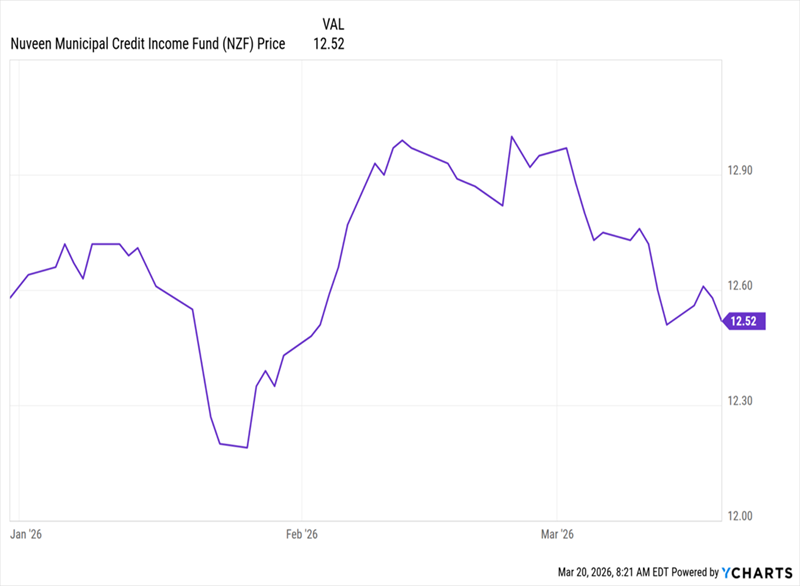
In the municipal bond market, the Nuveen Municipal Credit Income Fund (NZF) has experienced a price drop to December levels as market reactions to oil price hikes pressure Treasury yields. With the fund’s yield at 7.6%, its investment appeal is heightened against the backdrop of a shifting economy influenced by AI advancements, suggesting potential opportunities for investors seeking tax-free income amidst rising inflation expectations.