Warren Buffett’s Latest Moves: A Peek into Berkshire Hathaway’s Investments
For investors, few events are as highly awaited as when Berkshire Hathaway’s (NYSE: BRK.A)(NYSE: BRK.B) CEO Warren Buffett reveals his recent investment activities.
Institutional investors managing over $100 million must file Form 13F with the SEC within 45 days after each quarter ends. This document gives a snapshot of what major money managers are buying and selling. With nearly $287 billion managed by Berkshire, a filing is mandatory.
The deadline for first-quarter trading activity came on May 15, and Buffett’s firm is known for submitting its 13F after market close on deadline days.

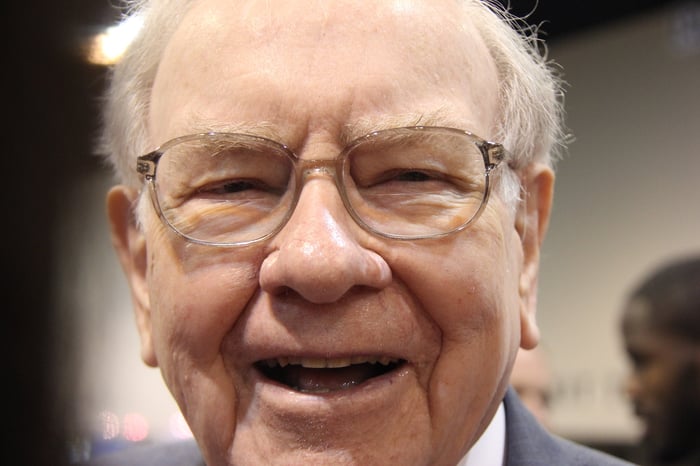
Berkshire Hathaway CEO Warren Buffett. Image source: The Motley Fool.
The first-quarter cash flow statement reflected an active period for Berkshire. Buffett increased the company’s investment in alcoholic beverage firm Constellation Brands (NYSE: STZ) significantly and continued to invest in Domino’s Pizza. Conversely, he reduced Berkshire’s holdings in Bank of America (NYSE: BAC) and entirely exited his position in Citigroup.
However, the real talk on Wall Street stems from the confidential treatment applied to Berkshire Hathaway’s latest 13F filing.
Buffett’s Discreet Accumulation of Stocks
Occasionally, top money managers seek regulatory permission to avoid reporting details of their trading activity. This strategy allows them to quietly build positions in specific investments. Since investors often follow Buffett’s moves, not disclosing his purchases lets him acquire stakes at improved prices.
The last instance of Buffett using this confidentiality occurred in 2023 when he built a position in Chubb (NYSE: CB) during the third and fourth quarters, revealing it in the first-quarter 2024 filing.
Historically, Buffett rarely relied on this method. However, in 2020, he successfully accumulated large stakes in Verizon Communications and Chevron, both significant parts of Berkshire’s portfolio. A decade ago, he also utilized such a filing to increase his stake in Phillips 66.
The pressing question now is: What stock is Buffett currently purchasing?
Clues Indicating Buffett’s Secret Investment
The most telling hint lies in Berkshire Hathaway’s first-quarter operational results. On page 8, under “Investments in equity securities,” a cost basis comparison from December 31, 2024, to March 31, 2025, reveals three categories:
- Banks, insurance, and finance: $15.707 billion cost basis on 12/31 vs. $14.268 billion on 3/31.
- Consumer products: $12.658 billion cost basis on 12/31 vs. $13.76 billion on 3/31.
- Commercial, industrial, and other: $47.141 billion cost basis on 12/31 vs. $49.097 billion on 3/31.
The decrease in the financial category reflects Buffett’s ongoing sales of Bank of America and Citigroup. Meanwhile, the increase in consumer products can largely be attributed to Berkshire’s $1.1 billion investment in Constellation Brands. Thus, Buffett’s undisclosed stock likely falls under the “commercial, industrial, and other” segment.
While exact cost bases of most Berkshire investments remain unknown, estimates suggest Buffett contributed around $285 million to Pool Corp., $36 million to Occidental Petroleum, and approximately $21 million to HEICO.
This analysis indicates Buffett may have invested over $1.6 billion into the undisclosed stock recently. Since Berkshire must report stakes exceeding 5% in any company, this hints that the mystery stock has a market cap likely exceeding $50 billion.
Additionally, Buffett’s commitment to value investing highlights his eagerness to find a favorable deal. He has refrained from buying back shares of Berkshire for nine months after previously repurchasing nearly $78 billion over 24 quarters. This suggests he is likely searching for opportunities amidst a costly market.
“`html
Warren Buffett’s Potential Investment in UPS: A Closer Look
Image source: Getty Images.
Narrowing Down the Sector
Warren Buffett’s investment choices often encompass various sectors, but certain areas seem less likely for him. For example, the technology sector is categorized under “other,” where Buffett’s lack of expertise may limit his interest. Similarly, healthcare appears to be an impractical focus given his investment history.
Since early 2022, Buffett has consistently increased his holdings in Occidental Petroleum. This points away from further investments in drilling companies, leading to a stronger inclination towards the industrial sector.
Market Opportunities in Industrials
The market sell-off triggered by President Donald Trump’s tariffs during the first quarter has opened intriguing entry points within industrial stocks. However, with around thirty-six industrial companies boasting market caps over $50 billion, refining choices is challenging until valuation comes into play.
Currently, only three industrial companies present forward price-to-earnings (P/E) ratios below 15—considered a benchmark for value investing:
- FedEx: forward P/E of 11.2
- United Parcel Service (NYSE: UPS): forward P/E of 12.5
- Paccar: forward P/E of 12.8
Paccar’s soaring share price over the past three years raises doubts about Buffett’s interest. Consequently, it seems plausible that he may be targeting a major logistics player.
UPS: A Value Proposition
While FedEx presently appears to be the cheaper option based on forward P/E, UPS—previously part of Berkshire Hathaway’s portfolio— aligns with several criteria that Buffett tends to favor.
UPS faced a significant decline in January after announcing plans to reduce service volume to its largest customer, Amazon (NASDAQ: AMZN). Although this decision may seem puzzling given Amazon’s potential for high shipping volumes, it aligns with UPS’s strategy to focus on higher-margin services. This creates a situation where short-term concerns lead to a clear price dislocation, without compromising UPS’s long-term growth prospects.
Additionally, UPS has a strong competitive advantage due to its recognizable branding and unmatched logistics network. This scenario excites Buffett, who often seeks opportunities to invest in well-established brands facing temporary setbacks.
UPS also maintains a robust capital return strategy, having returned $5.9 billion to shareholders in the previous year through share repurchases and dividends; its current dividend yield stands at an impressive 6.5%.
Current Share Valuation
After Berkshire sold its remaining stake in UPS in 2023, shares were trading in the high $170s to $180s range. As of now, the stock trades around $100, a level unseen consistently for more than five years.
If pressed on which stock Buffett is quietly accumulating, my bet would be on a renewed investment in UPS.
Investment Considerations for UPS
Before investing in UPS, potential buyers should carefully evaluate the situation:
The Motley Fool Stock Advisor team has identified ten stocks currently seen as top investment bets, notably excluding UPS. The selected stocks are believed to offer substantial returns in future markets.
For instance, if an investor had purchased $1,000 in Netflix on December 17, 2004, the return would have reached approximately $642,582. Similarly, an investment in Nvidia on April 15, 2005, would now be worth around $829,879.
Notably, the Stock Advisor’s total average return stands at an impressive 975%, significantly outperforming the S&P 500’s 172% return. Investors are encouraged to stay informed about the ten featured stocks available with membership.
The views and opinions expressed herein are those of the author and do not necessarily reflect those of Nasdaq, Inc.
“`
5 Stocks Our Experts Predict Could Double In the Next Year
By submitting your email, you'll also get a free pivot & flow membership. A free daily market overview. You can unsubscribe at any time.