
Craig Hastings/Moment via Getty Images
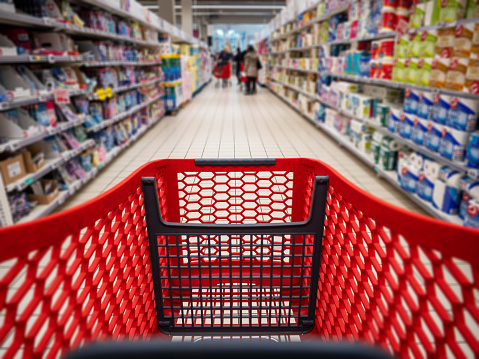
Recent data shows that weight-loss medications are significantly impacting how much individuals spend on groceries, with major implications for companies in the retail and pharmaceutical sectors.
An updated Numerator survey of 92,000 people revealed that 12.3% of households reported having a member utilizing GLP-1s such as Novo Nordisk’s Ozempic and Wegovy and Eli Lilly’s Mounjaro and Zepbound.
The survey also indicated that households spend more on groceries than non-GLP-1 households. However, their spending declines after starting medication use. Before beginning treatment, households using GLP-1 drugs spent over $150 more on groceries per month on average compared to non-user households. This difference in spending is influenced by factors such as household size, income, number of children, and general food expenditure.
According to analyst Pamela Kaufman and her team at Morgan Stanley, “Monthly spend on categories most negatively impacted by GLP-1 users for weight loss include snacks, pastries, and ice cream, while yogurt, fish, and vegetable snacks are most positively impacted. Our prior survey work suggests a notable reduction in the consumption of less healthy categories when taking GLP-1 drugs.”
“When monthly grocery spend is indexed to adjust for these differences, GLP-1 households’ monthly grocery spend decreases anywhere from 6% to 9% more than the change in spending among non-GLP-1 households,” Kaufman affirmed.
Morgan Stanley notes that major grocery stocks such as Walmart, Target, Kroger, and Albertsons may experience the impact of this trend.
5 Stocks Our Experts Predict Could Double In the Next Year
By submitting your email, you'll also get a free pivot & flow membership. A free daily market overview. You can unsubscribe at any time.