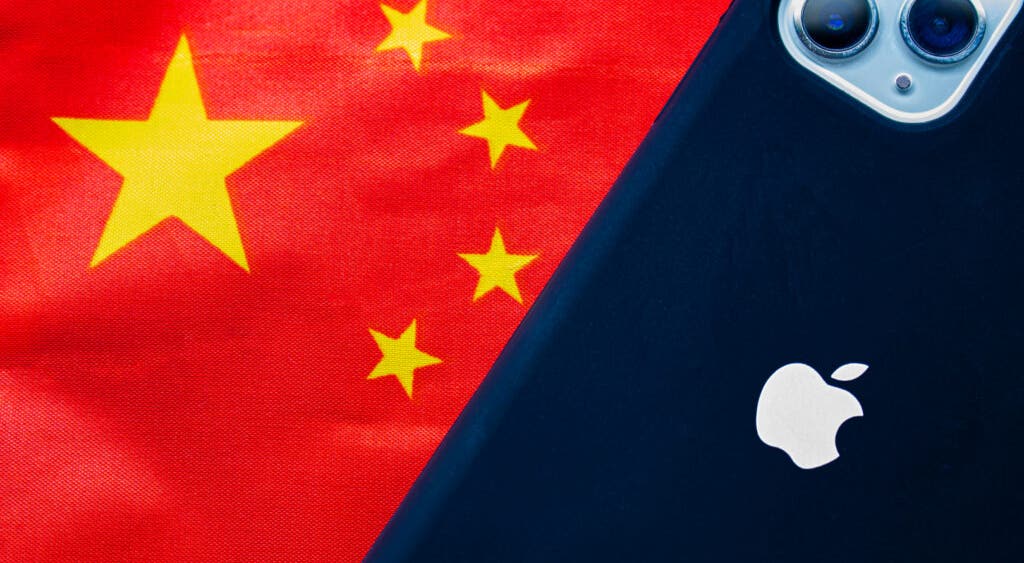

Apple Inc.’s AAPL strategic decision to introduce RCS support to iMessage in 2024 has sparked controversy over its motivation. A recent report points to potential influence from China, challenging prior assumptions that European pressure was the primary driver.
Revelations of China’s Role in Apple’s Decision
What Happened: John Gruber’s Daring Fireball report suggests that China may have been a pivotal factor in Apple’s choice to embrace the RCS messaging standard in iMessage, as opposed to previous beliefs that European demands were the primary force behind the decision.
With Apple feeling the heat in the Chinese market, this may have contributed significantly to the company’s pivot. Gruber dismisses notions that the European Commission’s Digital Markets Act swayed Apple’s decision, emphasizing that Apple was not considered a “gatekeeper” under the Act, and thus, Europe would not mandate Apple to enable third-party apps to utilize iMessage services.
Gruber’s analysis of the sequence of events does not align with the theory of European influence. He highlights that leaks from September, predating Apple’s RCS confirmation in November, indicated that iMessage was not classified as a gatekeeper before the announcement.
Furthermore, Gruber posits that China’s influence may have been the catalyst for Apple’s paradigm shift. Chinese carriers have long supported RCS, and the Chinese government began mandating RCS support for new 5G devices to be certified in the country since 2023.
Despite Apple’s initial hesitance to support RCS due to encryption concerns, Gruber infers that the influence of China’s government likely enforced the change.
Implications of the Revelation
Why It Matters: The initial attribution of Apple’s decision to support RCS in 2024 to EU pressure has been called into question. Speculation regarding the EU’s Digital Markets Act, anticipated to have substantial implications for messaging apps, fueled expectations of Apple opening up iMessage to third-party chats. However, the timeline of events and Apple’s non-gatekeeper status under the Act contradict this theory, pointing instead to China’s influence as the driving force behind Apple’s RCS support decision.
The implications are significant, as investors and industry observers must now reconsider the scale and impact of China’s influence on one of the world’s most valuable companies. Apple’s responsiveness to the Chinese government and market dynamics introduces a new layer of risk and uncertainty for stakeholders.
Disclaimer: This content was partially produced with the help of Benzinga Neuro and was reviewed and published by Benzinga editors.
Photo courtesy: oasisamuel on Shutterstock
5 Stocks Our Experts Predict Could Double In the Next Year
By submitting your email, you'll also get a free pivot & flow membership. A free daily market overview. You can unsubscribe at any time.