Symbotic (NASDAQ: SYM) arrived onto the public market by merging with a SPAC on June 8, 2022, causing a buzz among investors. After an impressive debut at $10.54, the company’s stock catapulted to a record high of $63.54 by July 31, 2023.
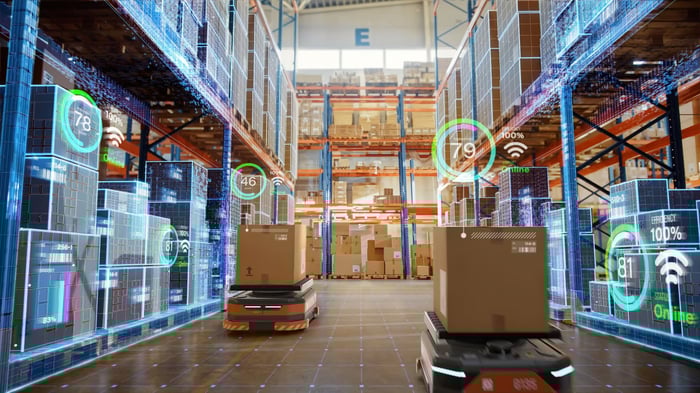
The allure of Symbotic was crystal clear. Their autonomous robots promised to streamline pallet and case processing, boasting about massive cost savings potential through a single module investment. The echo of an enticing $50 million upfront cost translating into a whopping $250 million lifetime savings rung loudly in the ears of many investors.
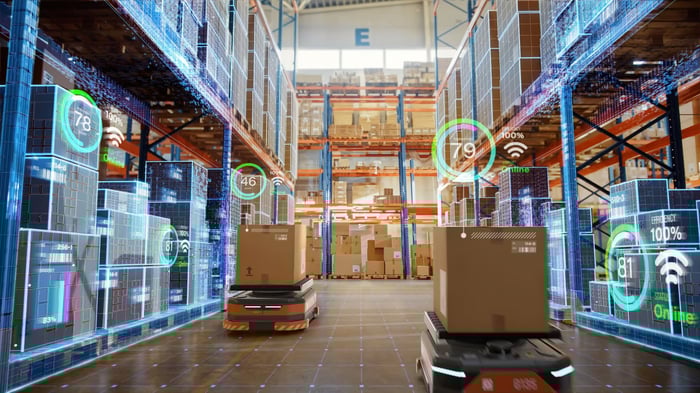
Image source: Getty Images.
Further kindling interest, Symbotic boasted notable backers, including SoftBank (OTC: SFTB.Y) and retail giant, Walmart (NYSE:WMT), which secured an 11% ownership slice. With revenue surging at a remarkable CAGR of 116% between fiscal 2021 and fiscal 2023, analysts anticipated a continued CAGR of 44% leading up to fiscal 2026.
Although Symbotic’s stock has retraced slightly to around $40, its ascent of nearly 280% within a span of two years is undeniably impressive. Yet, before plunging into bullish waters, investors should heed the following three crucial considerations.
Walmart Dominance and Risks
During fiscal 2023, a staggering 88% of Symbotic’s revenue flowed from its Master Automation Agreement (MAA) with Walmart. This comprehensive deal, set to extend until 2034, aims to automate all 42 of Walmart’s U.S. regional distribution centers.
Despite serving other clients like Target, Albertsons, and C&S Wholesale, the overwhelming reliance on Walmart poses a significant vulnerability. Failure to diversify beyond Walmart could spell a sudden revenue stagnation once the domestic automation process concludes.
Creation of a Crucial Customer: GreenBox
In a strategic move, Symbotic partnered with SoftBank to establish GreenBox, a warehouse-as-a-service joint venture. Holding a 35% stake, Symbotic teamed up with SoftBank to corner 65% ownership. Via a $7.5 billion pact kicking off in fiscal 2024, GreenBox solely sources its systems from Symbotic, envisaging over $500 million in annual recurring revenue when all systems are operational.
The promise of diversification away from Walmart sounds appealing. However, contingent on SoftBank’s support, this venture could backfire, afflicting Symbotic if GreenBox fails to thrive in the competitive landscape.
Valuation Concerns with Dual-Class Shares
While Symbotic’s $2.97 billion enterprise value appears enticing at 1.7 times this year’s sales, its dual-class structure, granting founder Rick Cohen a hefty 75% stake, inflates the actual market cap to a hefty $22.9 billion.
Considering this market cap, Symbotic’s stock valuation – standing at 13 times this year’s sales – appears lofty. Yet, if conviction lingers in increased warehouse automation adoption, the lofty valuation seems more palatable. Projections from Precedence Research anticipate a robust 16% CAGR in the global warehouse automation market between 2023 to 2032.
The Right Time to Enter the Arena?
With concerns over customer concentration, absence of GAAP profits, and a high valuation at play, Symbotic emerges as a daring investment proposition. Recent insider selling activity, significantly outpacing purchases, and a substantial 10% of shares being shorted till January end, reveal a degree of investor wariness.
Nonetheless, should Symbotic metamorphose into a diversified warehouse automation entity, broaden beyond Walmart and SoftBank, profitability might gain traction. As scalability efficiencies kick in, the growth trajectory may stabilize, potentially transforming Symbotic into a reliable growth stock. Although the stock whispers encouragement for speculative plays, investors must brace for turbulence – perhaps even a halving before a doubling, in its volatile journey.
Before leaping into Symbotic stock with $1,000, weigh all factors meticulously.
The Motley Fool Stock Advisor analyst team pinpointed the 10 best stocks they believe could deliver extraordinary returns in the foreseeable future – with Symbotic not making the cut. These elite 10 stocks offer a roadmap for potential success, tripling the returns of S&P 500 since 2002.*
Peek at the 10 stocks
*Stock Advisor returns as of February 20, 2024
John Mackey, former CEO of Whole Foods Market under Amazon, and The Motley Fool board member, Leo Sun with Amazon positions. The Motley Fool holds positions in and endorses Amazon, Target, and Walmart, with transparency reflected in their disclosure policy.
Opinions stated here are exclusive to the author and not necessarily reflective of Nasdaq, Inc.