Berkshire Hathaway’s Shareholder Meeting Highlights Key Market Shifts
On Wall Street, few events capture attention like Berkshire Hathaway‘s annual shareholder meeting. This year’s gathering saw approximately 40,000 attendees, a stark contrast to the mid-1970s when only about two dozen shareholders would attend in the employee cafeteria of one of its subsidiaries, National Indemnity.
The attraction largely stems from the opportunity to hear insights from Warren Buffett, one of the most successful investors in the world. Since becoming CEO six decades ago, Buffett has nearly doubled the annualized total return, including dividends, of the benchmark S&P 500 (SNPINDEX: ^GSPC).

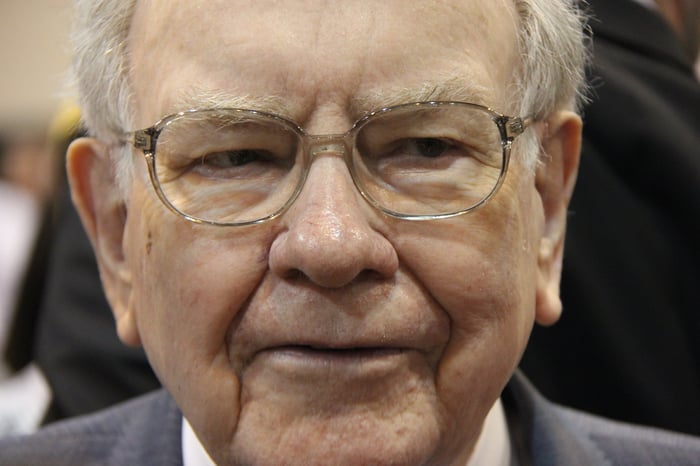
Berkshire Hathaway CEO Warren Buffett. Image source: The Motley Fool.
This year’s meeting on May 3 was particularly significant. Buffett announced he would step down at the end of the year, transitioning leadership to his designated successor, Greg Abel. While some aspects of Berkshire Hathaway may remain unchanged, this leadership shift is expected to bring notable adjustments.
Berkshire Hathaway’s Cash Reserves Reach Record Levels
During the annual meeting, Berkshire Hathaway also released its first-quarter operating results, allowing shareholders to gauge the performance of its subsidiaries, including BNSF and GEICO. One of the standout figures was its cash balance, which reached a record $347.7 billion, encompassing cash, cash equivalents, and U.S. Treasuries.
Typically, a robust cash position is seen as a positive by Wall Street. However, this is not the case for Berkshire Hathaway. Investors often view Buffett and his team as indicators of market conditions. The absence of stock purchases from Buffett could signal caution in the market.
According to Berkshire Hathaway’s cash flow statements, the company has been a net seller of stocks for ten consecutive quarters, from October 1, 2022, to March 31, 2025. During this time, more than $174 billion worth of equity securities were sold compared to purchases.
This large amount, when added to the cash generated from owned assets, illustrates how Berkshire’s cash reserves have more than tripled over three years to hit nearly $348 billion.
Warren Buffett’s Investment Philosophy Faces Challenges
Buffett’s core investing principle is to never bet against America, reflecting his understanding of economic and market cycles. Historically, U.S. recessions and bear markets are brief, with the average recession since World War II lasting about ten months and S&P 500 bear markets averaging just 286 days.
In contrast, economic expansions tend to be much longer, averaging five years. Rather than preparing for unpredictable downturns, Buffett focuses on positioning Berkshire’s portfolio to benefit from prolonged economic growth.
Yet, an unwavering commitment to value investing means Buffett only buys when valuations are favorable. For instance, since July 1, 2018, he repurchased nearly $78 billion worth of Berkshire stock, while stock was trading between 30% and 60% above book value. However, over the last three quarters, Buffett has refrained from stock buybacks, as Berkshire’s stock has been trading at a 60% to 80% premium to book value, indicating that he views the market as overpriced.

S&P 500 Shiller CAPE Ratio data by YCharts.
The S&P 500’s Shiller price-to-earnings ratio illustrates the market’s elevated valuation levels presently, aligning with Buffett’s cautious approach. As a veteran investor, Buffett’s current reluctance to buy could be indicative of broader market challenges, signifying a complex financial landscape ahead.
# Market Valuations Signal Caution as 2025 Begins
The cyclically adjusted P/E Ratio (CAPE Ratio) shows that the stock market entered 2025 at a historically expensive valuation. In December, the Shiller P/E approached a multiple of 39, marking the highest level during the current bull market cycle. This valuation ranks as the third-priciest multiple in a continuous bull market since January 1871. For context, the average Shiller P/E multiple since 1871 is a much more moderate 17.24.
Although the Shiller P/E is not effective for pinpointing the timing of downturns in the S&P 500 or other major stock indexes, it tends to anticipate significant market declines. Historical data shows that the last five occasions when the Shiller P/E surpassed 30 resulted in declines between 20% and 89% for one or more major stock indexes.
Warren Buffett has not directly commented on the Shiller P/E or similar valuation measures. However, his actions—such as recording ten consecutive quarters of net selling and maintaining a substantial cash reserve—signal that current stock valuations are concerning. While the long-term outlook for the U.S. economy and stock market may remain bright, Buffett’s recent decisions may raise alarms for investors in the short term.
Should You Invest $1,000 in Berkshire Hathaway Right Now?
Before purchasing stock in Berkshire Hathaway, consider the following:
The Motley Fool Stock Advisor analyst team has identified ten stocks they believe are currently better investment options, leaving Berkshire Hathaway off their list. The stocks that made their cut could yield significant returns in the coming years.
For instance, if you had invested $1,000 in Netflix when it made their list on December 17, 2004, your investment would have grown to approximately $614,911 by now!* Similarly, an investment of $1,000 in Nvidia from April 15, 2005, would have increased to around $714,958!*
It’s also worth noting that the Stock Advisor has achieved a total average return of 907%, significantly outperforming the S&P 500’s return of 163%. Don’t miss out on their latest top ten list, which is accessible upon joining Stock Advisor.
*Stock Advisor returns as of May 5, 2025
Sean Williams has no position in any of the stocks mentioned. The Motley Fool has positions in and recommends Berkshire Hathaway. The Motley Fool has a disclosure policy.
The views and opinions expressed herein are those of the author and do not necessarily reflect those of Nasdaq, Inc.
5 Stocks Our Experts Predict Could Double In the Next Year
By submitting your email, you'll also get a free pivot & flow membership. A free daily market overview. You can unsubscribe at any time.