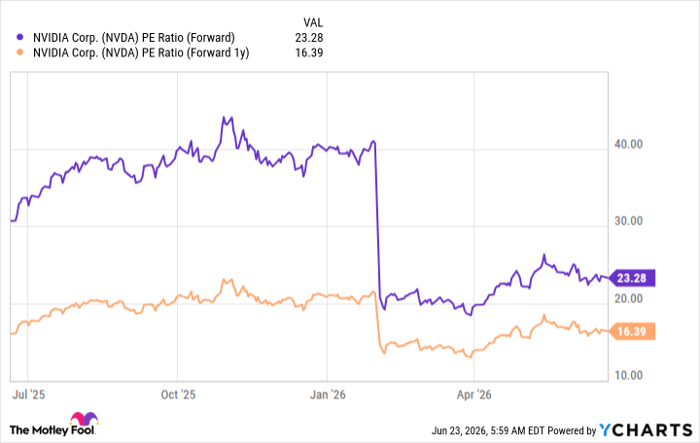
Nvidia’s stock (NASDAQ: NVDA) has risen only 4% so far in 2026, underperforming both the S&P 500, which is up 8%, and the Nasdaq Composite, which has gained 9%. The iShares Semiconductor ETF has more than doubled this year, driven by significant gains from competitors like Intel and Micron, while Nvidia has seen its stock decline 17% from its peak in May. Despite this, Nvidia reported a substantial 85% revenue increase year-over-year, reaching $81.6 billion, and its net income soared 139% to $45.5 billion.
Wall Street anticipates that Nvidia’s earnings per share (EPS) will nearly double this year, from $4.77 to approximately $8.69, with projected EPS of $11.67 in January 2028 and $15.76 in January 2029. Currently, Nvidia’s trailing price-to-earnings ratio stands at 33, compared to the S&P 500’s ratio of 26. Analysts have underestimated Nvidia’s growth, with projections for the current fiscal year’s revenue potentially reaching $400 billion, far exceeding earlier estimates of $250 billion.
Investors are cautious due to concerns about an AI bubble, leading to skepticism about Nvidia’s long-term profit sustainability. Despite the current slump in stock performance, Nvidia remains the most profitable company globally, expected to exceed $200 billion in net income this year.
5 Stocks Our Experts Predict Could Double In the Next Year
By submitting your email, you'll also get a free pivot & flow membership. A free daily market overview. You can unsubscribe at any time.