# Market Outlook: Bearish Sentiment Predicted by Jeff Clark
## Bear Market Predictions
Veteran trader Jeff Clark warns of a brutal phase in the current bear market. Despite the S&P being only 4% below its February all-time high, Clark believes a significant decline is on the horizon. Recent earnings reports have been strong, and consumer sentiment improved according to the University of Michigan’s survey.
### Bear Market Mechanics
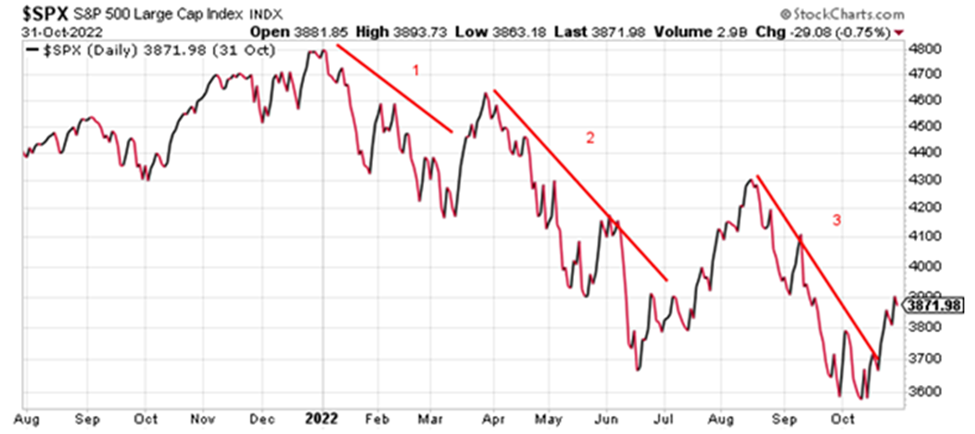
Clark explains that bear markets often have initial rallies that mislead investors. These rallies can induce hesitation among bearish traders and draw reluctant bulls back into the market, creating a false sense of security. He cites a 2022 bear market when the S&P rebounded significantly after an early decline.
V-shaped rallies, Clark notes, can lead to poor investment decisions where investors who sold at lows end up purchasing at higher prices. He anticipates that the current S&P setup limits substantial upside, projecting a market bottom around 4,125 this fall, which could represent a “generational buying opportunity.”
## Sector Predictions
Jeff Clark identifies the financial sector as the leader in the anticipated market decline. The Bullish Percent Index for the Financial Sector (BPFINA) has recently issued a new sell signal. This index tracks the percentage of stocks in a sector that meet bullish criteria, with over 80 indicating overbought conditions.
### Chart Insights
A recent chart highlights the new sell signal in the BPFINA. A previous signal in December had led to profitable trades for Clark and his subscribers, including a 50% return from put options on Bank of America (BAC) within two weeks.
## Legislative Impact
Attention is drawn to a clause in President Trump’s recently passed “One Big Beautiful Bill Act,” specifically “Section 899.” This provision alters how foreign investors are taxed on U.S. investments, potentially impacting portfolios.
Historically, foreign capital has flowed into U.S. assets due to favorable tax treatment. Section 899 removes key exemptions and imposes new reporting and withholding rules, which could have significant consequences for investment patterns, the dollar, and Treasury yields.# New Tax Clause Could Deter Foreign Investment in U.S.
The recent clause complicates and increases costs for foreigners investing in U.S. assets.
Higher taxes of up to 20% and additional compliance requirements may deter foreign investment. This reduction in foreign capital could put downward pressure on stock prices.
Impacts on Governments and Investments
Historically, sovereign wealth funds and foreign central banks have viewed U.S. Treasuries and assets as stable investments.
Section 899 categorizes these entities as taxable investors, weakening their incentive to buy or hold U.S. assets, including Treasuries.
Two main outcomes may arise from this change:
- Potential for a Weaker Dollar
If foreign investments decrease or inflows slow, demand for U.S. dollars may diminish, weakening the currency.
This decline could raise import costs, contribute to unwanted inflation, and prompt a sell-off of dollar-denominated assets.
- Increasing Treasury Yields
As the U.S. reaffirms its debt, reduced foreign demand for Treasuries may lead to increased supply, forcing higher yields to attract buyers.
Rising yields would elevate borrowing costs, exacerbating America’s deteriorating fiscal situation and potentially applying downward pressure on stock valuations.
The clause could correct unfair practices from other nations, specifically targeting those that levy discriminatory taxes on U.S. companies.
Countries imposing digital-services taxes, such as some EU members and the U.K., may be affected.
Both the Trump and Biden administrations have denounced these taxes as targeting U.S. tech firms unfairly.
While this clause proposes fairness, it risks destabilizing traditional foreign investment in U.S. assets, potentially impacting American portfolios.
We will continue to monitor this situation closely.
Conclusion
Section 899 represents a significant shift. It aims to deter unfair trade practices but poses risks to foreign investment that could damage economic stability.
Stay informed as we track these developments.
Regards,
Jeff Remsburg
5 Stocks Our Experts Predict Could Double In the Next Year
By submitting your email, you'll also get a free pivot & flow membership. A free daily market overview. You can unsubscribe at any time.