Investors often flock to dividend-paying stocks, seeking to reap the rewards of stable, passive income. However, the recent dividend cut by Southern Copper (NYSE:SCCO) serves as a stark reminder that not all dividends are sustainable. In a volatile market, sound financials and adequate cash flow are essential to uphold these payouts. Here are three notable companies that could potentially follow suit in slashing their dividends.
Hasbro (HAS)
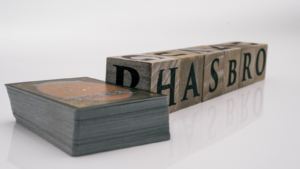
Source: Nico Bekasinski / Shutterstock.com
The toy giant Hasbro (NASDAQ:HAS) has managed to maintain its quarterly dividend at 70 cents per share. Despite this, the company faces significant challenges as its sales plummeted by 23% during the imperative fourth quarter, which includes the lucrative Christmas holidays. These struggles resulted in steep operating losses of $1.2 billion, prompting the company to enact aggressive cost-cutting measures, including a workforce reduction.
Although Hasbro is making efforts to reduce its debt, substantial financial obligations persist, raising concerns about its ability to sustain current dividend outlays. Moreover, with the company generating only around $1.75 per share in free cash flow but paying out $2.80 per share in dividends, the sustainability of the payout remains in doubt, echoed by analysts and comparisons to rival Mattel’s dividend-cutting strategy.1
Innovative Industrial Properties (IIPR)
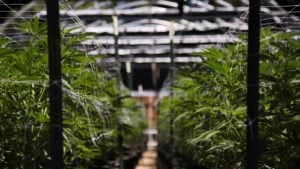
Source: Shutterstock
Despite Innovative Industrial Properties’ (NYSE:IIPR) resilience and substantial growth since its inception, its substantial dividend increases may reach an inflection point. While the company has historically raised dividends at an impressive 42% annually, the recent increase amounted to a mere 1%, failing to keep pace with inflation and diminishing shareholder returns relative to prior periods. This trend is further indicative of the challenges posed by oversupply and regulatory barriers within the marijuana industry, exacerbated by a dividend yield exceeding the adjusted funds from operations (AFFO) yield.
Best Buy (BBY)
Challenges Facing Best Buy: Sales, Dividend, and Store Closures
By Roger Lowenstein
A Struggling Giant
Like other prominent companies, consumer electronics retail behemoth Best Buy (NYSE:BBY) finds itself grappling with several challenges. The company’s dividend, once a badge of honor, has now devolved into a burdensome albatross that is increasingly difficult to shoulder, potentially necessitating a cut to alleviate cash flow pressures.
Declining Sales & Profit Woes
The struggles extend to Best Buy’s sales and profits, both of which are on a downward trajectory. The tumult in the housing market has precipitated a strain on crucial segment sales, especially in the realm of appliances, which constitute 14% of the company’s revenue. Notably, appliance revenue witnessed a marked 15% decline in the third quarter, painting a grim picture of its financial health.
Dividend Growth Amidst Ebbing Cash Flow
Despite the overarching downturn, the retailer continues to amplify its dividend, even as its FCF (Free Cash Flow) evaporates at an alarming rate. Over the past five years, the payout has surged by an average of 15% annually, while over the last decade, it has soared by a whopping 18%. Sustaining such lofty growth rates with FCF rapidly dissipating presents an increasingly insurmountable challenge.
Retail Contraction and Store Closures
In addition to these woes, the company grapples with a contracting retail footprint. Best Buy has shuttered 24 stores in the first nine months of 2023 and a staggering total of 100 over the past five years. Moreover, the retailer has divulged plans to close 15 to 20 stores annually for the foreseeable future. A reduced physical presence invariably translates into lower sales, exacerbating the strain of sustaining a dividend yielding 5% annually. The recent 20% uptick in stock value from its nadir does little to render it a compelling dividend investment.