
Joanna Stern, esteemed senior tech columnist at the Wall Street Journal, recently delved into the realm of electric vehicle (EV) charging economics. Despite the looming upfront costs, Stern’s analysis uncovered significant long-term savings achievable through the convenience of home charging.
Insight Unveiled: Stern’s revelation came to light as she penned a column in the WSJ detailing her personal experience with charging her EV at home. During a segment on CNBC’s “Last Call,” Stern disclosed that a mere $125 spent on home charging facilitated traversing a substantial distance of 2500 miles.
“I am effectively slashing my fuel expenses in half compared to gasoline consumption. This paradigm shift is reverberating nationwide,” asserted Stern.
Comparing her EV charging expenditure with fuel costs for a traditional internal combustion engine (ICE) vehicle utilized by her family, Stern uncovered that at $3 per gallon in New Jersey, the gas expenses for their ICE vehicle nearly doubled those of electric charging.
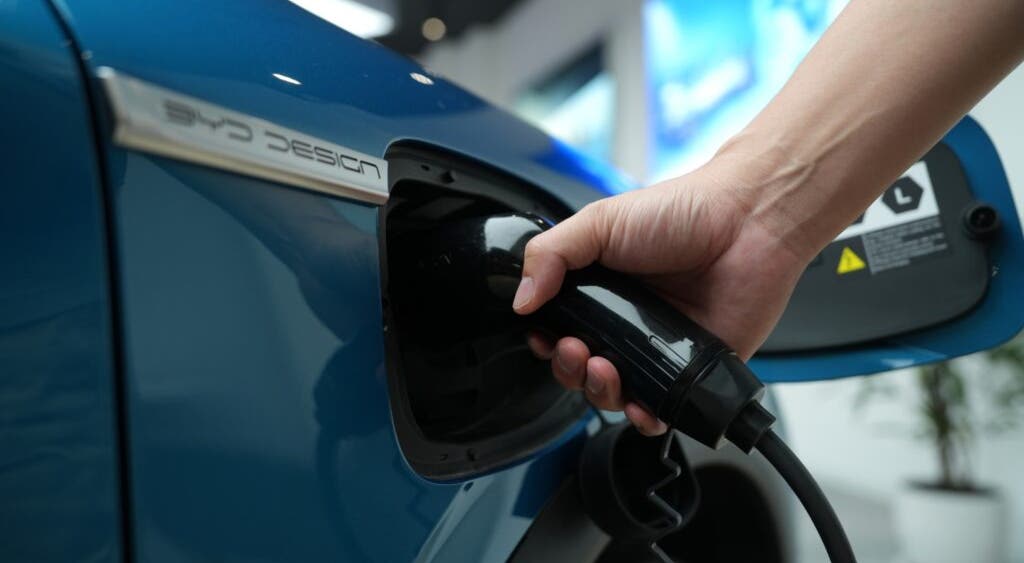
Nonetheless, Stern noted a crucial deficiency in communication from EV manufacturers regarding strategies for recuperating initial investments and locating available subsidies. The installation cost for a home charger typically ranges from $300 to $700, with additional installation charges spanning $300 to $1000.
Relevance: Stern’s narrative serves as a beacon illuminating the extensive cost benefits potentially accrued over time through the adoption of EVs, despite the initial financial outlay.
Riding the wave of progress, companies like Tesla Inc. TSLA have made significant inroads towards enhancing the accessibility of home charging. In a groundbreaking move in 2023, Tesla unveiled an unlimited overnight home charging scheme priced at $30 monthly, poised to further propel EV adoption rates.
Moreover, the EV charging landscape is in a state of flux, exemplified by endeavors of companies like Wallbox WBX in tackling the unique challenges emerging in the industry’s evolution. Efforts are shifting towards integrating charging infrastructure at locations where vehicles are habitually parked for prolonged periods, such as residences and apartment complexes, slated to encompass 80% of all charging ports in the U.S.
Concurrently, competition within the EV charging sector is escalating, with nascent players like Dunamis Charge and automotive giants including BMW, Mercedes-Benz, and others challenging Tesla’s supremacy. These entities are actively addressing impediments related to affordability and accessibility hindering widespread EV adoption in urban settings.
5 Stocks Our Experts Predict Could Double In the Next Year
By submitting your email, you'll also get a free pivot & flow membership. A free daily market overview. You can unsubscribe at any time.