Market Volatility Surges Under Trump’s Presidency in 2025
Editor’s note: This article, initially titled “Beyond the Ups and Downs: Building Wealth in a Volatile Stock Market,” has been updated.
The stock market has experienced significant volatility in early 2025, following Donald Trump’s inauguration as the 47th President of the United States in January.
Initially, markets remained stable, but this tranquility was short-lived.
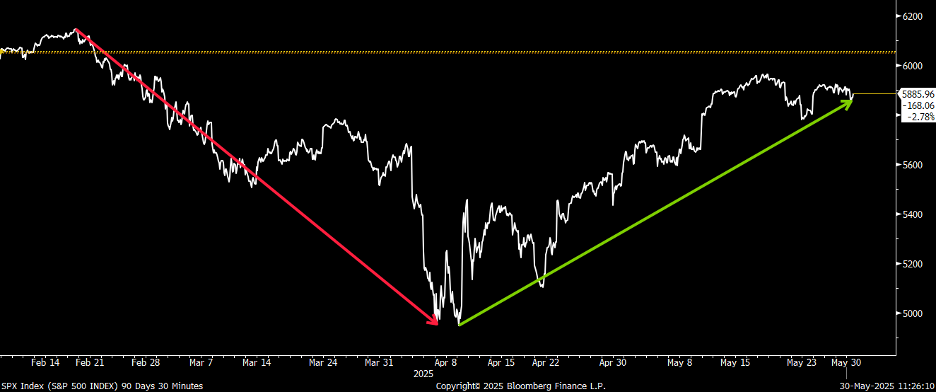
From mid-February to mid-March, the S&P 500 dropped 10% in 20 trading days due to concerns over a potential global trade war instigated by Trump. These fears materialized on April 2 when Trump announced “Liberation Day” tariffs, causing a historic 10% decline over two days—the fifth-worst crash in history.
A recovery soon followed.
One week later, Trump declared a 90-day pause on the tariffs, leading to a remarkable 9.5% increase in the S&P 500 in one day, contributing to a total rebound of 20% over the next month.
In just 90 days, the market had seen both a crash of 20% and a full recovery, reflecting volatility akin to the pandemic era and reshaping investor perceptions of political risk and policy uncertainty in 2025.
Expect Continued Volatility Amid Promised Changes
While I believe stocks will trend higher over the next few years, the road ahead will likely remain bumpy.
We are currently in the midst of an AI boom that could last another 2-3 years, reminiscent of the Dot Com Boom that spanned from 1995 to 1999, during which the Nasdaq rose 582% and the S&P almost tripled.
However, the unpredictable changes proposed by Trump, including trade negotiations, military restructuring, and tax reductions, introduce significant uncertainty for investors.
This level of change often creates discomfort, implying that volatility will persist despite the potential for long-term growth in stocks.
Volatility Metrics Under Trump’s Administration
Since Trump’s inauguration, market swings have reached record levels:
- Fastest 10% drop: Over 12.1% decline following the announcement of tariffs on April 2.
- Worst two-day crash: A 10.5% setback on April 3-4, the fourth-worst in history since 1950.
- Best single-day rally: A 9.5% surge on April 9, the strongest since October 2008 following the tariff pause announcement.
- Longest win streak: The S&P recorded its ninth consecutive gain on May 2, a rise of approximately 10% over this stretch.
- High volatility index: The CBOE Volatility Index (VIX) nearly doubled over six months, reaching 27.86.
This has been a record-breaking three months for the stock market.
Adapting Investment Strategies for Market Conditions
Trump appears committed to implementing his agenda, suggesting that current volatility is likely to continue.
This situation may be alarming for buy-and-hold investors, which emphasizes the need to adapt investment strategies.
The volatility offers significant opportunities for short-term traders looking to capitalize on market fluctuations.
However, successful short-term trading can be challenging. A quantitative system, like Auspex, can simplify this process by identifying stocks with strong growth, favorable technical trends, and investor interest.
Utilizing such a system can position portfolios for potential gains, requiring just about 30 minutes a month to manage effectively.
In a volatile market, this approach aims to help investors not only survive but thrive.
On the date of publication, Luke Lango did not hold any positions in the mentioned securities.
5 Stocks Our Experts Predict Could Double In the Next Year
By submitting your email, you'll also get a free pivot & flow membership. A free daily market overview. You can unsubscribe at any time.